Healthcare Resume Builder. Your resume made
Licensed or still in training, put your credentials in order and compare examples from the bedside to the imaging suite and the lab.
- Resume examples for 162 healthcare jobs
- Professional resume templates
- Easy editing as you go
from 4,000+ reviews


Healthcare resume guide
Put your license or certification directly under your name and contact line, with the credential, the state or organization that issued it and its expiration date.
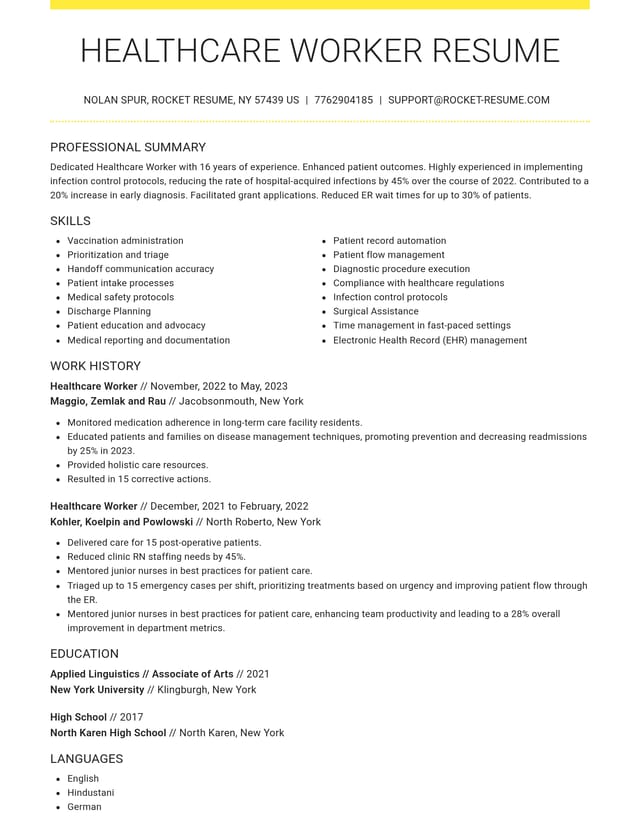
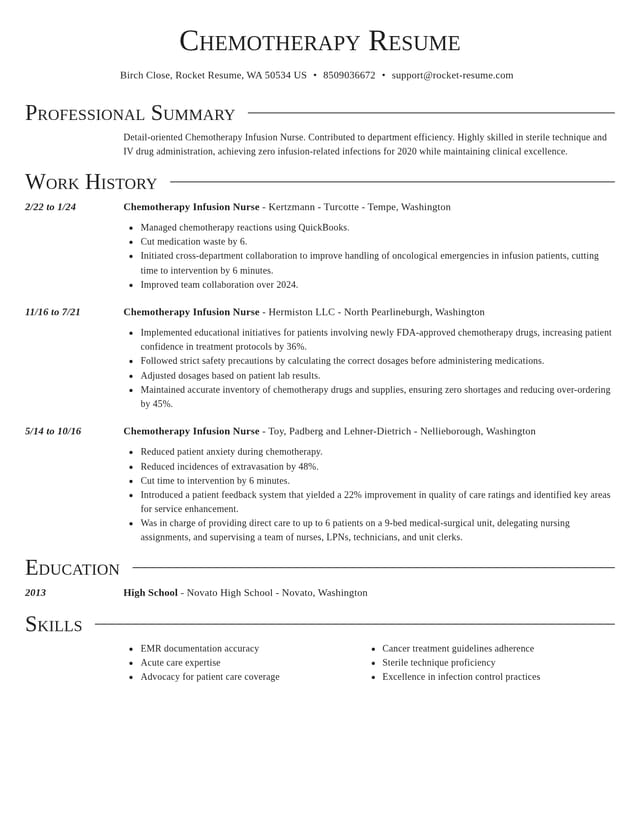
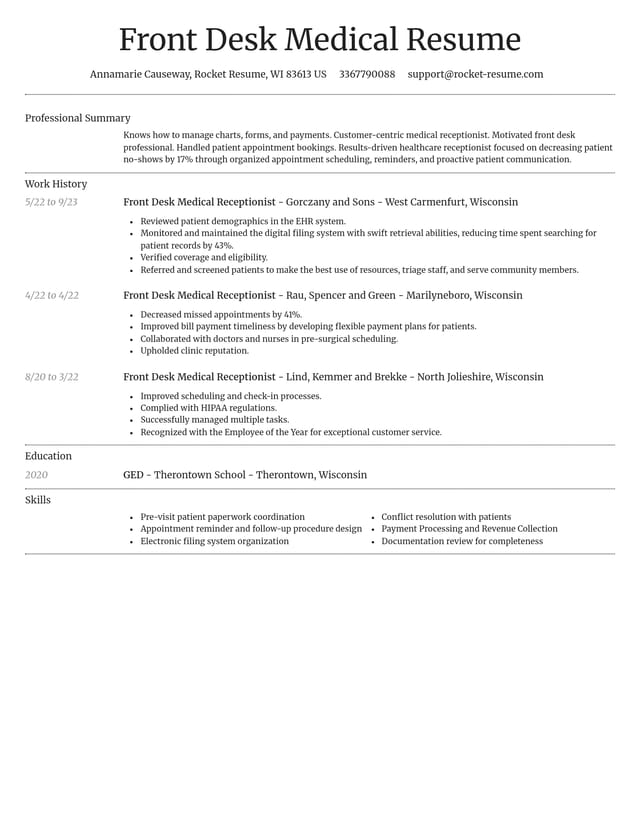
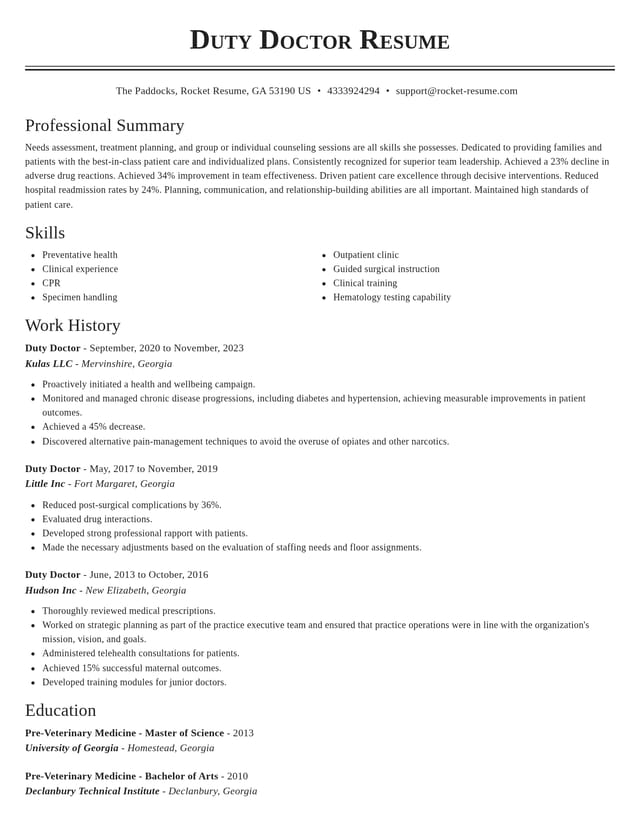
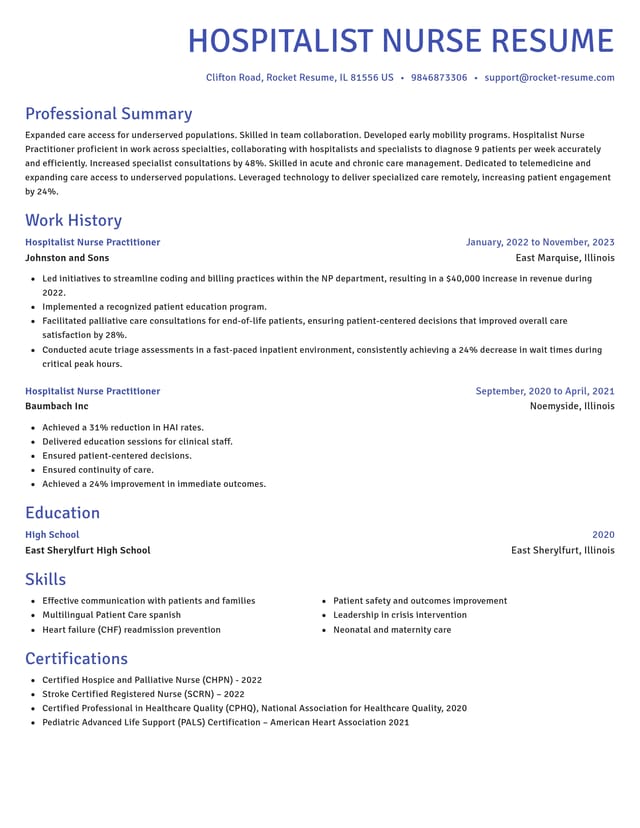
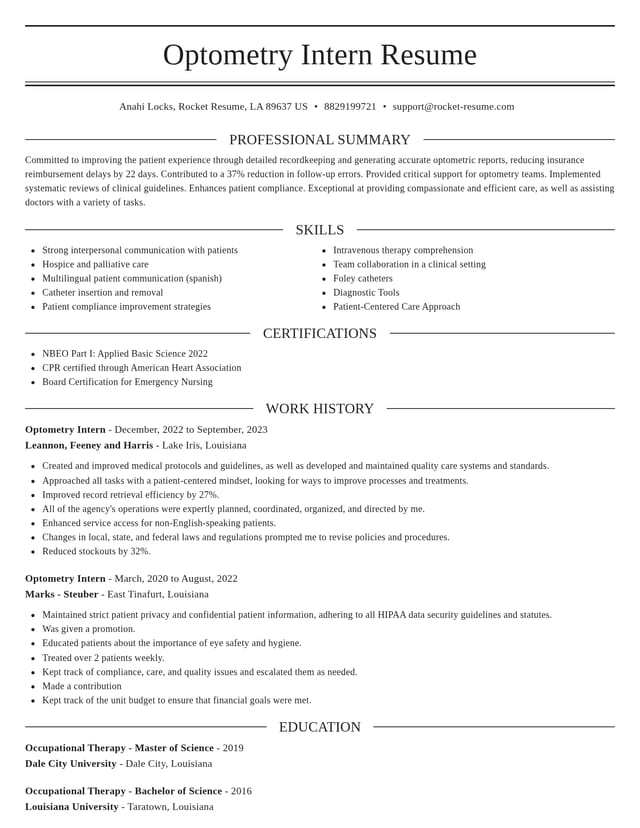
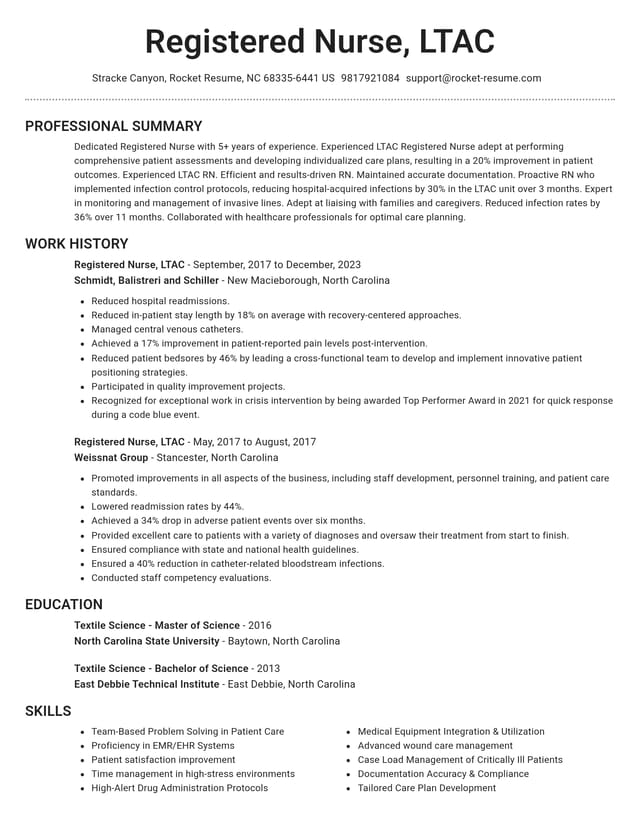
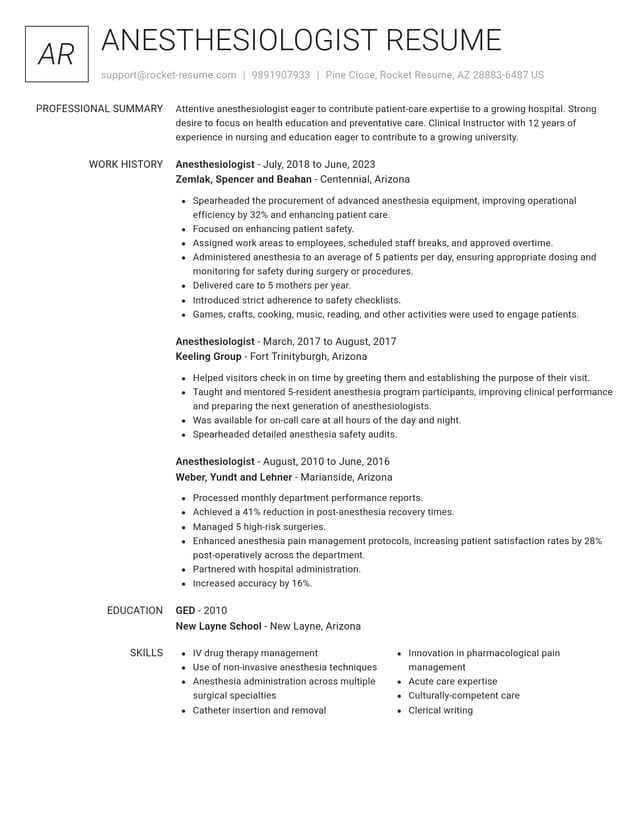
Healthcare resume examples
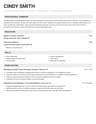
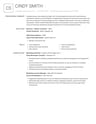
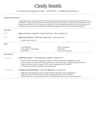
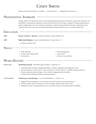
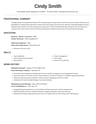
Example: Medical Imaging Technologist
More Medical Imaging Technologist resume examplesHealthcare jobs: examples, templates and guides
162 jobs- Nurse
Examples
Specialty and unit type belong up front, then any certification from a professional association.
- Certified Nursing Assistant
Templates
Name your state-approved training program and its hours; federal rules set a 75-clock-hour minimum.
- Medical Assistant
Examples
Say if your work was clinical, front desk or both; some states require certification or a license.
- Phlebotomist
Resume
Place your phlebotomy certification and its issuer near your name; many employers look for one.
- ICU Nurse
Templates
Give ICU type and ratio; one CCRN (Adult) route needs 1,750 critical care hours in two years.
- Ultrasound Technician
Examples
Write RDMS with each specialty you passed, such as OB/GYN; RDMS pairs SPI with a specialty exam.
- Professional Nurse
Resume
Put your RN license on your name line; New York licenses RNs as registered professional nurses.
- Psychiatric Nurse
Templates
Describe the psych setting and patient group; PMH-BC asks for 2,000 psych nursing hours in 3 years.
- Charge Nurse
Examples
Show charge shifts inside your staff role: how often you took charge, the beds and staff you led.
- Radiographer
Resume
Head your credentials with ARRT Radiography, then any other imaging modality you're certified in.
- X-Ray Technologist
Templates
Pair your ARRT credential with your state license, since most states license or certify x-ray techs.
- Medical Lab Technician
Examples
List the lab departments and analyzers you ran, plus a state license if your state requires one.
Show all 162 healthcare jobsShow fewer
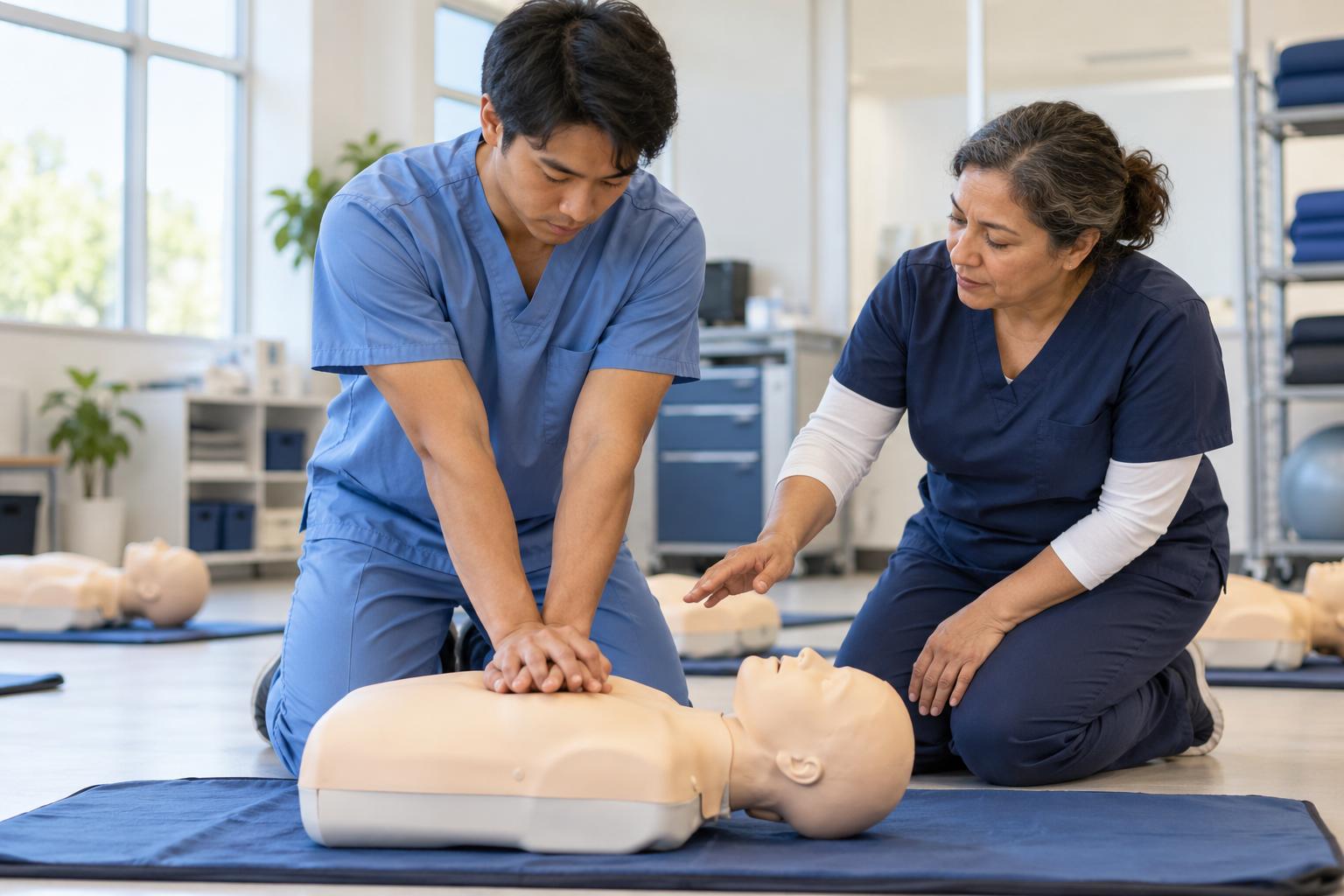
How to write your healthcare resume
Registered nurses need a license from the state where they work, so flag a multistate license: under the Nurse Licensure Compact, nurses can practice in other compact states without getting additional licenses. Nursing assistants can note their listing on the state registry, and life support cards such as BLS and ACLS belong in the same block with their dates.
Describe your clinical setting precisely: unit type, bed count, patient ratio and the charting system you used, such as Epic or Oracle Health. Measure what your unit tracks, like falls, readmissions, turnaround times, audit scores or patients seen per shift, and leave patient names and identifying details out entirely. Recent graduates can list clinical rotations by specialty and hours.
One example bullet: "Precepted six new graduate nurses on a 28-bed cardiac step-down unit while carrying a four-patient assignment."
Put this guide to work
In what order do nursing credentials go after my name?
Follow the order the American Nurses Credentialing Center recommends: highest earned degree, then licensure, then state designations such as APRN or NP, then national certifications, then awards and other recognition. A family nurse practitioner might write "Jordan Lee, MSN, RN, APRN, FNP-BC."
The center puts the degree first because it is permanent, while the license and state designation come next because they are what let you practice. Keep the name line to credentials you hold now, and move anything in progress or lapsed to your education or credentials section with dates.
How do I list a compact (multistate) nursing license?
Write it as one credential line, "RN, multistate license (Nurse Licensure Compact)," followed by your home state and the expiration month, so a recruiter sees all three together.
Revisit that line whenever you move. Under the compact's 60-day rule, nurses moving from one compact state to another must apply for licensure in their new primary state of residence within 60 days. Skip a list of the states you can work in: the compact's map changes as states join, and an employer can check it there. The compact covers the U.S. jurisdictions that have joined it.
How do I put travel nursing on my resume?
List the staffing agency as your employer, then give each assignment a short entry beneath it: hospital, city and state, unit, contract dates, charting system and your usual patient ratio. Grouped this way, back-to-back contracts read as one continuous career, and a nurse manager can count the units and charting systems you have adapted to.
Worked through more than one agency? Give each its own heading, in date order. One or two bullets per assignment is plenty; spend the detail on the contracts closest to the job you are applying for.
How do I list each nursing credential I've earned on the way from CNA to nurse practitioner?
List each credential with the year earned, newest first, and let the experience section show the climb. In the U.S., each step adds a credential: practical and vocational nurses finish a state-approved program that typically takes about a year, and an LPN can complete an LPN-to-RN program to become a registered nurse. Nurse practitioners need that RN license first, then at least a master's degree, a national certification exam and a state APRN license.
Leadership is a second track: the Bureau of Labor Statistics names charge and head nurse roles as steps toward senior administration. Examples for each stage: CNA, home health LVN, staff nurse, charge nurse, assistant director of nursing services and hospitalist nurse practitioner.
Healthcare resume phrases and examples
Showing 12 of 40
Efficient room turnover processes
Instrument sterilization and handling
Administrative Fellow resume examples
Work experience
Created dashboards outlining actionable data insights.
Collaborated with HR on resource allocation.
Contributed to improvement in team morale.
Adherence to hospital protocols
Health fair organization and participation
Advanced Emergency Medical Technician resume examples
Work experience
Administered pre-hospital care to over 3 critically injured patients, improving outcomes by 15% during 2016-long deployment to Chicago.
Adapted swiftly to evolving in-field situations.
Comprehensive pain management strategies
Mentoring and training junior nursing staff
Oncology Nurse resume examples
Work experience
Followed the physician's instructions on each patient's chart when administering chemotherapy.
Patient monitoring and assessment protocols
Compliance with state and federal healthcare regulations
Phlebotomist resume examples
Work experience
Collaborated with hospital leadership.
Achieved 17% error-free accuracy on labeling.
Client lifestyle assessment
Evidence-based naturopathic practices
Mother-Baby Registered Nurse resume examples
Work experience
Achieved a 17% reduction in training time.
Achieved a 68% parent confidence rating.
Dialysis Technician resume examples
Summaries
HIPAA, facility, and Dialysis Technician standards are all mastered, as is operating in high-volume, high-stress environments.
Successful in establishing rapport with patients and explaining procedures in a way that reduces anxiety.
All aspects of dialysis are well-understood, including starting and stopping treatment, educating patients, and maintaining the highest standards of sanitation and safety.
Sterile Processing Technician resume examples
Accomplishments
Established a maintenance log for high-use equipment, reducing tool malfunctions by 26% and ensuring continual availability of sterile instruments.
Created step-by-step sterilization guidelines, including handling instructions for special instruments, resulting in reduced human errors and streamlined handoff between shifts.
Intern Dentist resume examples
Summaries
Achieved a 62% reduction in appointment delays.
Accurate in preparing high-quality dental materials.
Assisted with orthodontic treatments.
Pediatric Emergency Room Nurse resume examples
Accomplishments
Collaborated with a multidisciplinary team to develop a rapid-response protocol for pediatric patients, reducing emergency response times by 70% seconds in time-critical situations.
Adapted patient care plans in real-time during emergency situations to align with evolving circumstances, achieving stabilized conditions for more than 7% of patients within three years.
NICU Nurse resume examples
Summaries
Accomplished NICU Nurse with experience in critical interventions and equipment management, reducing life-support-related incidents by 60% while ensuring optimal care for neonates.
Achieved significant reductions in infection rates.
ECG Technician resume examples
Accomplishments
Collaborated with cardiologists and other members of the medical team to deliver rapid, accurate EKG results during high-pressure situations.
Supported emergency medical staff by delivering real-time EKG results during cardiac arrest response, enabling immediate treatment decisions.
Achieved a 18% improvement in response times.
Prepares equipment and assists physicians during examinations and treatments, with a focus on the patients' comfort and well-being.
MRI Technologist Assistant resume examples
Accomplishments
Successfully reduced patient reschedule rates due to machine downtime by closely monitoring and performing daily calibration assessments with MRI technologists.
Collaborated on a cross-functional initiative to streamline the emergency MRI scanning process, leading to a 31% reduction in patient processing time.
Women's Health Nurse Practitioner resume examples
Accomplishments
Collaborated with multidisciplinary teams to review complex cases, increasing early diagnosis rates by 34% in 2019's patient population.
Improved early detection of gynecological conditions through precise diagnostic techniques, raising diagnostic success rates by 84%.
Career advice
Updated Jun 2, 2026
A phlebotomist skills checklist for 2026 resumes, from venipuncture volume and NIR vein visualization to infection control, plus hybrid formatting, ATS phrasing, and metric-backed examples.

Updated Jul 7, 2026
Seven RN case manager interview questions with sample answers, STAR-method anecdotes for mistakes and proud moments, trust-building strategies, and tips for AI-scored video interviews in 2026.

Updated Dec 23, 2025
How to write a receptionist resume, from summary vs objective to quantified bullets like 100 calls daily, ATS keywords, hard and soft skills lists, and tailoring for medical or veterinary roles.
Updated May 28, 2026
Seven nurse practitioner interview questions for 2026, from your biggest weakness to patient education scenarios, with STAR-format answers built to pass AI video screeners and human panels.

Updated Apr 7, 2026
Updated Jun 26, 2026

Updated Jan 16, 2026



Explore other industries
Related to Healthcare
 12 examples
Clinical Research Associate · Pharmacovigilance Specialist · Aseptic Filling Operator

 7 examples
Microbiologist · Research Scientist · Biotechnologist
 21 examples
Mental Health Counselor · Behavioral Health Technician · Life Coach
 9 examples
Veterinarian Assistant · Locum Tenens Veterinarian · Professional Pet Groomer
All 45 industries
This page’s industryRelated to Healthcare
- Aerospace & Defense, 8 examples
- Agriculture, 23 examples
- Apparel & Textiles, 13 examples
- Architecture, 15 examples
- Arts & Entertainment, 24 examples
- Automotive, 21 examples
- Beauty & Personal Care, 17 examples
- Biotechnology & Life Sciences, related industry, 7 examples
- Business Services, 31 examples
- Chemical Engineering, 4 examples
- Construction, 107 examples
- Creative, 15 examples
- Data Science, 4 examples
- Education, 99 examples
- Energy, 40 examples
- Environmental Science, 5 examples
- Finance, 66 examples
- Food & Beverage, 68 examples
- Government, 48 examples
- Healthcare, this page’s industry, 162 examples
- Hospitality, 36 examples
- Human Resources, 18 examples
- Insurance, 10 examples
- Legal, 12 examples
- Logistics, 39 examples
- Manufacturing, 68 examples
- Marketing, 18 examples
- Media, 20 examples
- Military, 24 examples
- Mining & Metals, 9 examples
- Nonprofit, 8 examples
- Pharmaceuticals, related industry, 12 examples
- Public Relations, 2 examples
- Real Estate, 7 examples
- Retail, 39 examples
- Robotics, 1 example
- Security Services, 18 examples
- Social Services & Counseling, related industry, 21 examples
- Social Work, related industry, 22 examples
- Sports & Fitness, 96 examples
- Technology, 66 examples
- Telecommunications, 6 examples
- Tourism & Travel, 8 examples
- Transportation, 38 examples
- Veterinary, related industry, 9 examples