Manufacturing resume examples from assembly to quality control
Assemblers, machine operators, machinists and quality inspectors: show the equipment you ran, the checks you made and the shifts you led with these manufacturing resume examples.
- Resume examples for 68 manufacturing jobs
- Professional resume templates
- Easy editing as you go
How to write a manufacturing resume
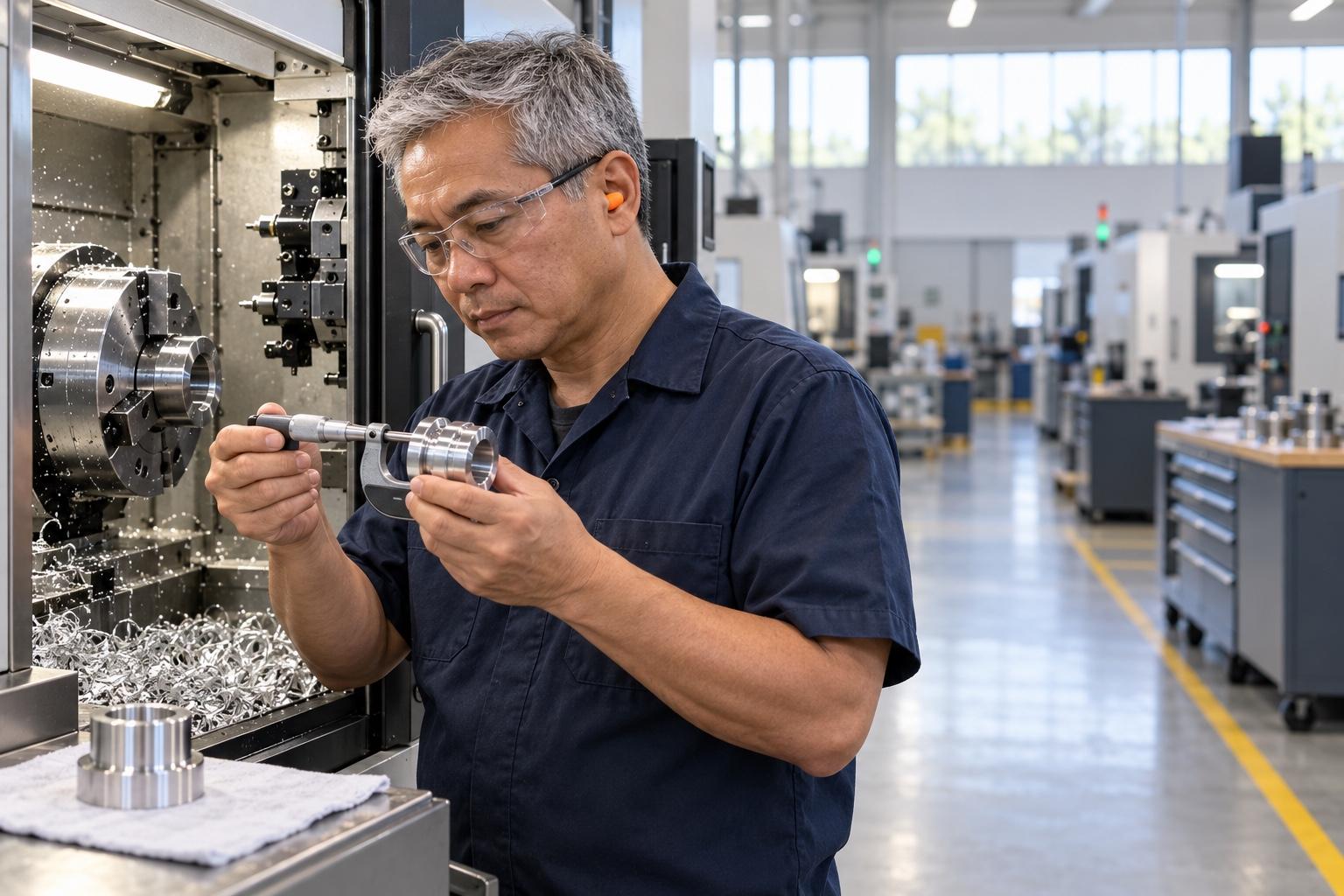
Manufacturing employers want to know what you did within a production process. The same machine may involve an operator, a setup tech, a maintenance tech and a quality inspector, each with different duties. Explain your role and the product or plant you worked in. Connect technical skills to work you performed and checked, and make training and promotions plain enough that an employer does not have to guess. The Bureau of Labor Statistics profile of machinists lists setting up equipment, working to specifications and checking finished parts among their duties.
Three things hide what you did on the floor:
- A general manufacturing title hides the production setting.
- Operating, setup, maintenance and inspection duties run together.
- Quality or output numbers aren't tied to your own work.

Identify the production work
Name the product or plant setting and the work you handled. Assembly, machine operation, maintenance, quality checks and shift supervision need different evidence, so decide on the target job first. Then compare operator, machinist and inspector resume samples and open the manufacturing job title closest to that target.
Choosing your job title in the builder brings up suggestions for that role. Rewrite them using tasks from your own production work, so the resume shows the work you did and the checks you made.
Distinguish equipment responsibilities
Describe the machine or process, your task and how you checked the work. Say whether you ran, set up, maintained or inspected equipment, since those are different jobs on the floor. The suggestions for machine, assembly and quality work can be changed to name your own equipment and specs.
What a quality inspector might write:
“Measured first-run parts with calipers and height gauges and caught a bore drifting out of tolerance before the 500-piece batch ran.”
Build My Manufacturing ResumeEach job in the builder's work history has room to say whether you ran, set up, maintained or inspected the machinery. Add the process and the checks that made up your part.
Explain the evidence behind production results
Where you have reliable records, add output, scrap or downtime figures and explain your part. Apprenticeships, technical school projects and supervised training show skills too when you are newer to the floor. Keep certification status and the limits of your role honest. Our articles on manufacturing careers have more ideas for moving up.
When you lack reliable figures, a specific completed task, such as a changeover you ran or a defect you traced, still shows responsibility. Apprenticeships and certifications can sit in optional sections of the builder, leaving your work history for production.
Keep production skills and training visible
Give each plant job a clear work-history entry and keep technical skills short, with enough context on equipment and training to be useful. If you moved into setup, quality or supervision, make the added duties plain. Templates with a certifications section keep forklift or safety training easy to spot. Automotive is one of several industries that use the same plant skills.
Build My Manufacturing ResumeWith a template chosen in the builder, read the live preview as a plant supervisor would. Look for a clean split between skills and experience, with promotions shown through the duties you took on.
How Rocket Resume helps
Name the plant, the job you did on the machine and the results that were yours:
- Your plant and product. Name the product, production line or process alongside your job so a broad title has a concrete setting.
- Run, set up or inspect. Adapt suggestions to show whether you ran equipment, changed its setup, maintained it or inspected the output.
- Quality results you can own. Connect an output or quality result to your own check or process change, and mark shared results as team results.
Put together the operator, machinist or inspector resume like this:
- Choose a template. Choose a template with a certifications section for forklift, safety or machine training.
- Add work experience. Add each plant job with dates and the machines, products or processes you worked on.
- Select relevant skills. Choose skill suggestions for the equipment you run, the checks you make and your setup work.
- Sum up your floor time. Close with a summary of your production role, main equipment and years on the floor.
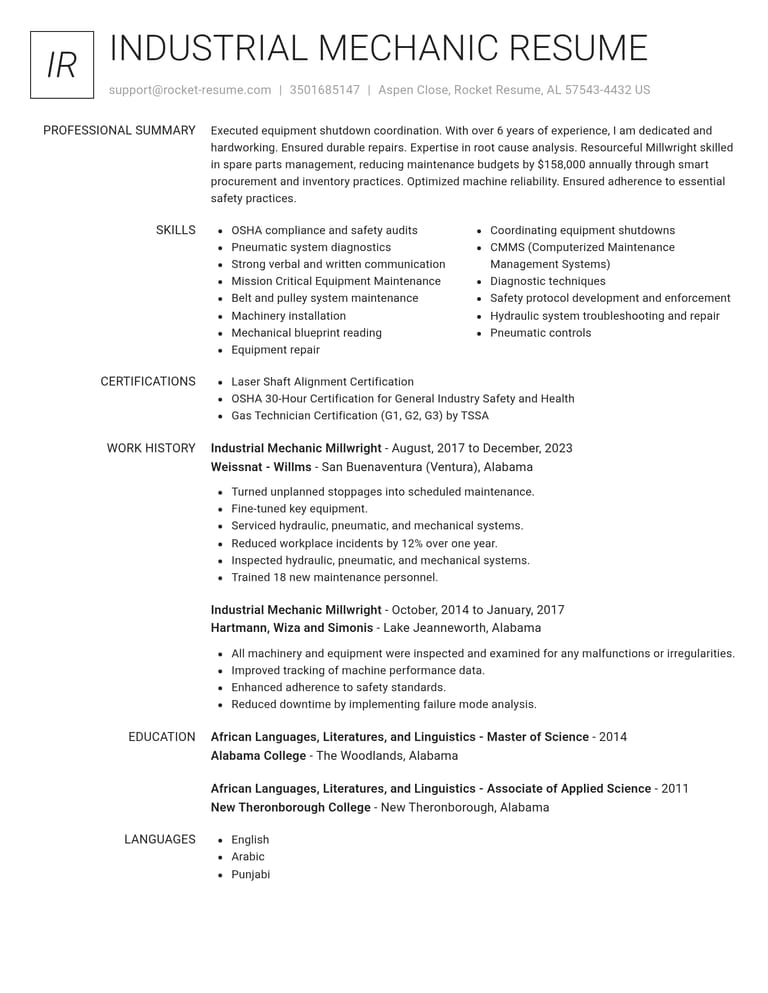
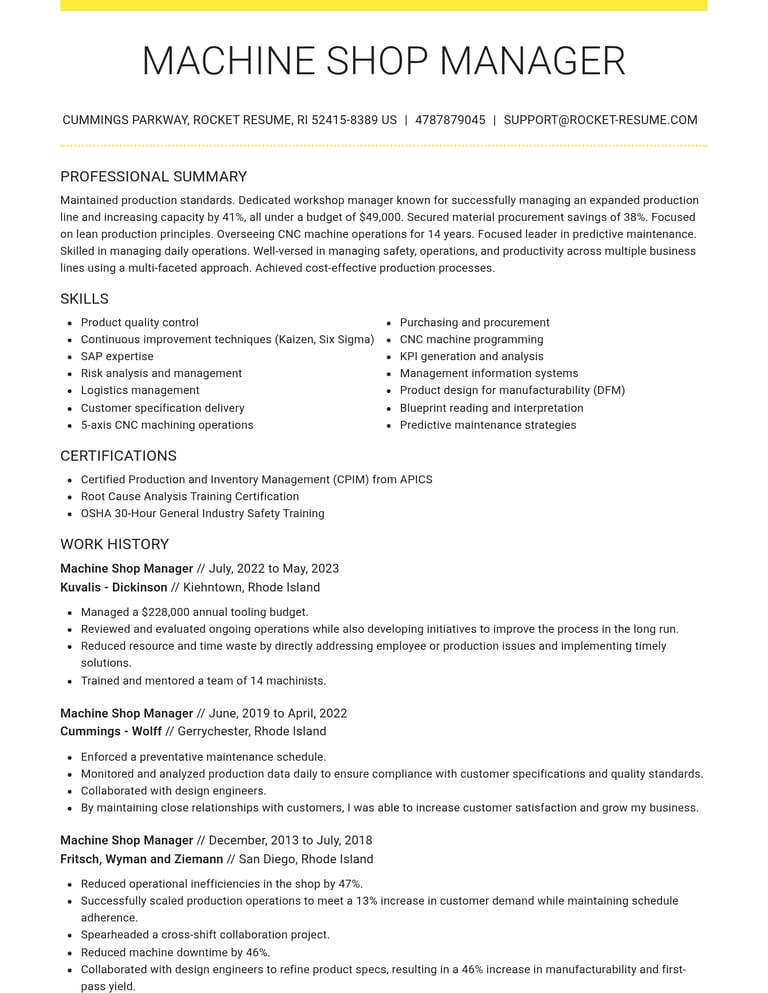
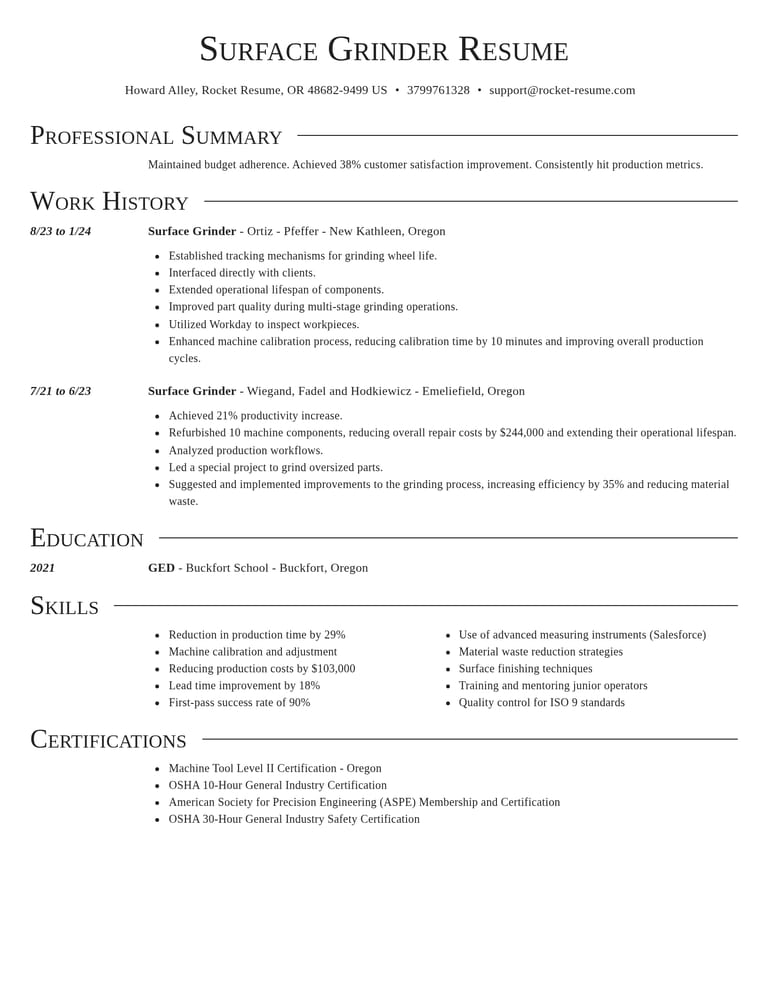
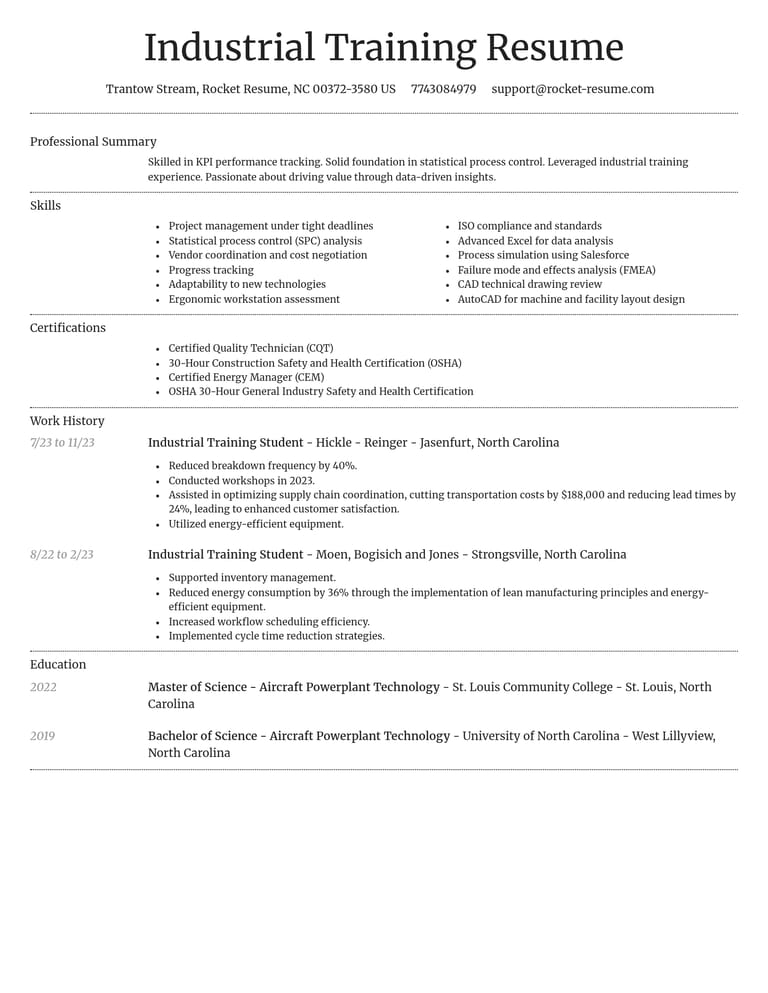
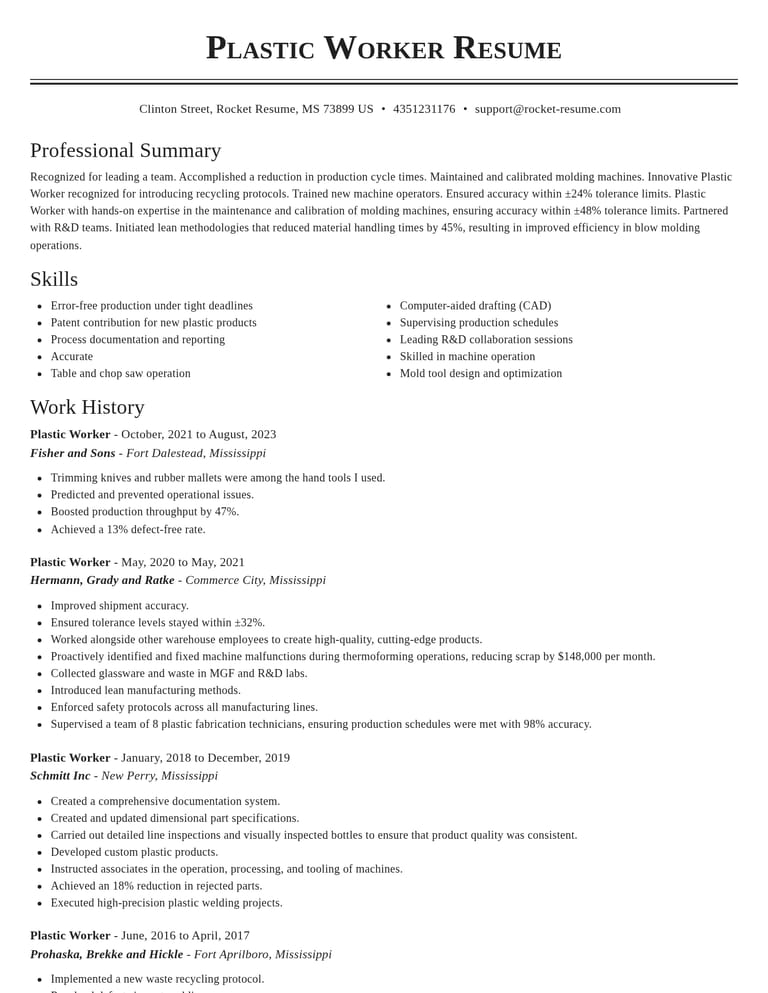
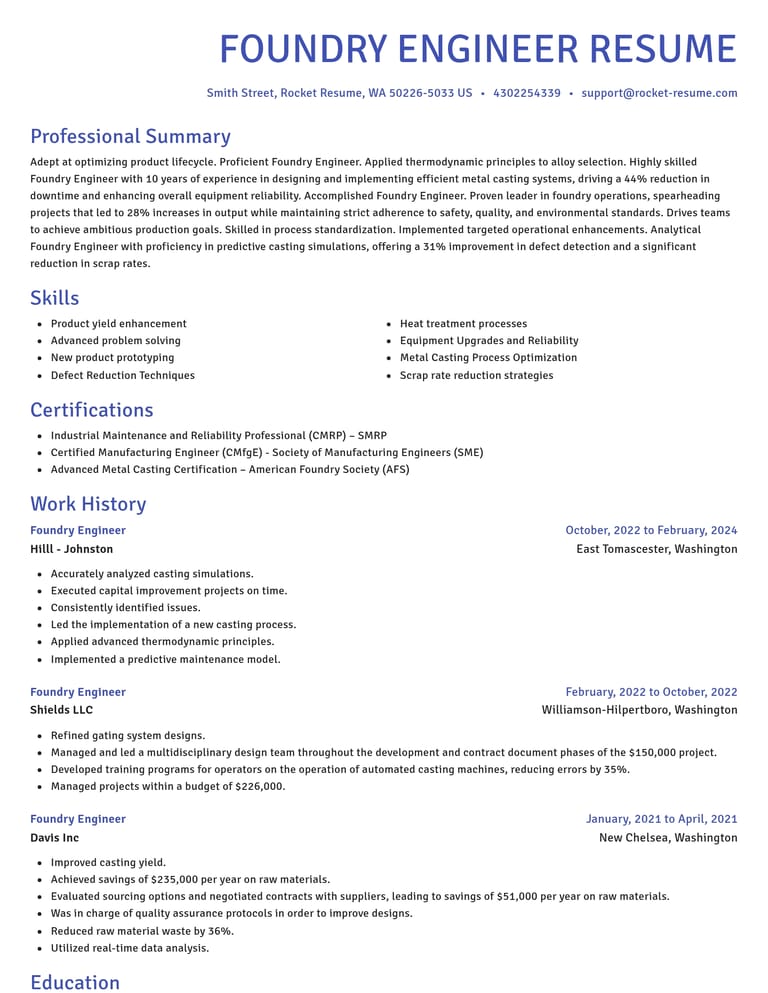
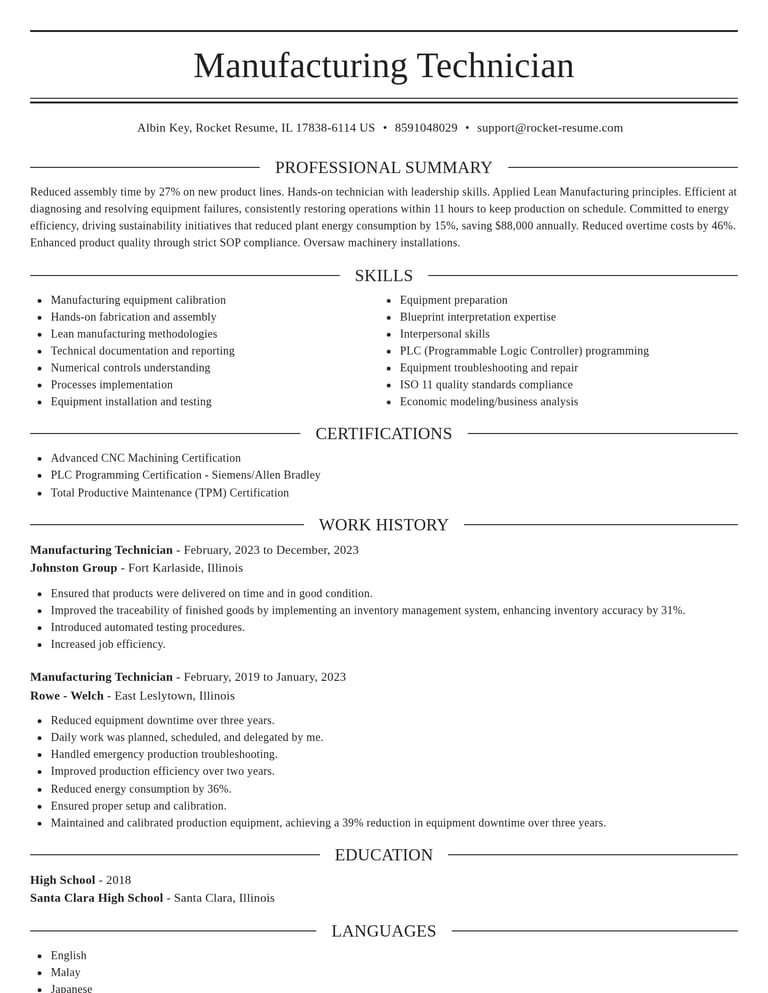
Manufacturing resume examples
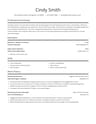
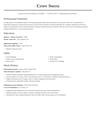
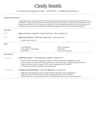
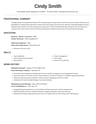
Visual Inspector resume example
More Visual Inspector resume examplesManufacturing jobs: examples, templates and guides
68 jobs- CNC Machine Operator
Examples
Controls such as FANUC and the axes you run, from 3-axis mills to live-tool lathes, belong up top.
- Aluminum Fabricator
Resume
Give alloys and weld process, plus any test to AWS D1.2, the structural welding code for aluminum.
- Plant Operator
Templates
Start with the process units you ran, your shift pattern and any startups or shutdowns you led.
- Manufacturing Technician
Examples
Open on the line or cell you keep running and one yield or downtime result you moved.
- Packer
Guides
Quote cases or units per hour, your mispack rate, and the scanners or label printers you used.
- Calibration Engineer
Templates
Show parameters you calibrate and, if your lab holds it, its ISO/IEC 17025 accreditation scope.
- Control Room Operator
Examples
List units you run from the board; at OSHA process safety sites, add your last refresher date.
- Multi-Skilled Technician
Guides
Sort skills by trade (mechanical, electrical, PLC); add lockout/tagout authorized-employee training.
- Pipe Fabricator
Tips
Note pipe sizes, materials and specs, plus welder qualifications such as ASME Section IX tests.
- Production Associate
Examples
List MSSC's Certified Production Technician if you hold it (safety, quality, processes, maintenance).
- DCS Operator
Resume
Platform first: the DCS you run, then the loops or alarms you handle on a typical shift.
- Die Cast Machine Operator
Templates
Report the alloy, machine tonnage and cycle time, and how you cut porosity or flash scrap.
Show all 68 manufacturing jobsShow fewer
Manufacturing resume skills, summaries and work history suggestions
Save suggestions for your resume
Tap the bookmark next to any suggestion to save it.
Saved itemsThe examples, skills, job titles and industries you save, together in one place.
RecommendedPages, searches and examples you used but haven’t saved.
In the builderYour saved suggestions show up in the resume builder, ready to add as you write.
You’re in controlYour saved items are private. Remove any of them at any time.
Showing 12 of 40
Grit and abrasive expertise
Geometrical defect elimination in finished parts
Dryer Operator resume examples
Work experience
Completed pre-operational checks on all equipment before beginning processes through coordinated and automated.
Double-checked and verified the final weights of finished goods.
Schematics and blueprints
Machinery downtime reduction
Powder Coat Painter resume examples
Work experience
Ensured that the production workflow, quality parts, and delivery times were all met.
Prepared parts that needed to be coated and followed powder coating procedures to the letter.
Parts installation
Mechanical tools
Workshop Assistant resume examples
Work experience
Set up and dismantled scaffolding, shoring, and other support systems to meet project requirements.
Assisted with project planning by measuring locations and pieces, marking points, and expertly cutting materials.
Blueprint interpretation and fabrication
Read and interpret engineering specifications
Electromechanical Technician resume examples
Work experience
Observed equipment in operation in order to detect electronic and mechanical hazards or problems that needed to be serviced, repaired, or replaced.
Applied advanced diagnosis techniques to repair servo-motor issues, reducing repair turnaround by 15 hours and saving $74,000 in outsourced repairs.
Employee cross-training programs
Continuous improvement (CI) leadership
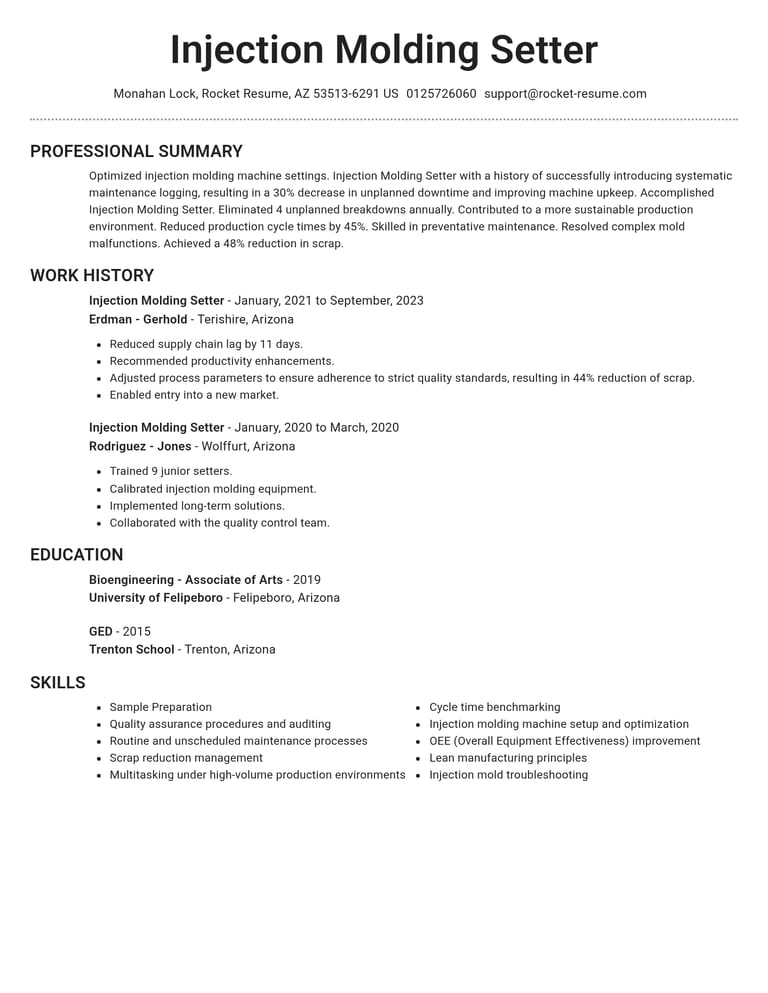
Injection Molding Setter resume examples
Work experience
Ensured compliance with environmental regulations by switching to more sustainable materials, reducing waste by 72% tons annually.
Calibrated injection molding equipment.
Tool Room Engineer resume examples
Summaries
Delivered high accuracy in tool performance.
Decreased repair costs by $74,000.
DCS Operator resume examples
Accomplishments
Enhanced visibility of production data by creating custom dashboards which allowed operators to foresee trends and prevent system overloads, reducing downtime by 63%.
Updated control system programming based on real-time data analysis, decreasing batch process times by 80% and increasing production capacity.
Machine Shop Manager resume examples
Summaries
Achieved a 46% increase in overall shop efficiency.
Accomplished Machine Shop Manager with a focus on lean production principles, minimizing scrap material and improving product quality by 24%.
Manufacturing Technician resume examples
Accomplishments
Developed operator certifications for key machines, widening team capability and reducing dependence on specialized technicians during high-volume periods.
Proactively identified mechanical issues and performed preventative maintenance, extending machine life by 14 operating hours.
Achieved zero defects in high-profile print orders.
Achieved 77% fewer technical interruptions during peak production periods.
Pellet Mill Operator resume examples
Accomplishments
Led continuous improvement projects that addressed chronic production delays, resulting in a 16% overall increase in daily pellet output.
Worked collaboratively with shift supervisors to balance workloads between operators, reducing labor inefficiency by 50% over two years.
Plastic Worker resume examples
Summaries
Achieved a 35% increase in product quality across shifts.
Achieved a 54% defect-free rate.
Mechanical Maintenance Manager resume examples
Accomplishments
Increased Mean Time Between Failures (MTBF) for critical equipment by 56% through root cause analysis and equipment upgrades.
Led safety training initiatives for the maintenance team, achieving a 24% reduction in workplace accidents within the past year.
Plant Operator resume examples
Summaries
Plant Operator is a focused Plant Operator with strong quality control, maintenance, and trucking skills.
To maintain the quality of production, resourceful in adjusting equipment with accuracy and efficiency.
Oven Operator resume examples
Accomplishments
Worked with engineering teams to design oven modifications that led to a 17% improvement in airflow and temperature consistency.
Played a critical role in streamlining communication between maintenance teams and production teams, leading to quicker oven repairs.
Manufacturing resume questions
How do I describe machine operator duties on a resume?
Open each job with your level of responsibility: loading and unloading, running several machines at once, adjusting offsets, or setting up new jobs and signing off first-article inspection. Then name the part families and the quality checks you own, such as hourly in-process gauging or SPC (statistical process control) charts. Close with one number per job, like parts per shift, scrap you cut or a changeover you shortened, and how you got there. Compare the CNC Machine Operator and Lead Machine Operator examples to see a run role beside a lead role.
Where does forklift certification go on a resume?
Put forklift certification under Certifications, naming the truck types and the evaluation date, for example "Forklift operator: sit-down counterbalance and reach truck, evaluated 05/2026." Under OSHA's U.S. rule, training covers the types of truck you'll be authorized to drive, and your employer's certification records your name, the training and evaluation dates and who trained or evaluated you, so your resume line should match that record. Moving to a different type of truck brings refresher training, so leave off types you haven't been evaluated on. Then show the forklift work in your job bullets: loads per shift, rack heights and your damage record.
How do I show GMP or lean training on a manufacturing resume?
Treat GMP (good manufacturing practice) as a requirement you met. In a U.S. drug plant, FDA rules call for training in current good manufacturing practice as it relates to each employee's functions, on a continuing basis, so name the GMP training you've completed, the batch records or logbooks you kept and any deviations you helped close. Lean works differently: it's a set of methods, so pair each tool with its result, such as a 5S layout that cut search time or a kaizen event that removed a step. A string of lean terms with no results tells a hiring manager little.
How should a resume show a climb from production associate to machinist, lead or supervisor?
Write each title's bullets around the work it added, starting on the floor. Production Associate: rate, quality and the stations you were cross-trained on. CNC Machine Operator: setups and the tolerances you held. Lead Machine Operator: the people you trained and the cells you balanced. Machine Shop Supervisor: scheduling, staffing and the shop's results. If you finished an apprenticeship on the way, list the trade and completion year under Training. When it was registered with the U.S. Department of Labor or a state apprenticeship agency, Verify My Apprenticeship lets you download a PDF of your transcript to share with an employer.
Resume guides and career advice

Updated Feb 27, 2026
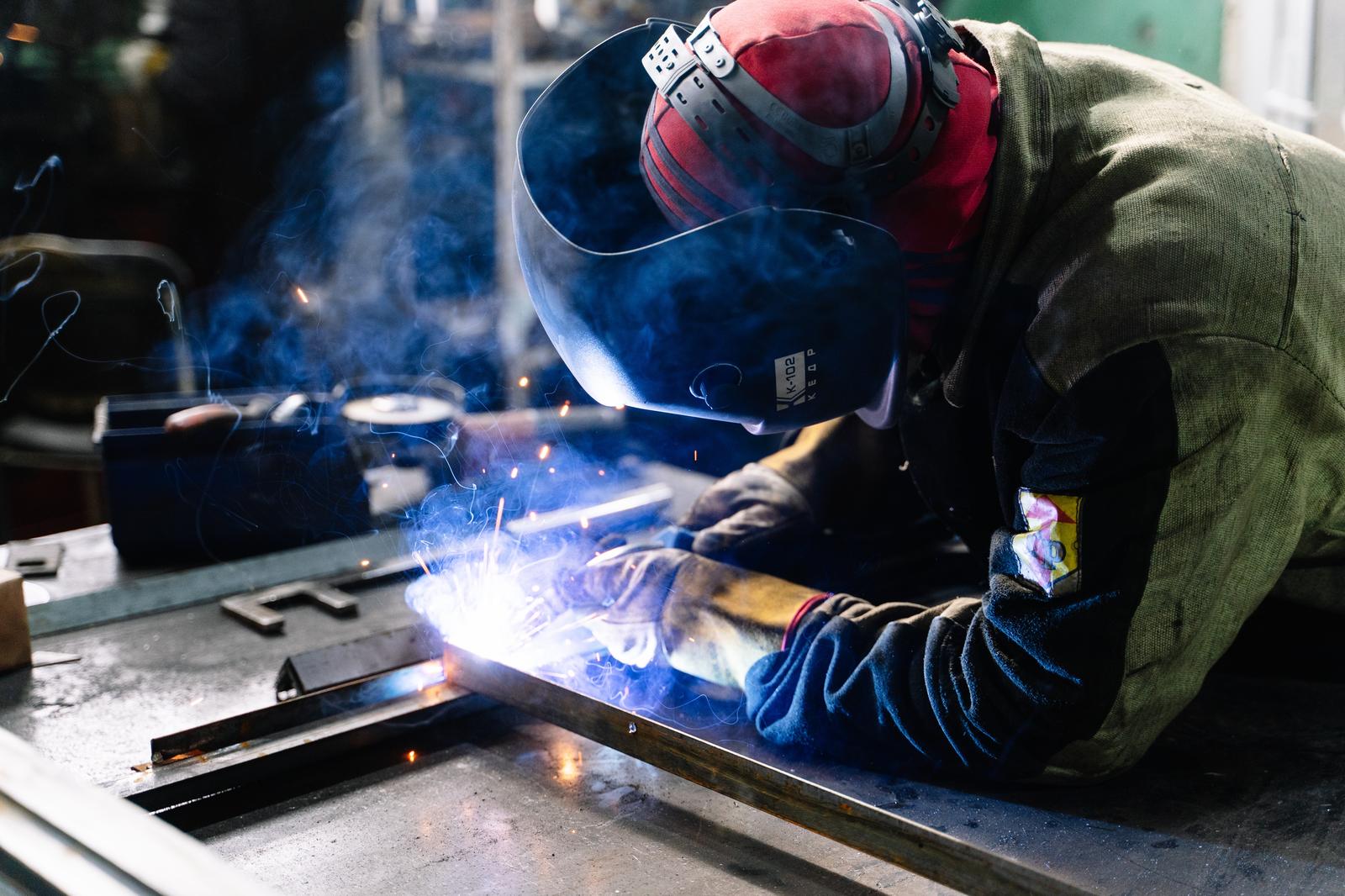
Pipe welding career path with the 6G test position, SMAW and TIG processes, apprenticeships, ASME and API 1104 certifications, and pay from $67,000 to $75,000, plus pipeline welders topping $100,000.
Updated Jan 30, 2026
Welder pay from the $51,000 median to $83,360 for rig welders, the 45,600 openings projected each year, 6-to-24-month training programs, AWS certification, and steps to apply for welding jobs.
Maintenance planner qualifications, day-to-day duties like CMMS scheduling and work orders, salaries ranging from $21,700 to $133,926 with a $94,228 median, and the resume skills that lift your pay.

Oct 14, 2026
Most resumes need five main sections: contact details, a summary or objective, work experience, skills and education. Add optional sections such as certifications or awards when they show you fit the job, and if you're short on work experience, let school, part-time jobs, volunteering and projects fill the page. Leave off references, a photo, your date of birth, salary history and anything else that doesn't help an employer judge your work.


Explore other industries
Related to Manufacturing




All industries
This page’s industryRelated to Manufacturing
- Aerospace & Defense, 8 examples
- Agriculture, 23 examples
- Apparel & Textiles, 13 examples
- Architecture, 15 examples
- Artificial Intelligence, 6 examples
- Arts & Entertainment, 24 examples
- Automotive, related industry, 21 examples
- Beauty & Personal Care, 17 examples
- Biotechnology & Life Sciences, 7 examples
- Business Services, 23 examples
- Chemical Engineering, 4 examples
- Childcare, 14 examples
- Construction, related industry, 106 examples
- Creative, 15 examples
- Customer Service, 17 examples
- Education, 94 examples
- Energy, related industry, 39 examples
- Environmental Science, 5 examples
- Finance, 63 examples
- Food & Beverage, 68 examples
- Government, 48 examples
- Healthcare, 160 examples
- Hospitality, 35 examples
- Human Resources, 18 examples
- Insurance, 10 examples
- Legal, 12 examples
- Logistics, 37 examples
- Manufacturing, this page’s industry, 68 examples
- Marketing, 8 examples
- Media, 20 examples
- Military, 24 examples
- Mining & Metals, related industry, 9 examples
- Nonprofit, 8 examples
- Pharmaceuticals, 11 examples
- Public Relations, 10 examples
- Real Estate, 7 examples
- Retail, 38 examples
- Robotics, related industry, 11 examples
- Sales, 14 examples
- Security Services, 19 examples
- Social Services & Counseling, 21 examples
- Social Work, 14 examples
- Sports & Fitness, 96 examples
- Technology, 67 examples
- Telecommunications, 6 examples
- Tourism & Travel, 8 examples
- Transportation, 38 examples
- Veterinary, 9 examples