A college resume builder for
Build a resume for your next internship, campus job or first role after graduation. Start with your experience and use examples to help describe it.
- Reorder sections for each role
- Examples for campus and part-time jobs
- Modern and traditional resume designs
- A saved copy for each internship application

Danny
Apr 2023
“I'll recommend it to friends and family.”

Dayani F.
Jan 2025
“Everything about this tool is amazing, I love it”

Kelvin P.
Jul 2025
“You guys were amazing, I got a new job.”

John W.
Nov 2022
“You made my resume professional”
from 3,900+ reviews


How to write a college resume: sections, order and GPA
A college resume brings together the experience you have so far: projects, campus roles, part-time work and internships. Start with one page and choose details that show what you can do for the employer. For broader context, see our research on hiring trends.
What goes on a college resume?
Open with your name, city and state, phone number and a professional email address. If you graduate soon, use a personal email instead of your school address, which may stop working after you leave. Then add these sections, roughly in this order while you're in school:
- Summary, if useful: a short introduction connecting your studies or experience to the role
- Education: school, degree and major, graduation year (or the year you expect to finish), and honors such as Dean's List
- Experience: internships, part-time and campus jobs, and research assistant roles, newest first
- Projects: class, club or personal work that shows a skill the job asks for
- Activities: clubs, student government, athletics and volunteering, with any leadership role named
- Skills: software, languages and lab or technical skills you could talk about in an interview
In Rocket Resume's builder, Experience goes under Work History, and your GPA, honors, coursework and class projects go in the details box under your school. Clubs, teams and volunteering fit the optional Affiliations section, and bigger projects fit Additional Information. On the last screen, you can rename either one to Activities or Projects and switch to any design in the template gallery without retyping.
Should education come first on a college resume?
Usually, if your studies are your strongest evidence for the role. Put relevant work first when an internship or job says more than your coursework does. In the builder, you can drag your degree up to the top, compare the two versions and keep the stronger one.
When should I put my GPA on my resume?
Include your GPA when the application asks for it, or when it strengthens your application. Label the scale and distinguish your overall GPA from a major GPA. Don’t substitute one for the other when an employer requests a specific measure. Our article on GPA on a resume covers the details, and the FAQ says when high school comes off.
How do I list internships and part-time jobs?
Use a consistent format: job title, employer, location and dates. Then describe what you did and what it helped accomplish. Part-time work counts even when it’s outside your major. For example, if you trained new baristas, explain what you taught them and how you checked they were ready. Use numbers only when you can back them up.
What if I don't have much work experience yet?
Give relevant projects, coursework and activities more space. For a class app, name what you built, the tools you used and your part in the team. For a lab project, explain the question you investigated and the work you did. Choose coursework that connects to the posting instead of listing your whole schedule. For more ideas, read our guide to writing a college resume with no experience, or open the examples for your future industry to see how people in that field describe similar work.
Turn your classes and campus jobs into a resume with Rocket Resume
Start with a campus job, internship or part-time role. Use the builder’s suggestions to describe the work, then edit them to match your experience. Add your studies and projects, and keep a separate version for each kind of internship.
- Say how much work experience you have so far, answer the school question if the builder asks it, then choose a design.
- Add each job or internship, newest first, and use suggestions that match the work. Then add your school.
- Make each example you pick true to what you did, then add your skills, a summary and any clubs under Affiliations.
- Put education or work experience first, depending on which best supports the application. Proofread each line and date before you download.
Resume designs for internships in any field
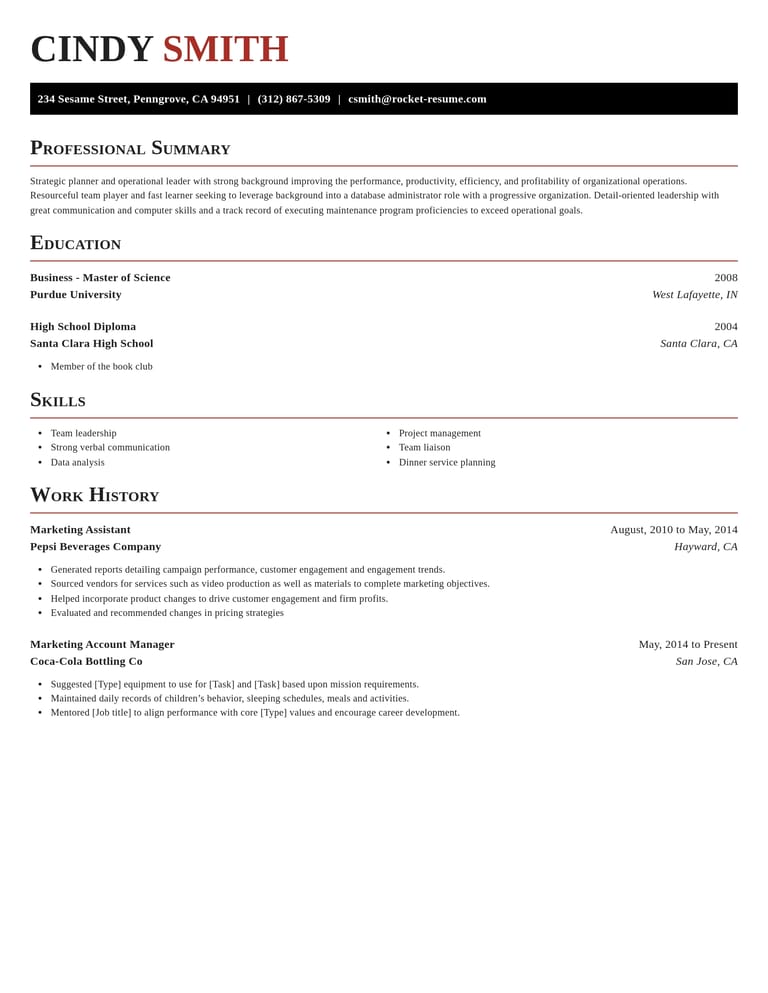
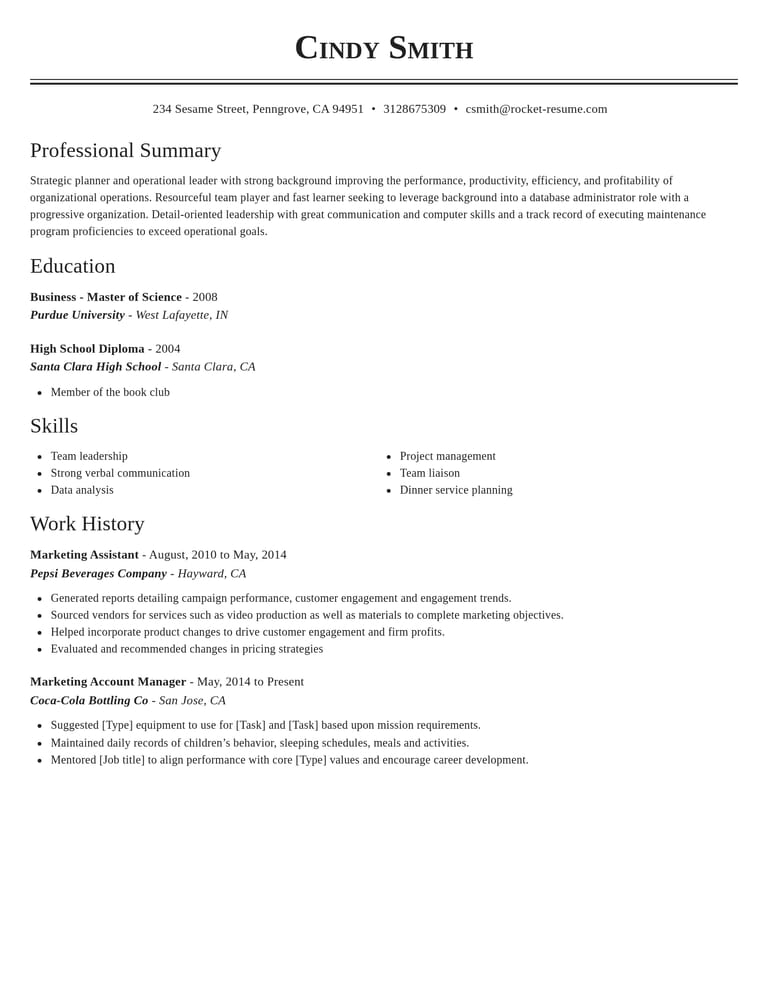
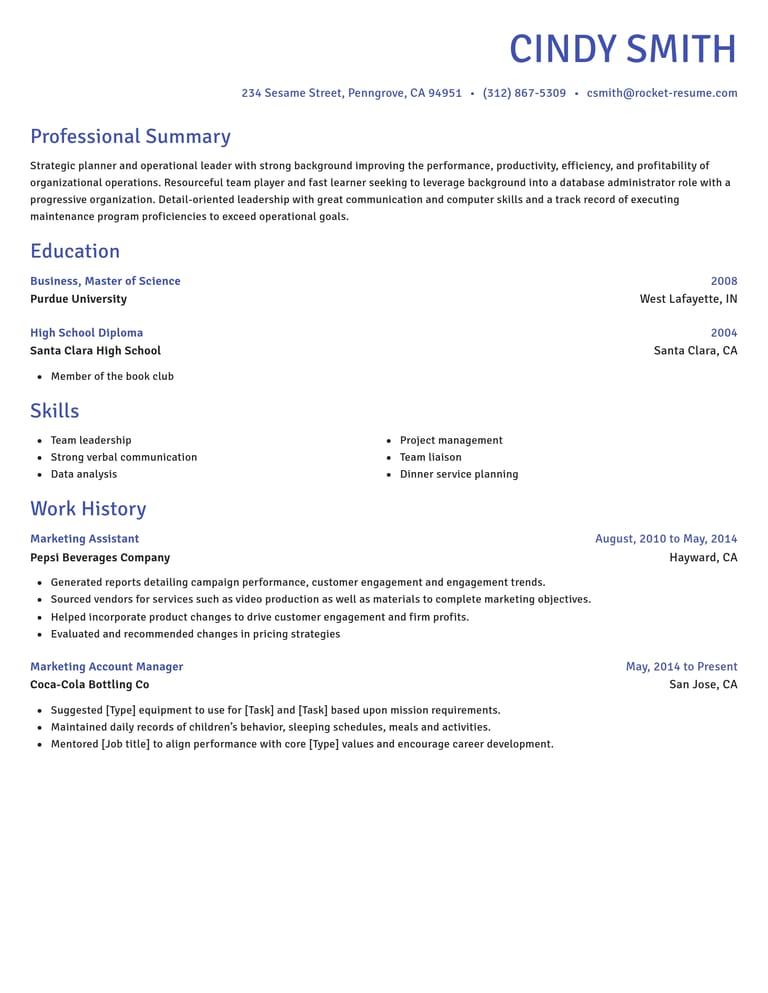
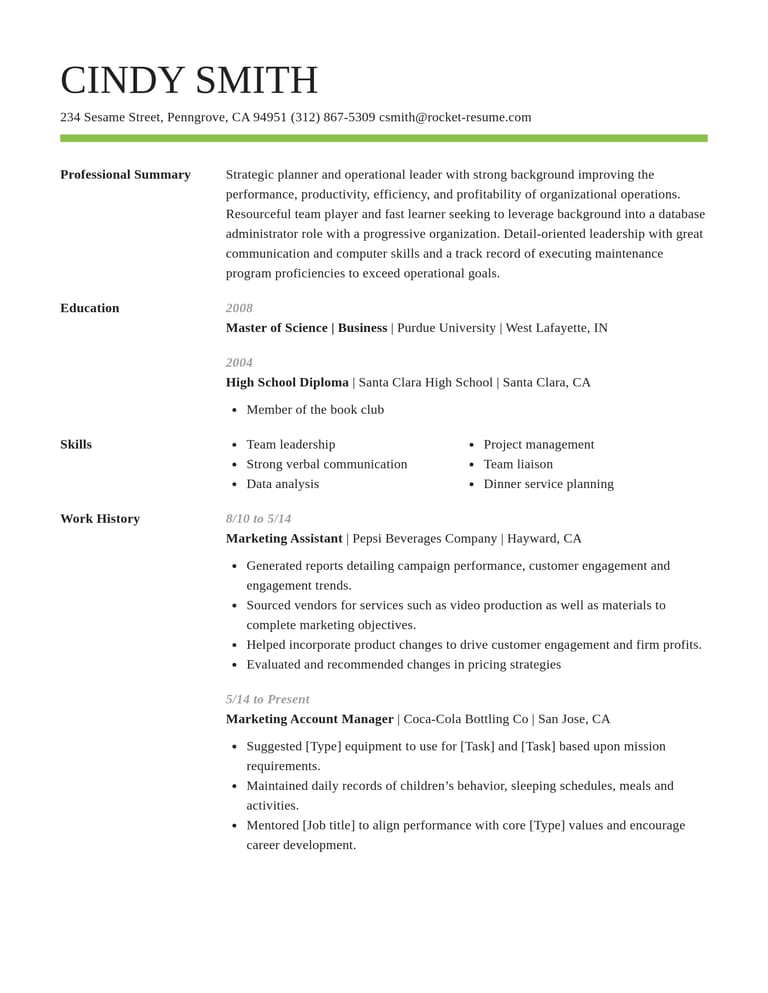
What the builder does for a student resume
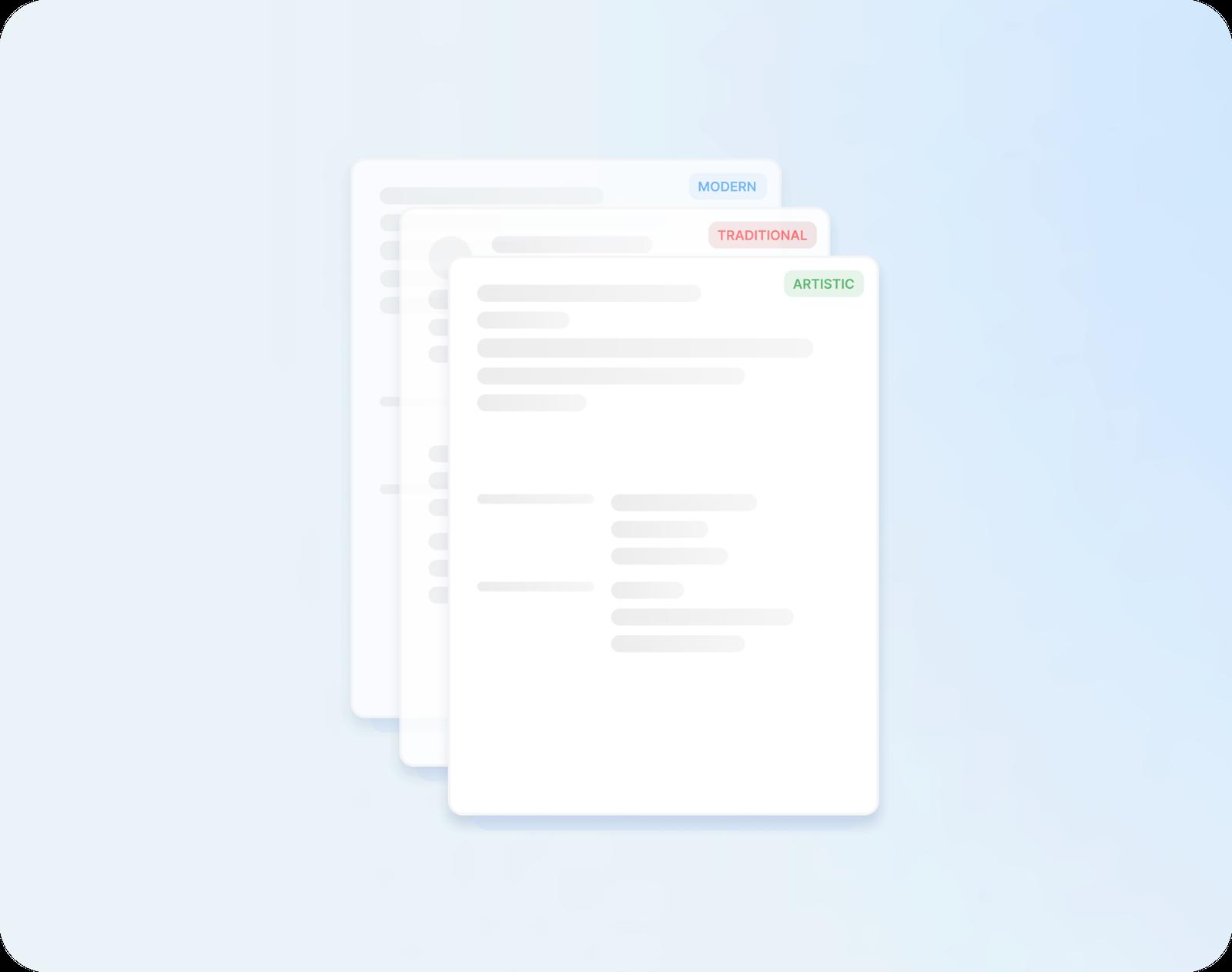
A clean layout from the first line
From your first entry, every design keeps the margins, headings and spacing in line. Move to another design later and nothing you wrote is lost.

Suggestions for student jobs
Add a campus or off-campus job, such as library assistant or server. Use relevant suggestions as a starting point and edit them to match what you did.

Choose what leads your resume
Give education more space when your course is most relevant. Lead with work experience when it provides stronger evidence for the role.

Copies for different postings
In My Library, make a copy for each posting and adjust it, so a research lab and a marketing internship each get their own version.
Why specific bullet points help a short resume
“Great resume builder, I'll be using it again”

“I needed a resume fast, great and very useful”

What students ask about college resumes
What is a college resume builder?
A college resume builder helps students and new graduates put their experience into a resume. You add your education and work, choose a design and edit the suggestions that fit.
Is a college resume the same as a resume for college applications?
They're different documents. A resume for college applications is written in high school for admissions and scholarships and leads with grades, activities and awards. A college resume is for internships and jobs once you're enrolled. For an admissions resume, see our high school resume templates.
Should I put my GPA on my resume?
Include it when requested or when it adds useful evidence of your academic work. Name the scale and label a major GPA clearly. Follow the application’s instructions about which GPA to provide.
Should I include high school on my college resume?
Keep high school details while they add relevant experience or achievements you can’t yet show from college. As you build college experience, give that space priority.
Can I put class projects and coursework on my resume?
Yes. In the builder, add them in the details box under your school: three to five classes that match the job on one line, then each project's name, its class or club and a line on what came of it. A longer list fits in Additional Information, renamed Projects.
Do unpaid internships and volunteer work count as experience?
Yes. List an unpaid internship like any other job, with your title, the organization, dates and results. Volunteer work can go under Work History when it matches the job, or in the optional Affiliations section when it's less related.
How long should a college resume be?
Aim for one page for internships and entry-level jobs, unless the application asks for something else. Keep the details most relevant to the role. An academic CV is a different document, so follow the programme or research role’s instructions if that’s what it requests.
Build from an example in your field
Featured this week



- 17 examples
- 160 examples
- 94 examples
- 38 examples
- 10 examples
- 68 examples






Show all industries (A–Z)Show fewer
- Aerospace & Defense, 8 examples
- Agriculture, 23 examples
- Apparel & Textiles, 13 examples
- Architecture, 15 examples
- Artificial Intelligence, 6 examples
- Arts & Entertainment, 24 examples
- Automotive, 21 examples
- Beauty & Personal Care, 17 examples
- Biotechnology & Life Sciences, 7 examples
- Business Services, 23 examples
- Chemical Engineering, 4 examples
- Childcare, 14 examples
- Construction, 106 examples
- Creative, 15 examples
- Customer Service, 17 examples
- Education, 94 examples
- Energy, 39 examples
- Environmental Science, 5 examples
- Finance, 63 examples
- Food & Beverage, 68 examples
- Government, 48 examples
- Healthcare, 160 examples
- Hospitality, 35 examples
- Human Resources, 18 examples
- Insurance, 10 examples
- Legal, 12 examples
- Logistics, 37 examples
- Manufacturing, 68 examples
- Marketing, 8 examples
- Media, 20 examples
- Military, 24 examples
- Mining & Metals, 9 examples
- Nonprofit, 8 examples
- Pharmaceuticals, 12 examples
- Public Relations, 10 examples
- Real Estate, 7 examples
- Retail, 38 examples
- Robotics, 11 examples
- Sales, 14 examples
- Security Services, 19 examples
- Social Services & Counseling, 21 examples
- Social Work, 14 examples
- Sports & Fitness, 96 examples
- Technology, 67 examples
- Telecommunications, 6 examples
- Tourism & Travel, 9 examples
- Transportation, 38 examples
- Veterinary, 9 examples
What job seekers say about building here
from 3,900+ reviews