Military resume examples for veterans moving into civilian jobs
Moving from active duty to a civilian job? These military resume examples show veterans how to turn rank, job codes and duties into plain terms, with training and teams described accurately.
- Resume examples for 24 military jobs
- Professional resume templates
- Easy editing as you go
How to write a military resume
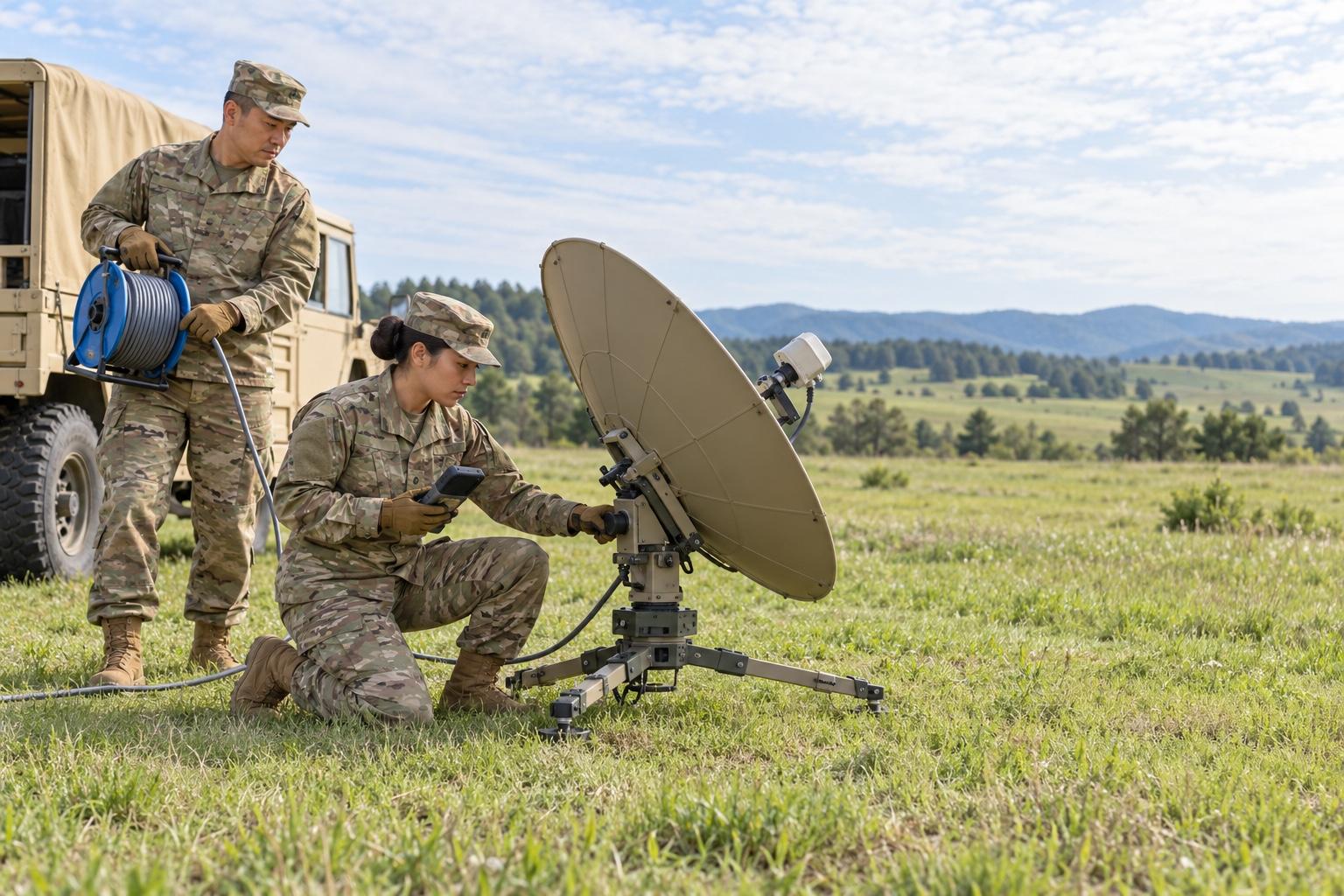
A civilian employer may not know what your rank, assignment or military abbreviation means. Your resume needs to explain the work in terms that fit the job you want. Start with duties such as maintaining equipment, coordinating operations or leading a team, then add the context a civilian needs. Training and awards can support that account when their relevance is clear and their civilian meaning is not overstated. Service members work in fields ranging from administrative and healthcare roles to protective service, vehicle and machinery mechanic work, and transportation and material handling, according to the Bureau of Labor Statistics overview of military careers.
Three things get lost when service duties go straight onto a civilian resume:
- Rank and military terms obscure the work a civilian employer needs.
- Service responsibilities have little context outside the military setting.
- Training is presented as though it automatically grants civilian qualifications.
Start with the civilian function
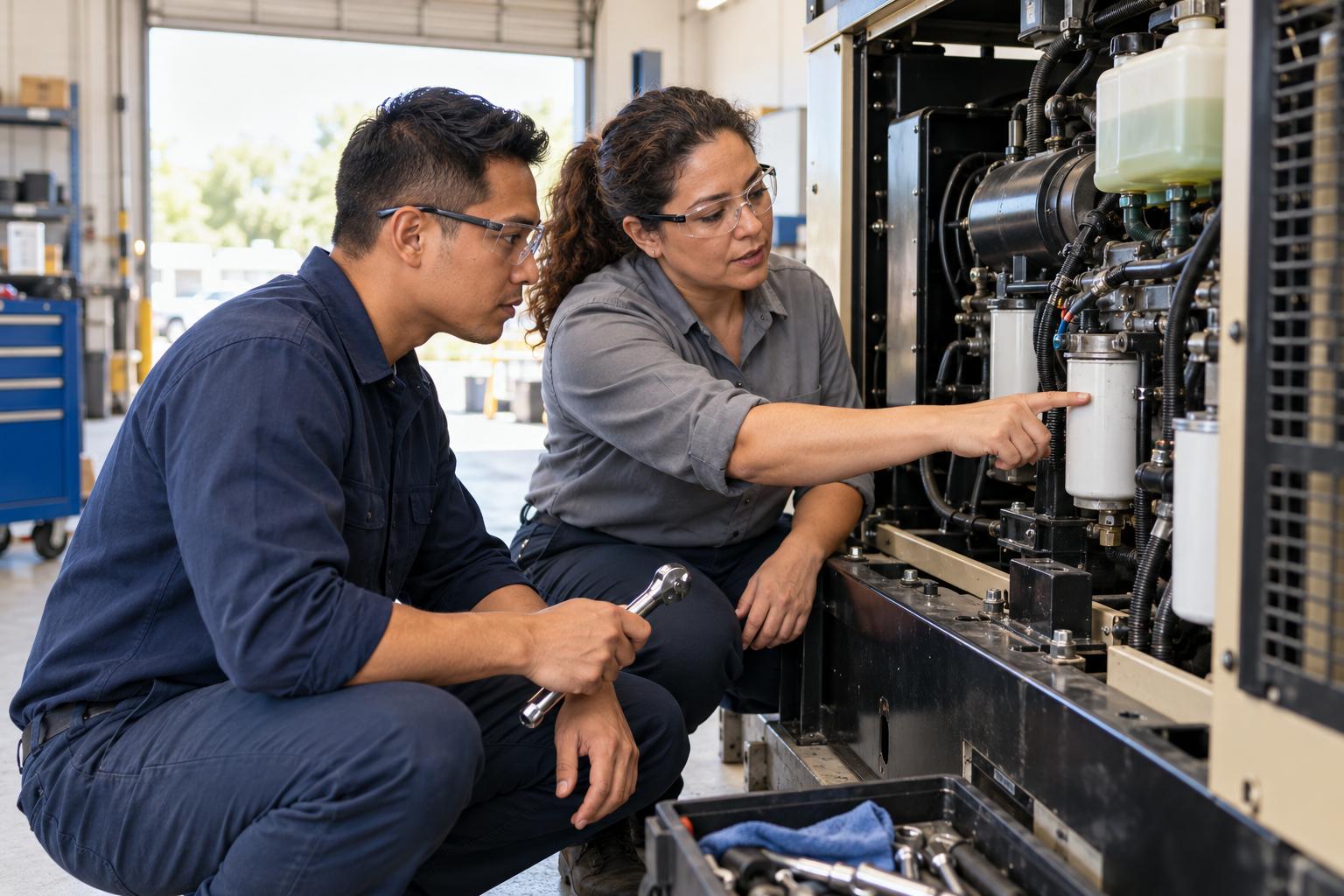
Choose the civilian role you want before rewriting your service history. Pick out the duties that match it, such as maintenance, operations, administration or team leadership. Your rank alone may not explain the work to a civilian hiring manager. See how other veterans did it in resume samples for civilian roles, and look through military and veteran job titles.
Build My Military ResumeSet your target civilian title in the builder first, since its suggestions follow the job you pick. Replace them with your own duties, spelling out acronyms a civilian employer may not know.
Translate responsibility into plain language
Describe duties in plain language and spell out unfamiliar terms. Give team size, equipment or operational scope when you can share it. Separate completed training and recognized credentials from experience that may not transfer to a civilian license. Start from the suggestions for maintenance, logistics and leadership duties and swap in your own details.
A former motor pool supervisor might write:
“Ran preventive maintenance for 45 tactical vehicles and cut overdue work orders from 30 to 6 in one year by setting a weekly inspection schedule.”
Build My Military ResumeTake one military duty and write it up as civilian work in a dated builder entry. Swap the abbreviation for the task or team it describes, then add scope you can share.
Pick the service work that fits the job
Pick duties that show how you solved problems, coordinated work or supported people. Keep classified and sensitive details out. If you are applying to a federal job, follow the current announcement and federal resume guidance instead of sending the same resume to each employer. For more help with the move, read our guides for veterans changing careers.
Schools, service training and certifications get their own space when you add an optional section in the builder. Describe how each one applied to your duties, and keep the ones that connect with the civilian job.
Make service history easy to understand
Assignments, dates and duty descriptions should be easy to follow, and relevant training easy to spot. Avoid long strings of unexplained abbreviations, and show growth through the work you owned as well as promotions in rank. Several templates have room for training and awards. Veterans whose skills fit security, logistics or government work can look at those civilian industries too.
Build My Military ResumeRead the live preview in the builder as someone with no military background would. If an abbreviation or a rank is doing the explaining in any entry, rewrite that entry in plain civilian terms.
How Rocket Resume helps
Turn rank and job codes into duties a civilian manager knows:
- Service in civilian terms. Keep service titles accurate and explain the matching function in familiar civilian terms within each dated entry.
- Context for your duties. Use a related suggestion to describe the team, equipment or operational task without leaning on a military term.
- Training and credentials, kept apart. Record service training and civilian credentials in separate entries, using verified names instead of assuming they are equal.
Go from service record to civilian resume in four steps:
- Choose a template. Pick a template with room for assignments, training and awards.
- Add work experience. Add each assignment with dates and describe the duties in civilian terms.
- Select relevant skills. Choose skill suggestions for the equipment, operations and team leadership you handled.
- Lead with your civilian goal. Open the summary with the civilian role you want, then your branch and years of service.
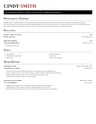
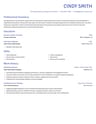
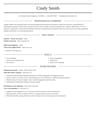
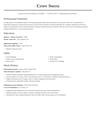
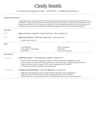
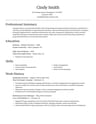
Military resume examples
Military jobs: examples, templates and guides
24 jobs- Infantryman
Tips
Turn patrols and field exercises into plain terms: soldiers led, ranges run, gear signed for.
- 0311 Infantry Rifleman
Resume
O*NET ties MOS 0311 to roles like patrol officer or security guard; write toward the one you want.
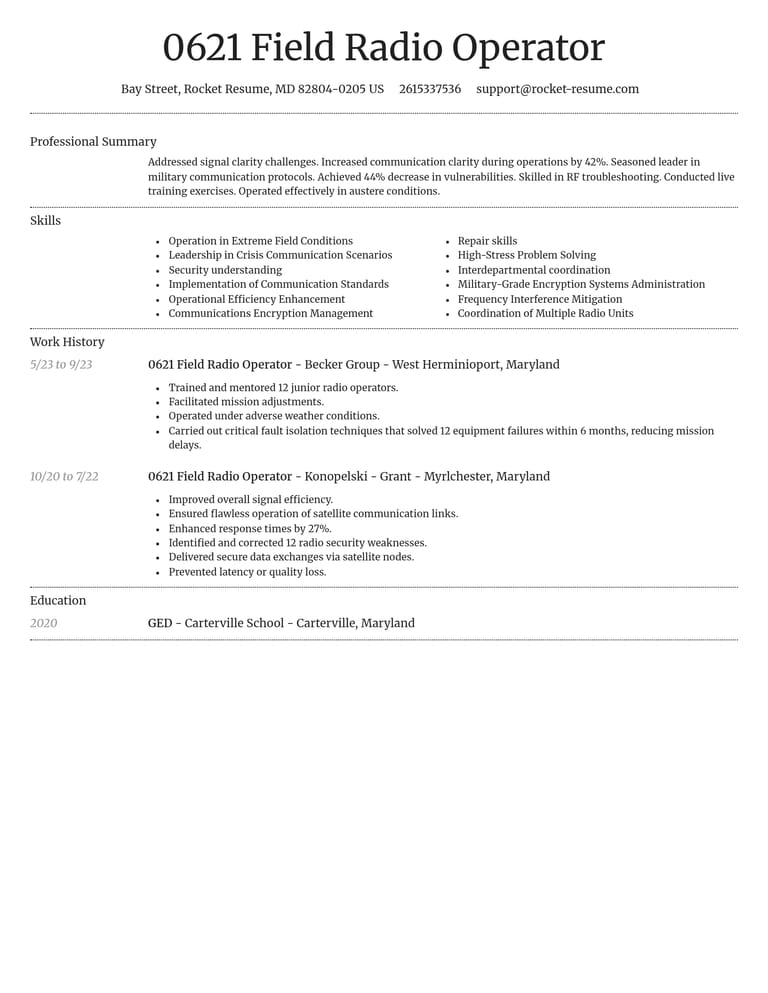
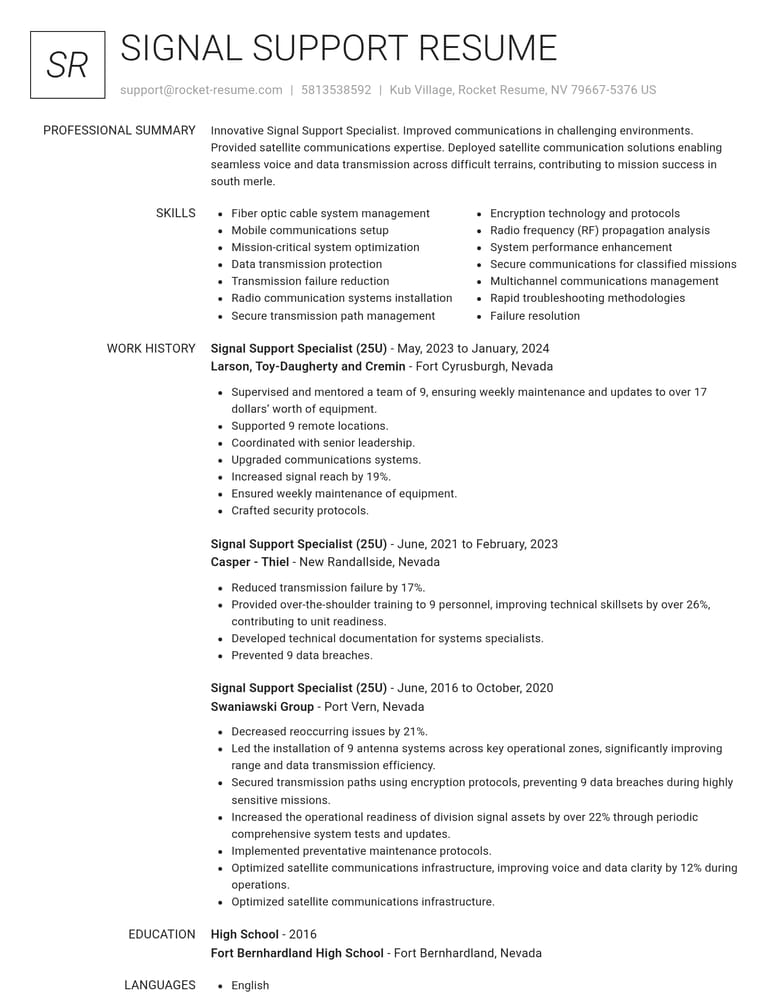
O*NET lists 0621 as Transmissions System Operator; give both names, then the nets you ran.
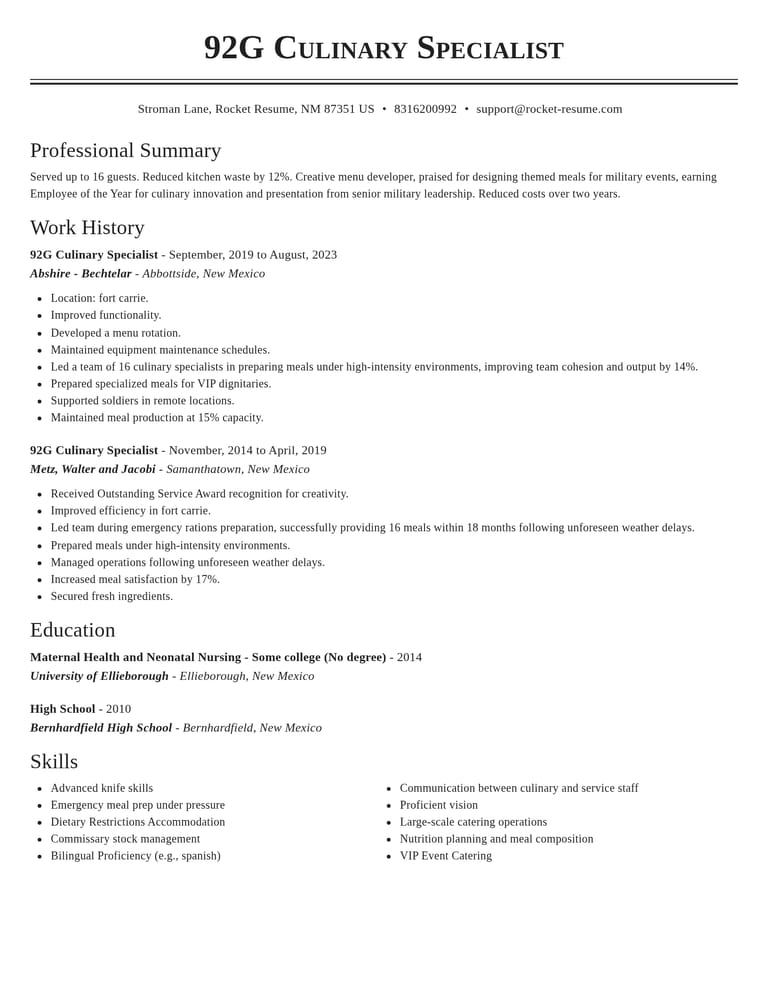
- 92G Culinary Specialist
Templates
Meals served a day, the size of the dining facility and any food safety certificate you hold.
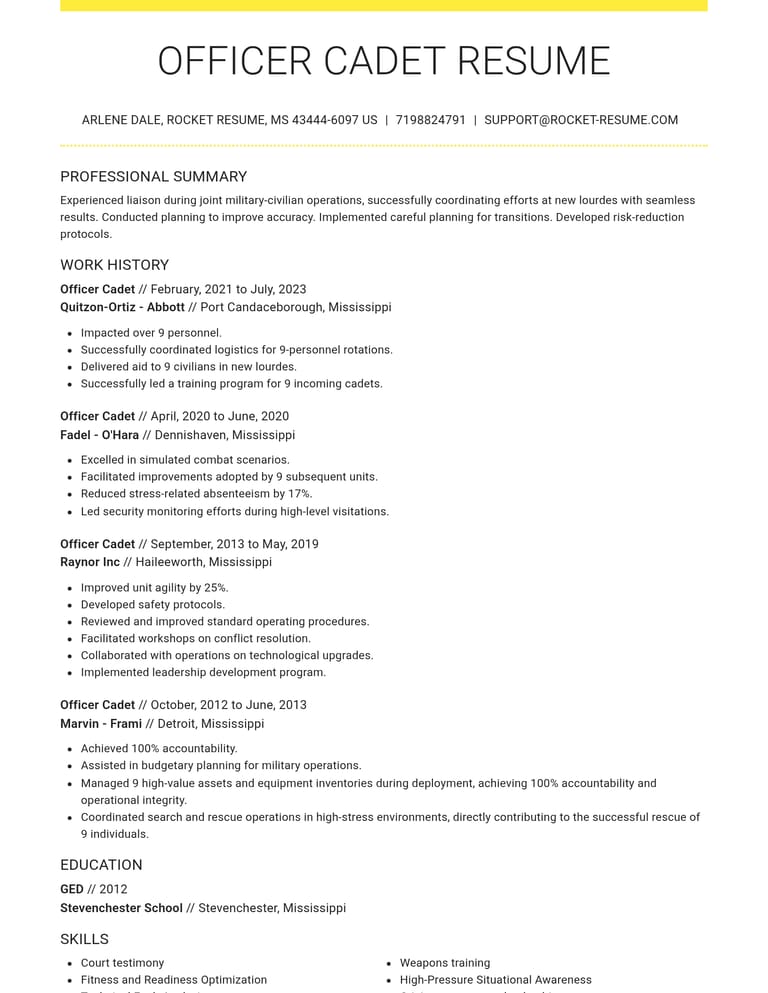
- Air Cadet
Resume
Squadron, highest cadet rank and courses passed, such as flight orientation or leadership.
Name the warehouse or supply room you ran, your inventory accuracy and shipments received.
- Combat Medic (68W)
Examples
EMT certification and its expiry go first; the Army requires it to finish 68W training.
Howitzer type, your crew position and the safety checks you ran before each fire mission.
- Human Resources Specialist (42A)
Templates
Personnel actions processed a month, the units you served and the HR systems you used.
- Infantryman (11B)
Examples
Army schools you finished, with years, then the civilian skill each one maps to.
Certifications like Security+ with dates, then the networks, users and tickets you handled.
Show all 24 military jobsShow fewer
Military resume skills, summaries and work history suggestions
Save suggestions for your resume
Tap the bookmark next to any suggestion to save it.
Saved itemsThe examples, skills, job titles and industries you save, together in one place.
RecommendedPages, searches and examples you used but haven’t saved.
In the builderYour saved suggestions show up in the resume builder, ready to add as you write.
You’re in controlYour saved items are private. Remove any of them at any time.
Showing 12 of 40
Mechanical systems knowledge
Materials transport
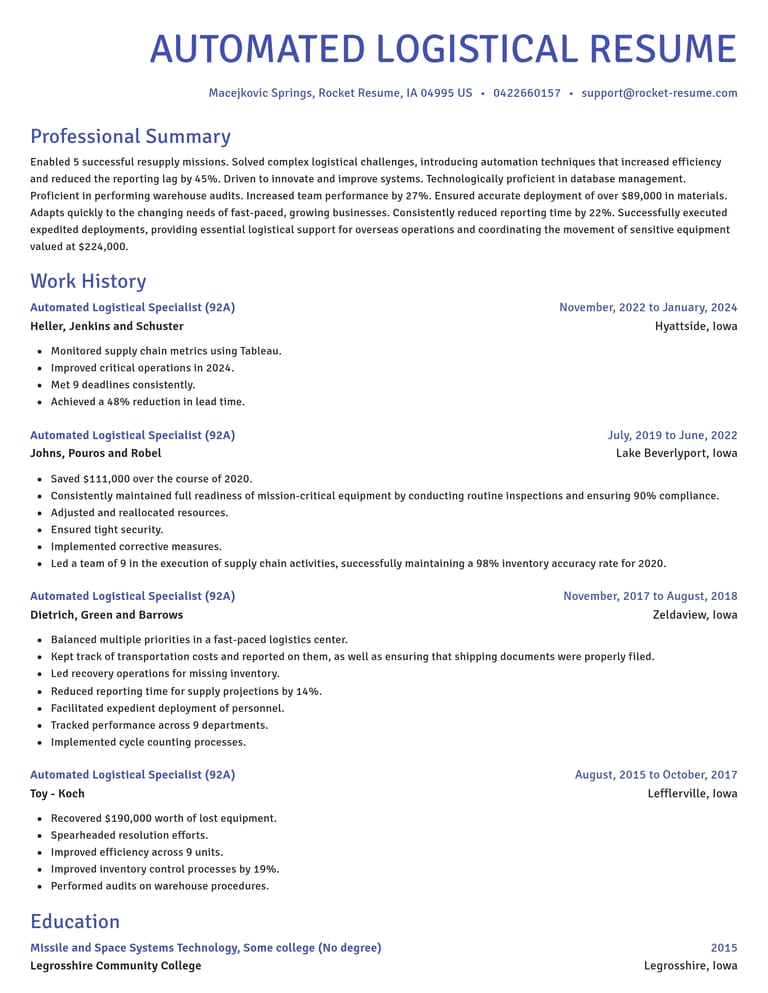
Automated Logistical Specialist (92A) resume examples
Work experience
Balanced multiple priorities in a fast-paced logistics center.
Achieved a [Percentage]% decrease in transportation costs.
Military encryption protocols
Mobile communications setup
Military Police Sergeant resume examples
Work experience
Awarded [Award] for demonstrating exceptional leadership during emergency response to an international terrorism threat in [Location].
Designed and implemented a training course for junior military police members on crisis intervention, improving response time by [Percentage]%.
Goal-setting and performance metrics tracking
Disaster relief resource allocation
Seaman Apprentice resume examples
Work experience
Actively participated in cross-departmental training.
Conducted routine inspections on deck equipment.
Technical expertise
Fostering team cohesion via readiness drills
Infantryman (11B) resume examples
Work experience
Coordinated and led [Number] reconnaissance missions in [Location], gathering critical intelligence that directly influenced operational success.
Coordinated and led [Number] reconnaissance missions.
Conflict resolution in operational settings
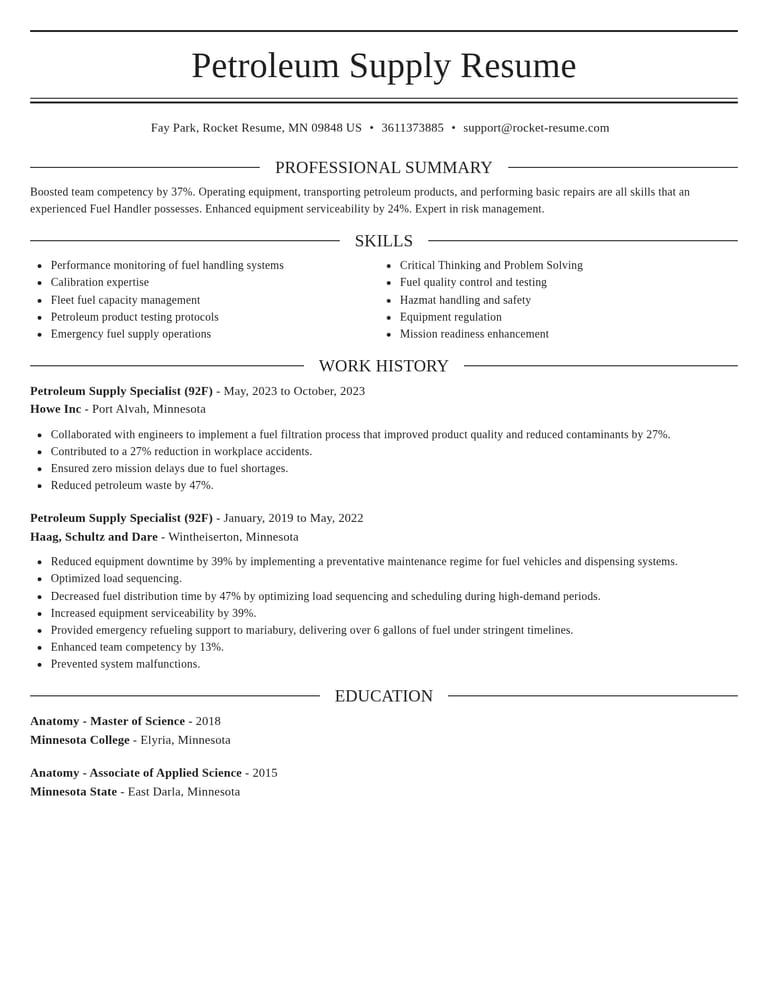
Fleet fuel capacity management
Wheeled Vehicle Mechanic (91B) resume examples
Work experience
Cut down maintenance delays by [Days]%.
Developed a preventative maintenance plan.
Dedicated to improving operations and efficiency by utilizing [Skill] and [Skill] abilities.
Adjusted techniques based on environmental conditions.
ROTC Cadet resume examples
Accomplishments
Facilitated smooth transition between leadership teams, reducing turnover disruption by [Percentage]% and improving operational continuity.
Led a crisis incident management simulation for [Number] cadets, ensuring adherence to proper protocols and reducing response time by [Percentage] minutes.
Designed peer-to-peer mentoring programs for junior cadets, increasing training efficiency by [Percentage]% and improving leadership pipeline.
Boosted readiness by [Percentage]%.
Consistently improved mission success rates by [Percentage]%.
Human Resources Specialist (42A) resume examples
Accomplishments
Worked with leadership to develop succession planning strategies for key roles, ensuring continuity in leadership with a [Percentage]% success rate in internal promotions.
Monitored and analyzed HR metrics on retention, turnover, and employee satisfaction for a workforce of [Number], resulting in a [Percentage]% improvement in workforce planning.
Implemented new applicant tracking software, reducing overall recruiting costs by $[Amount] annually and enhancing the candidate experience.
Combat Medic (68W) resume examples
Summaries
Adapted medical procedures for field operations.
Achieved [Percentage]% compliance in medical readiness.
Mess Management Specialist resume examples
Accomplishments
Managed a team of [Number] mess staff overseeing daily operations that served up to [Number] meals, reducing operational errors by [Percentage]%.
Conducted staff assessments to optimize team performance, resulting in a [Percentage]% improvement in service turnaround times.
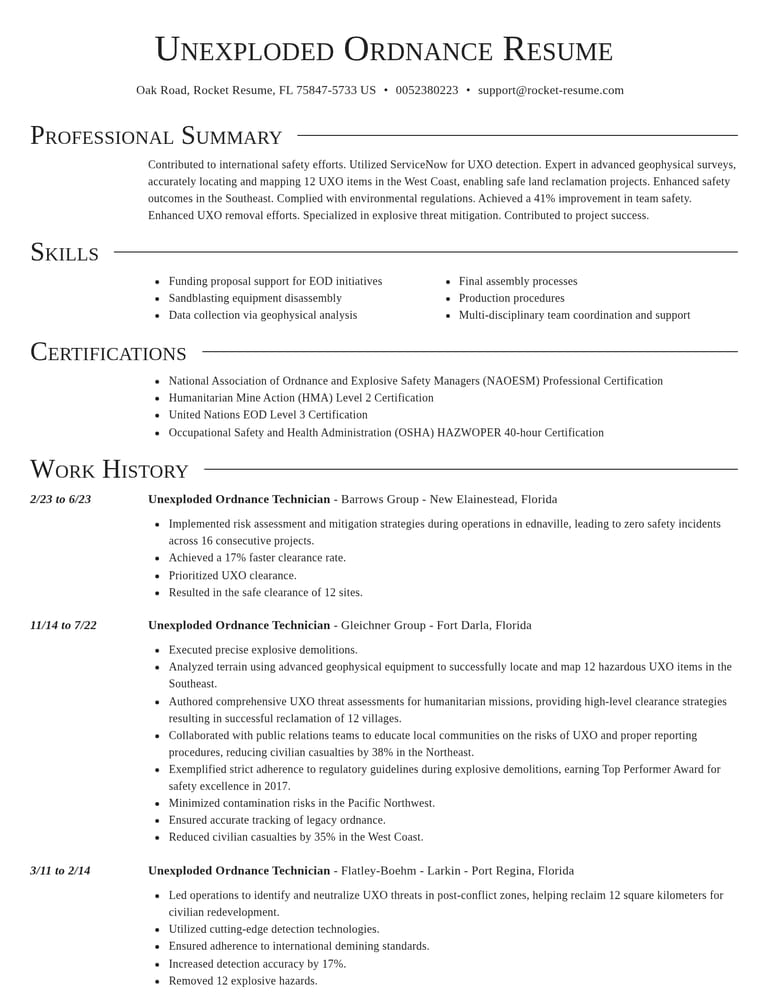
A dynamic leader with experience coordinating international demining efforts, resulting in faster and safer clearance of UXO-contaminated regions.
Adept at mission planning and execution.
0621 Field Radio Operator resume examples
Accomplishments
Fulfilled the role of primary radio operator for [Number] independent field missions, maintaining communications continuity under extreme conditions.
Developed and maintained radio communication networks supporting [Number] missions with [Percentage]% successful transmission accuracy.
Configured [Number] workstations with minimal impact.
Accomplished Information Technology Specialist focused on continuous system improvement, implementing new technologies to ensure peak performance.
Military resume questions
How do I list military service on a resume?
List military service in your resume's experience section like any other job, newest first: a civilian-style title, then branch, component (active duty, Reserve or National Guard), duty station and dates. Add your final rank with its paygrade, such as "Sergeant (E-5)." The Pentagon's rank insignia guide explains that paygrades mainly standardize pay and that one grade can hold two ranks: an Army corporal and a specialist both receive E-4 pay, but the corporal is expected to lead. So spell out who reported to you. If you still serve in the Guard or Reserve, keep that service as its own entry running alongside your civilian job, with any mobilization dated beneath it.
Which military awards, schools and credentials should go on my resume?
Keep the ones a civilian employer can connect to the job. A decoration earned for a specific achievement deserves a line if you add the reason, as in "Army Commendation Medal for rebuilding a battalion's supply records." Military schools fit under training, with their length and what they qualified you to do. Civilian credentials carry over as they are. Some are built into military training, such as the emergency medical technician certification Army 68W medics must earn to graduate, and the Army also funds others through Credentialing Assistance. List each with its issuer and expiration date. See Combat Medic (68W) examples.
How do I put ROTC on my resume, and what changes after commissioning?
While you're in the program, list ROTC under your college or as its own leadership entry: cadet rank and position, any scholarship, and the training events you've passed. In Army ROTC the big one is Advanced Camp, a 35-day summer field training event cadets must pass to qualify as officers. Navy ROTC students are midshipmen, and at graduation they are commissioned as Navy or Marine Corps officers. Once you're commissioned, the billets you hold become the experience section and ROTC shrinks to a line under education. Enlisted soldiers can also reach a commission through Green to Gold. Compare ROTC Cadet and US Naval Officer examples.
How do I list a SkillBridge internship on my resume?
Give it its own experience entry, with the host company as the employer, your role and the dates, and add "DoD SkillBridge" to the title line so a reader knows why it overlaps your last months in uniform. SkillBridge is a Defense Department program for transitioning service members, and the Department of Veterans Affairs says you need at least 180 continuous days on active duty, must be able to finish within your final 180 days of service, and need approval from your chain of command. Because it's civilian work in the field you're entering, write its bullets in that field's language. It's also your most recent job, so it can sit at the top.
Resume guides and career advice

In the US, a resume is the one- or two-page document most employers want, while a CV (curriculum vitae) is the long record of an academic career used for faculty, research and some medical positions. In the UK and much of Europe, CV is simply the everyday word for a resume, so for a job there, adapt your resume's length, spelling, paper size and personal details to local custom. If a US employer outside academia asks you for a CV, send your resume unless its instructions call for more detail.

Nov 15, 2026
Use AI to improve a resume built from your own facts, checking each suggestion for accuracy and voice. Remove private information before sharing, work against a specific posting, and review the finished resume before sending.

Explore other industries
Related to Military





All industries
This page’s industryRelated to Military
- Aerospace & Defense, related industry, 8 examples
- Agriculture, 23 examples
- Apparel & Textiles, 13 examples
- Architecture, 15 examples
- Artificial Intelligence, 6 examples
- Arts & Entertainment, 24 examples
- Automotive, 21 examples
- Beauty & Personal Care, 17 examples
- Biotechnology & Life Sciences, 7 examples
- Business Services, 23 examples
- Chemical Engineering, 4 examples
- Childcare, 14 examples
- Construction, 106 examples
- Creative, 15 examples
- Customer Service, 17 examples
- Education, 94 examples
- Energy, 39 examples
- Environmental Science, 5 examples
- Finance, 63 examples
- Food & Beverage, 68 examples
- Government, related industry, 48 examples
- Healthcare, 160 examples
- Hospitality, 35 examples
- Human Resources, 18 examples
- Insurance, 10 examples
- Legal, 12 examples
- Logistics, 37 examples
- Manufacturing, 68 examples
- Marketing, 8 examples
- Media, 20 examples
- Military, this page’s industry, 24 examples
- Mining & Metals, related industry, 9 examples
- Nonprofit, 8 examples
- Pharmaceuticals, 12 examples
- Public Relations, 10 examples
- Real Estate, 7 examples
- Retail, 38 examples
- Robotics, 11 examples
- Sales, 14 examples
- Security Services, related industry, 19 examples
- Social Services & Counseling, 21 examples
- Social Work, 14 examples
- Sports & Fitness, 96 examples
- Technology, 67 examples
- Telecommunications, 6 examples
- Tourism & Travel, 9 examples
- Transportation, related industry, 38 examples
- Veterinary, 9 examples