Insights to help you get hired faster
Tips, strategies, and expert advice to help you build a stronger resume, stand out to recruiters, and land your next role with confidence.

Latest resources
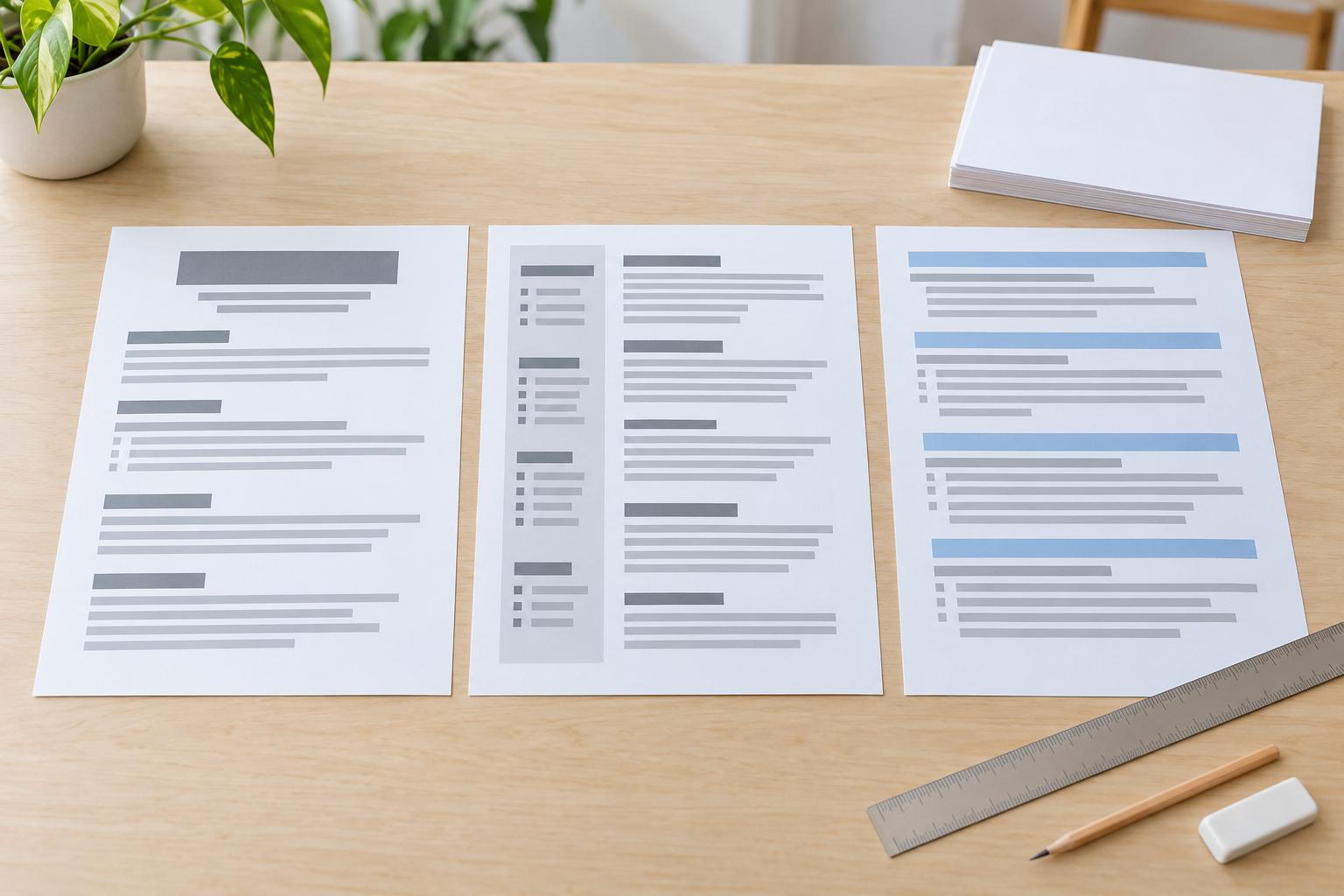

See what a properly formatted resume looks like, choose a chronological, hybrid or functional resume, and set up the page and the file before you send it.

Oct 14, 2026
Most resumes need five main sections: contact details, a summary or objective, work experience, skills and education. Add optional sections such as certifications or awards when they show you fit the job, and if you're short on work experience, let school, part-time jobs, volunteering and projects fill the page. Leave off references, a photo, your date of birth, salary history and anything else that doesn't help an employer judge your work.
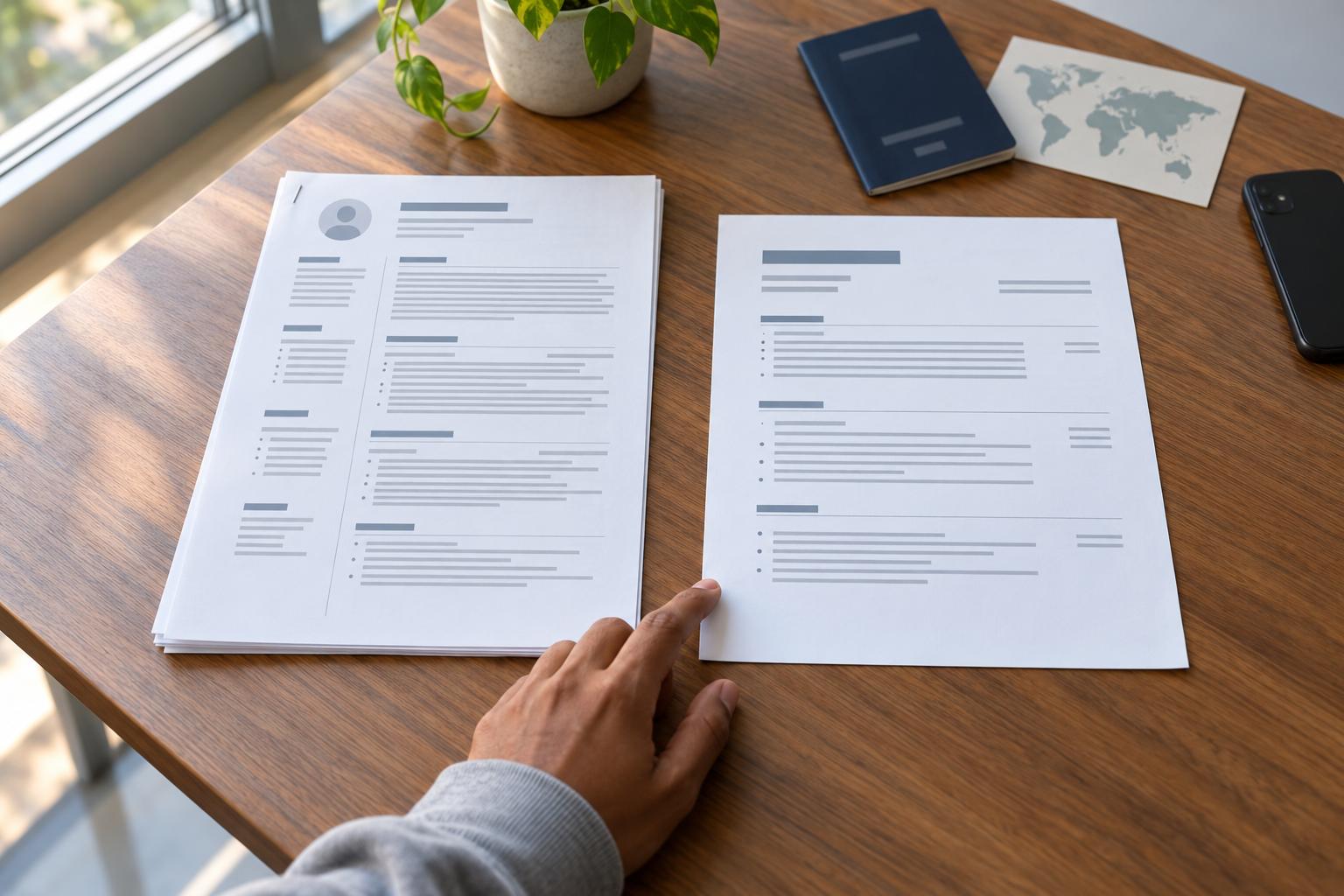
In the US, a resume is the one- or two-page document most employers want, while a CV (curriculum vitae) is the long record of an academic career used for faculty, research and some medical positions. In the UK and much of Europe, CV is simply the everyday word for a resume, so for a job there, adapt your resume's length, spelling, paper size and personal details to local custom. If a US employer outside academia asks you for a CV, send your resume unless its instructions call for more detail.

Before you write, pull together your job dates, results, education and the posting for the job you want. Fill in your contact details, work history, education and skills in that order, building each bullet from an action verb and a result. Write the summary last, even though it goes at the top, then tailor the resume to the job and proofread it before you apply. The same steps work for a first resume, with school, volunteering and part-time work counting as experience.
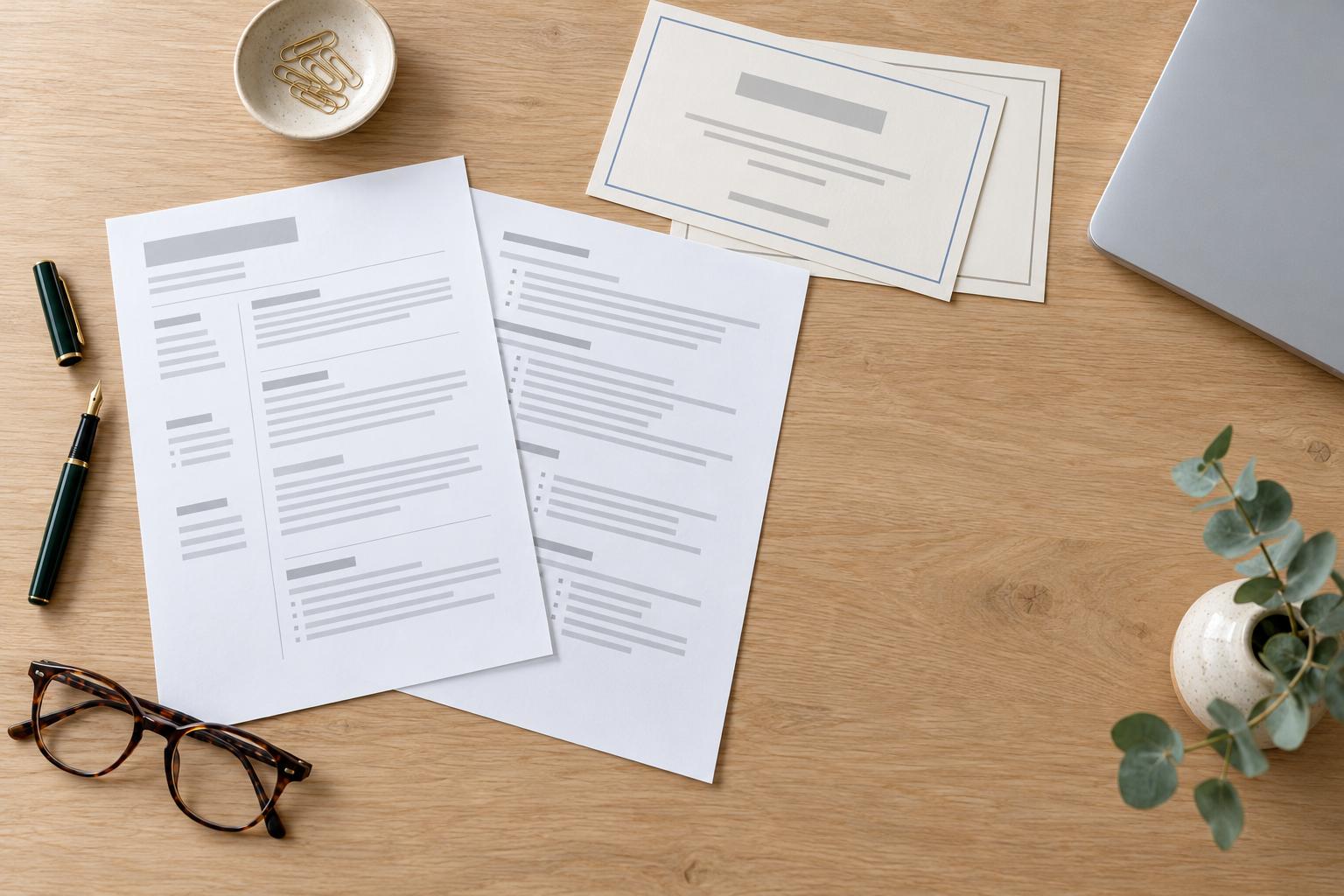
Start by deciding which document you need: a job CV for most jobs outside North America, an academic CV for faculty, research and grad school applications, or a resume for other jobs in the US and Canada. List everything newest first, keep most job CVs to two pages and let an academic CV run as long as your record needs. Show what you achieved in each role with numbers you can back up, tailor the CV to each application and send it as a PDF unless the employer wants a Word file.

Updated Sep 10, 2026


Updated Aug 20, 2026



Updated Aug 22, 2026



Updated Aug 7, 2026

Updated Aug 6, 2026

Updated May 15, 2026

Updated Jan 27, 2026