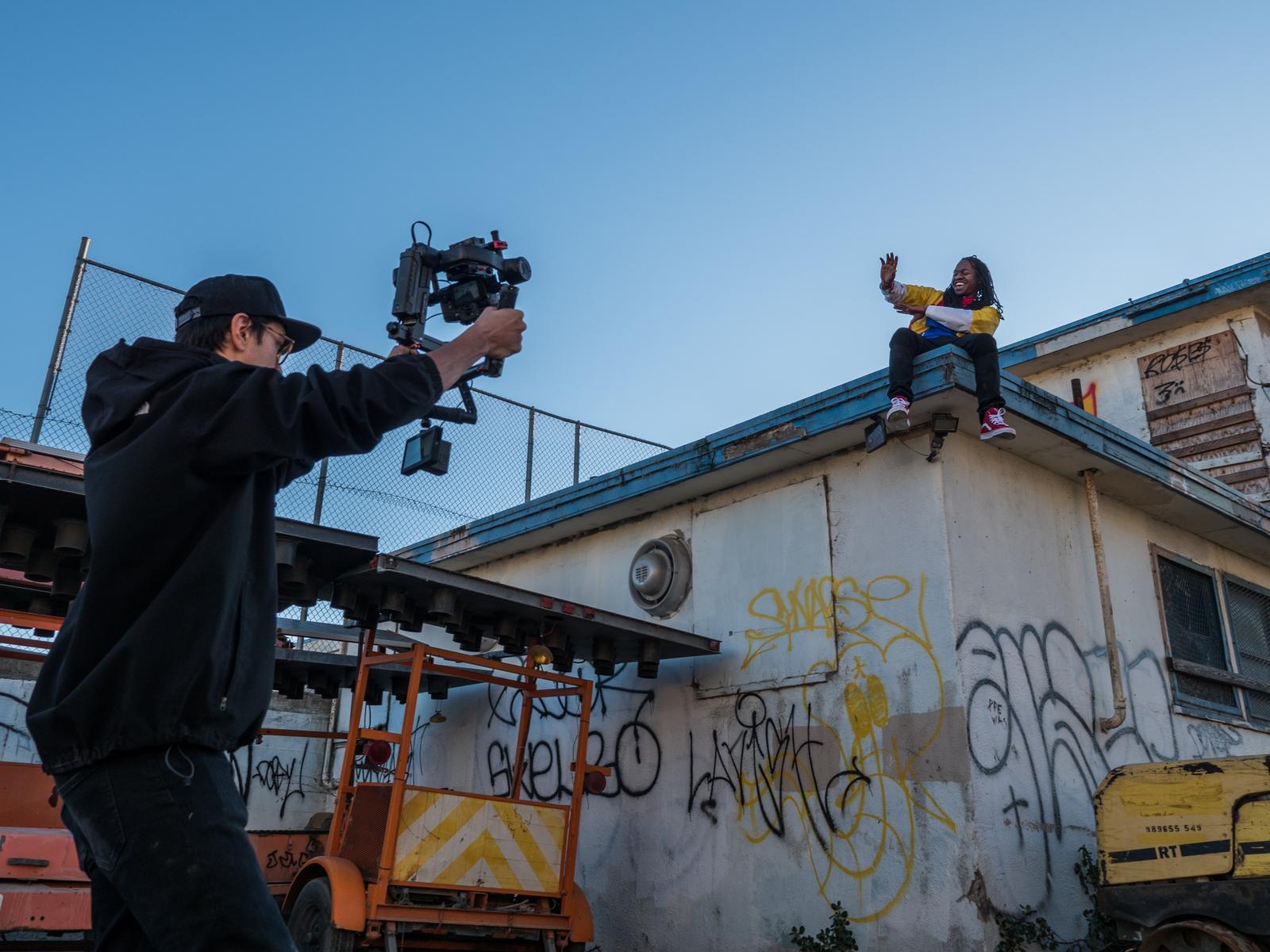
How to Become a Musician on YouTube
Learn what musicians’ work involves, what U.S. copyright guidance says about recordings and covers, and how to present your music when applying.


Prepare a written account of your music
For opportunities that request one, summarize relevant performance, training and project experience.
Explore the CV makerBecoming a musician involves extensive training and regular practice; the Bureau of Labor Statistics’ Occupational Outlook Handbook includes performing for recordings and promoting a career among musicians and singers’ typical duties. This article also draws on the U.S. Copyright Office, CareerForce from the Minnesota Department of Employment and Economic Development, and O*NET OnLine from the U.S. Department of Labor. It leaves out how to grow a channel, how YouTube recommends or pays for videos, and what musicians earn there, because those publishers do not cover those subjects.
Where posted recordings fit into a musician’s work
The Bureau of Labor Statistics’ Occupational Outlook Handbook describes musicians and singers as playing instruments or singing for live audiences and in recording studios. Its typical duties include practicing to improve technique, rehearsing for performances, performing for audiences and recordings, auditioning for music groups, finding and booking performance locations, and promoting a career through a website or social media presence, photo shoots, or interviews.
O*NET OnLine, from the U.S. Department of Labor, says musicians and singers may perform on stage, for broadcasting, or for sound or video recording. Its tasks include practicing individually or with other musicians, learning suitable music, listening to recordings to improve skills, making or participating in recordings, arranging and editing music to fit its style and purpose, and promoting their own or their group’s music through media interviews and other activities. These are tasks across the occupation, not a checklist that every musician performs.
O*NET OnLine, from the U.S. Department of Labor, lists YouTube under video creation and editing software for the occupation. This article’s reading is that posting recordings on YouTube can carry parts of the work: performing for recordings and maintaining an online presence that promotes the music. Posted recordings do not replace the auditions, live performances, and booking work in the Bureau of Labor Statistics’ Occupational Outlook Handbook.
Training, practice, and entering the occupation
Musicians and singers typically do not need formal postsecondary education to enter the occupation, according to the Bureau of Labor Statistics’ Occupational Outlook Handbook. They need extensive training and regular practice to acquire their skills. Those pursuing some genres, such as classical or opera, may choose a bachelor’s or higher degree.
The Bureau of Labor Statistics’ Occupational Outlook Handbook says musicians and singers typically begin singing or learning to play an instrument at a young age by taking private lessons and school classes. As they advance, they may participate in music camps, festivals, or fellowships. Some business courses, such as marketing, may help with learning the self-promotion often required of professional musicians and singers.
The Bureau of Labor Statistics’ Occupational Outlook Handbook gives the following as examples of important qualities for the work:
Quality | What the Bureau describes |
|---|---|
Dedication | Auditioning can be frustrating because getting hired may take many auditions; musicians and singers must be determined to continue auditioning after receiving rejections. |
Discipline | Talent is not enough for most musicians and singers to find employment; they must practice and rehearse consistently to improve technique, style, and performance. |
Interpersonal skills | Musicians and singers need to work well with people such as agents, producers, and conductors, build connections, and create good working relationships. |
Musical talent | Professional musicians or singers must have superior musical abilities. |
Promotional skills | To build a fan base, musicians and singers need to promote their music and performances through local communities, word of mouth, and social media. |
What to expect from work as a musician
The Bureau of Labor Statistics’ Occupational Outlook Handbook says musicians and singers often have irregular schedules. Many find only part-time or intermittent work and may have long periods of unemployment between jobs. The stress of continually looking for work may require accepting full-time jobs in other occupations while working part time in music. The Bureau also lists self-employed workers among the occupation’s largest employers.
Advancement, in the Bureau of Labor Statistics’ Occupational Outlook Handbook, means becoming better known, finding work more easily, and earning more for each performance. Successful musicians and singers often rely on agents or managers to find jobs, negotiate contracts, and develop their careers. The Handbook carries pay and outlook figures for the occupation as a whole; this article prints none.
What copyright protects when you record
The U.S. Copyright Office says protection begins when an original work is “fixed” in a tangible medium—for example, when you record a song or write its music in notation. The Office says you do not need to do anything else for copyright protection to exist.
According to the U.S. Copyright Office, owning your music gives you rights to make and sell copies, distribute copies, create new works based on it, and, with some limitations, publicly perform or display it. Read the Office’s page for those limitations.
The U.S. Copyright Office says recording a song may create a musical work and a sound recording. The recorded sounds and the content within them are separate copyright-protected works, subject to different rules and commonly owned and licensed separately. The Office distinguishes them this way:
Work | What it contains | Who creates it |
|---|---|---|
Musical work | The underlying composition and any accompanying lyrics | Usually a songwriter or composer |
Sound recording | Musical, spoken, or other sounds fixed in a recording medium | Can be created by the performer, producer, or others |
For information about royalties, the U.S. Copyright Office directs readers to its handout How Songwriters, Composers, and Performers Get Paid.
Deciding whether to register your music
The U.S. Copyright Office says registration adds benefits to the protection that already exists when a work is fixed. It creates a public record of ownership and, for U.S. works, provides access to federal courts in cases of infringement.
Applying requires an application, a filing fee, and a copy of the work, according to the U.S. Copyright Office. The Office lists the Standard Application for registering an individual sound recording or musical work and directs readers to its help team for assistance choosing an application option.
The U.S. Copyright Office also says you may want to consider submitting a trademark application for your band name to the U.S. Patent and Trademark Office, in addition to registering your sound recordings and musical works.
Checking a cover song before posting
The U.S. Copyright Office warns against assuming you can freely use another artist’s work. Generally, the Office says using another artist’s sound recording or musical work requires using a work already in the public domain; getting permission directly from the copyright holder or licensing the work under the licensing contract’s terms; or relying on a statutory limitation or exception, such as fair use.
For a cover song, the U.S. Copyright Office tells readers to always compare all intended uses with the rights holder’s rights and make sure each use is lawful. Posting your recording is an intended use to include in that comparison. The Office’s page gives general U.S. copyright information and does not mention video or any site; check your own intended uses against its guidance there.
The U.S. Copyright Office also says there is no hard and fast minimum amount of music you can use without permission when permission is needed. Trying and failing to contact the rights holder does not substitute for permission. Copyright owners often have representatives handling licensing; the Office says these might be, for example, a music publisher or performing rights organization.
If someone uses your music unlawfully
The U.S. Copyright Office says you have the right to pursue legal action if your work is used unlawfully, without permission and outside a statutory exception or limitation such as fair use. Generally, copyright lawsuits are decided in federal court; for a U.S. work, the Office says registration is required before bringing an infringement lawsuit there.
The U.S. Copyright Office describes its Copyright Claims Board as a voluntary forum for copyright disputes, intended as a cost-effective and streamlined alternative to federal court. Using it also requires having filed a copyright registration application. Consult the Office’s page for the rest of its guidance on responding to unlawful use.
Showing your recordings when you apply
The Bureau of Labor Statistics’ Occupational Outlook Handbook includes auditioning for positions in orchestras, choirs, bands, and other music groups among typical duties. For degree programs pursued by some classical and opera musicians, it says applicants typically must submit recordings or audition in person and sometimes must do both. That statement concerns those programs; it does not establish what a particular application accepts.
CareerForce, from the Minnesota Department of Employment and Economic Development, describes a portfolio as documents, photos, graphics, or other examples of someone’s work. Its general advice to job seekers says sharing a portfolio with a prospective employer can be a way to stand apart from candidates who may not prepare additional documentation of their past work. This article’s application of that idea is to treat your recordings as examples of your musical work.
CareerForce, from the Minnesota Department of Employment and Economic Development, lists potential portfolio content including project outlines and work samples; articles; photos, videos, or other documentation of presentations or public speaking; diplomas, certifications, transcripts, and special licenses; evidence of workshops and conferences attended; references, evaluations, recommendation letters, and testimonials; and information about awards and honors. Its caution is to include only work you played a significant role in creating and to follow confidentiality, privacy, or other requirements for work created while employed elsewhere.
If an opportunity calls for a written music profile, organize your experience with resume outline ideas.
When you turn to a resume, you can review arts and entertainment resume examples. The example below is this article’s own, using activities described by the Bureau of Labor Statistics’ Occupational Outlook Handbook and O*NET OnLine from the U.S. Department of Labor; none of the publishers named in this article provides resume wording for musicians. Replace the activities with your own experience and keep only what you have done.
Example resume entry to adapt
Musician — recordings posted on YouTube
- Practiced and rehearsed music for recorded performances.
- Arranged and edited music to fit the intended style and purpose.
- Performed music for recordings and promoted my music through a social media presence.
Before you post a recording
Use this checklist to revisit the Bureau of Labor Statistics’ Occupational Outlook Handbook’s description of practice in the occupation and the U.S. Copyright Office’s guidance on rights:
- Rehearse the music you plan to perform.
- Distinguish the musical work from the sound recording when reviewing ownership and rights.
- For a cover song, compare every intended use with the rights holder’s rights, including posting the recording.
- When permission is needed, a short excerpt does not remove that need. Do not treat an unanswered permission request as permission.
- Consider the registration benefits and application options the U.S. Copyright Office describes.
This article summarizes and adapts guidance from the Minnesota Department of Employment and Economic Development on CareerForce.MN.gov. CareerForce.MN.gov content is licensed under CC BY 4.0.
This page includes information from O*NET OnLine by the U.S. Department of Labor, Employment and Training Administration (USDOL/ETA). Used under the CC BY 4.0 license. O*NET® is a trademark of USDOL/ETA. Rocket Resume has modified all or some of this information. USDOL/ETA has not approved, endorsed, or tested these modifications.
Match the profile to the opportunity
Choose details relevant to the musical work or collaboration you are pursuing.
Explore CV examples