Build a great resume with
Show what you handled and what changed because of your work. Start with Rocket Resume's job examples, add your own details and build a resume that fits the opening.
- Resume examples to make your own
- Help turning everyday duties into achievements
- Focus on the experience the job needs
- Templates that organize your experience

Danny
Apr 2023
“I'll recommend it to friends and family.”

Dayani F.
Jan 2025
“Everything about this tool is amazing, I love it”

Kelvin P.
Jul 2025
“You guys were amazing, I got a new job.”

John W.
Nov 2022
“You made my resume professional”
from 3,900+ reviews


What makes a resume specific and convincing
A job title tells an employer what role you held. The details explain what you did there. A useful resume makes those details clear: the responsibility you handled, the scale of the work and any result you can support. Rocket Resume's examples give you a starting point to edit.
What separates a great resume from an average one?
Relevant details that support your fit for the opening. Instead of leaving the reader to guess what a job title involved, describe the work and its outcome. When there is no measured improvement, show the responsibility or scale. For more ideas, read our guide on how to make your resume stand out.
How do I turn duties into achievements?
Start with a task you actually did. Add a result when you can support it, or explain the responsibility more clearly. The examples below are illustrative, not customer achievements. Replace each placeholder with your own facts; if you cannot verify a number, leave it out.
- Duty: "Responsible for staff scheduling." More specific: "Built weekly schedules for [number] staff across [number] shifts."
- Duty: "Ran sound for live events." More specific: "Updated the stage patch list so crew members could identify connections during changeovers."
- Duty: "Answered customer emails." Result, if supported: "Reduced average email reply time from [before] to [after] by [specific change]."
Search your job title in the builder for examples to adapt. Keep those that fit and add your own responsibilities or results.
How do I add numbers to a resume?
Use a number wherever it tells the reader how many, how much, how often or how fast. Think of people trained or served, budgets, sales, projects delivered, hours saved and rankings. If you can't pin down the exact figure, a fair estimate with "about" or "more than" works, as long as you could back it up in an interview. Keep any line to the one or two figures that matter most, so none of them gets lost.
What goes in a focused resume summary?
Write two or three short sentences about the role you want, your relevant experience and a strength you can support. Draft the summary after your work history so you can choose from the evidence already there. An illustrative example is "Event production coordinator with [number] years of touring experience. Coordinated schedules and crew handoffs for a [number]-date tour." Use only details that match your work. Not sure whether to use a summary or an objective? Our FAQ covers it.
How do I match a resume to each posting?
Read the requirements and choose the experience that shows you meet them. Use the posting's terms when they accurately describe your skills, but keep your actual job titles and qualifications. Put relevant details early in each description. The hiring research gives wider context, and these good and bad resume examples show the difference on the page.
In Rocket Resume, you can keep a master resume in My Library and duplicate it there for each opening. Then change only what that job needs, using the builder tools below to edit your work descriptions.
Does a resume's design make it great?
Use a layout that makes your jobs, dates and qualifications easy to find. It should support the content, with enough room for the relevant detail. This article on what to weigh in a resume's design goes further. All the designs in our template gallery let you compare different ways to present your experience. Check your own text in the design before settling on it.
Put these habits to work in Rocket Resume
Rocket Resume guides you through the sections and offers job examples you can adapt. Add the facts that belong to your work, then review how the resume reads as a whole. You can also read other job seekers' reviews further down. Here's the route through the builder:
- Choose your level of experience, then pick a design. Swapping it later keeps your text.
- Enter your latest job and look for examples that match your responsibilities.
- Rework the examples with your own responsibilities and results, keeping the details that fit this opening.
- Read each line in the preview, download your finished resume and start applying.
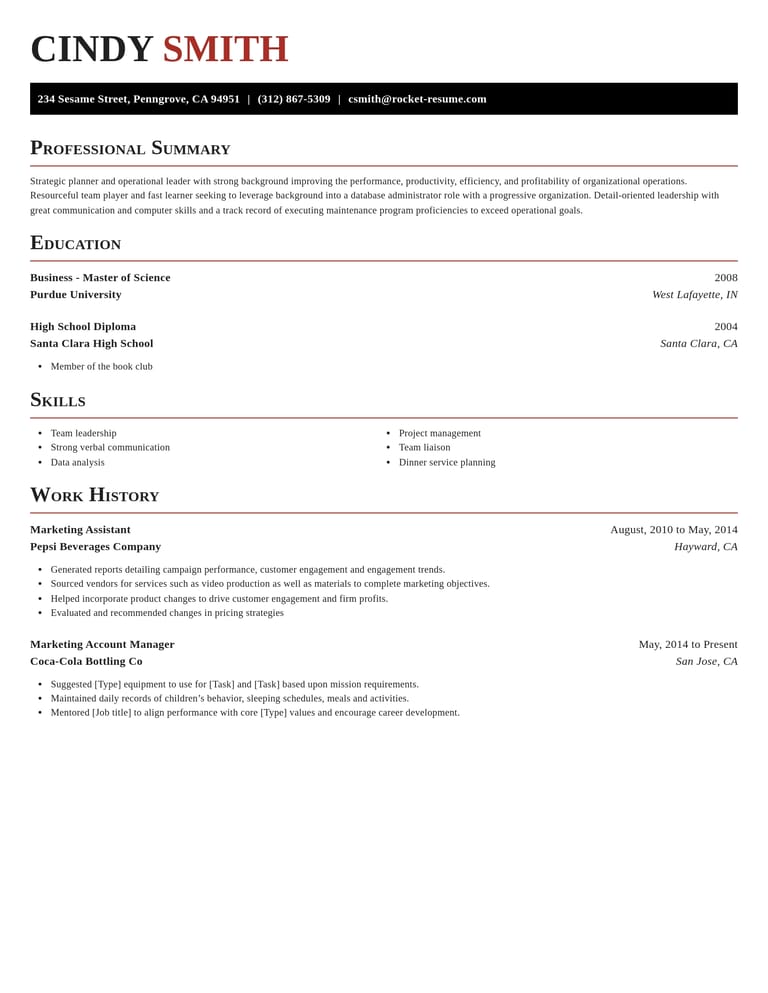
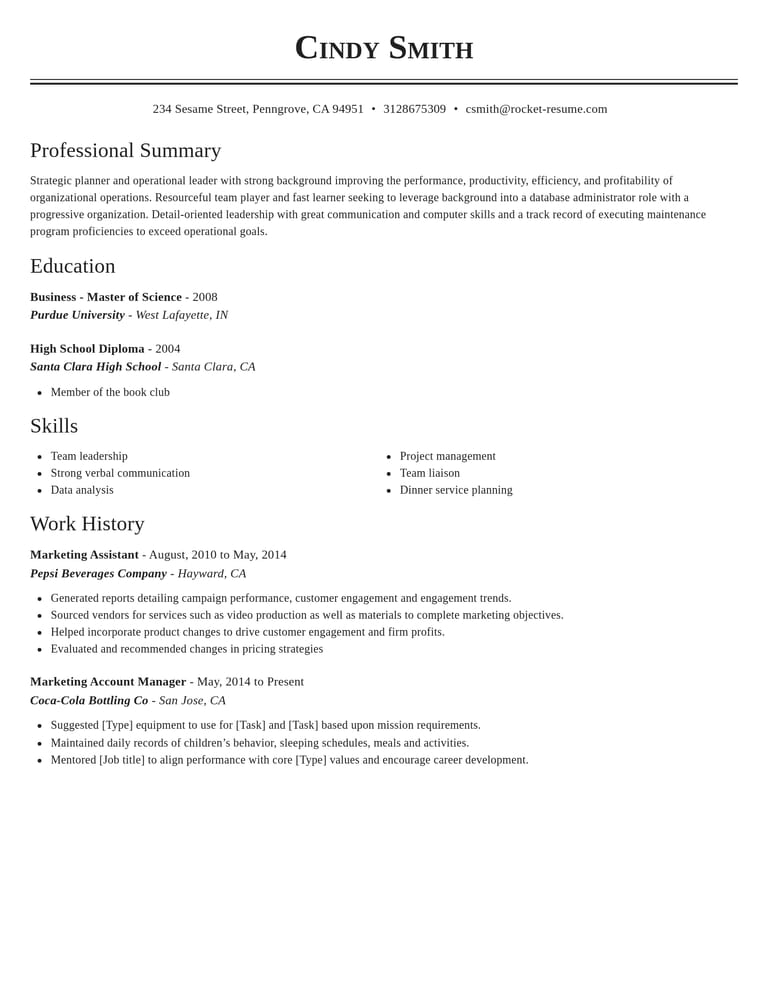
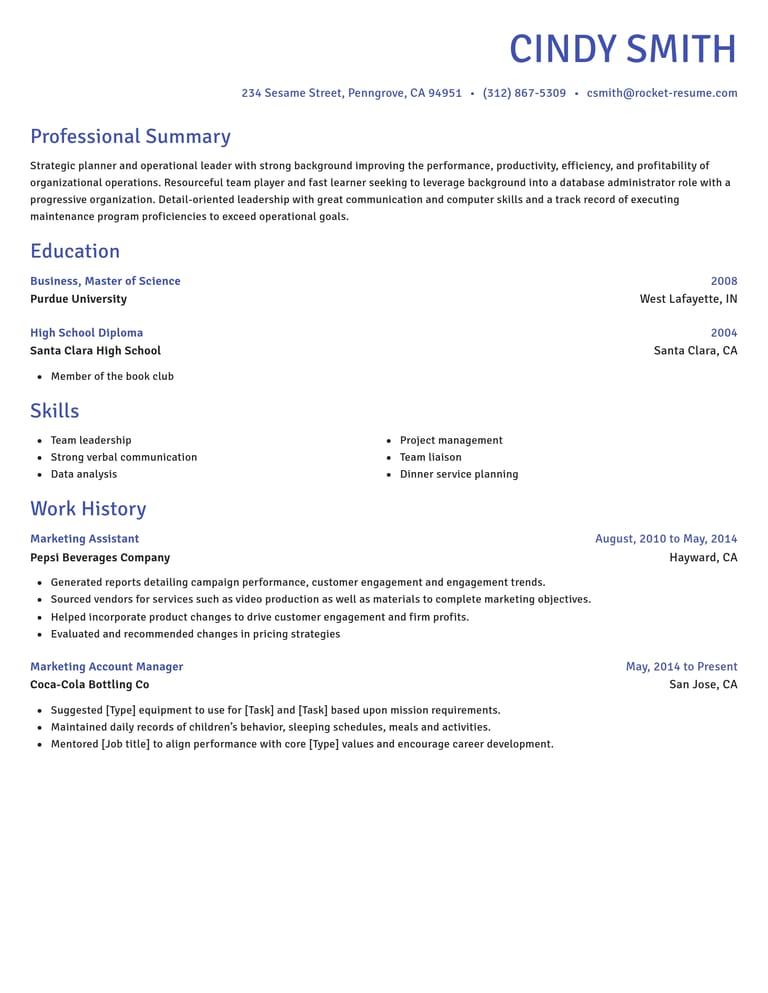
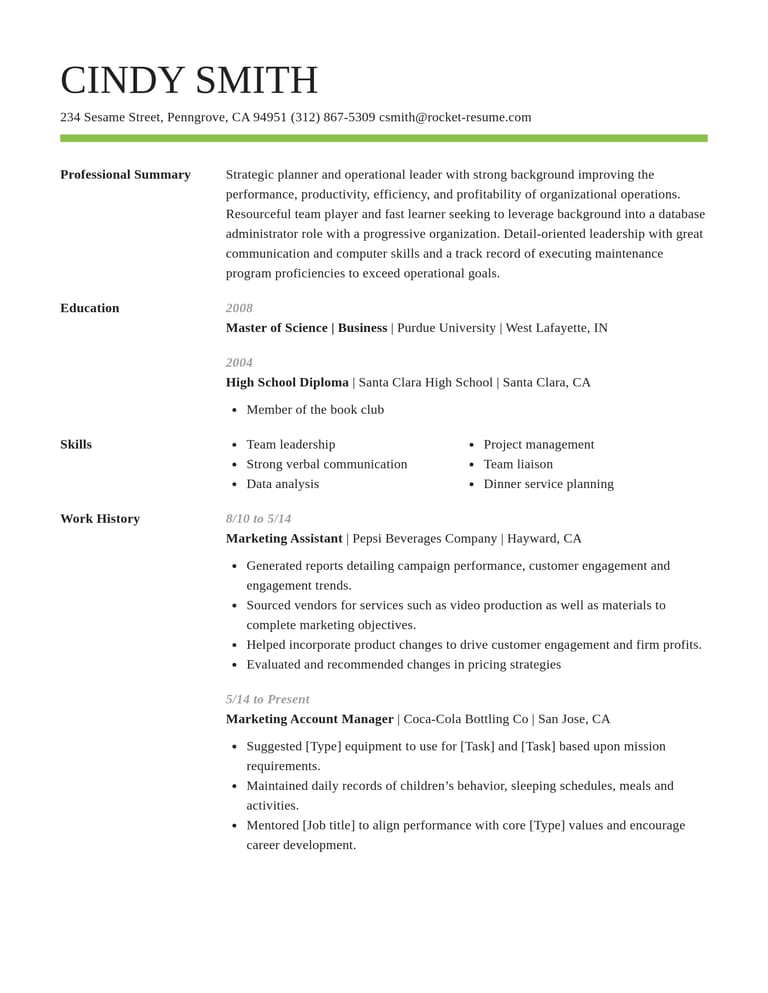
Designs that keep your results in view
Builder tools that put your results first

Examples to build on
Look for examples that fit the job you held. Add what you achieved, with a figure when it helps explain the result.
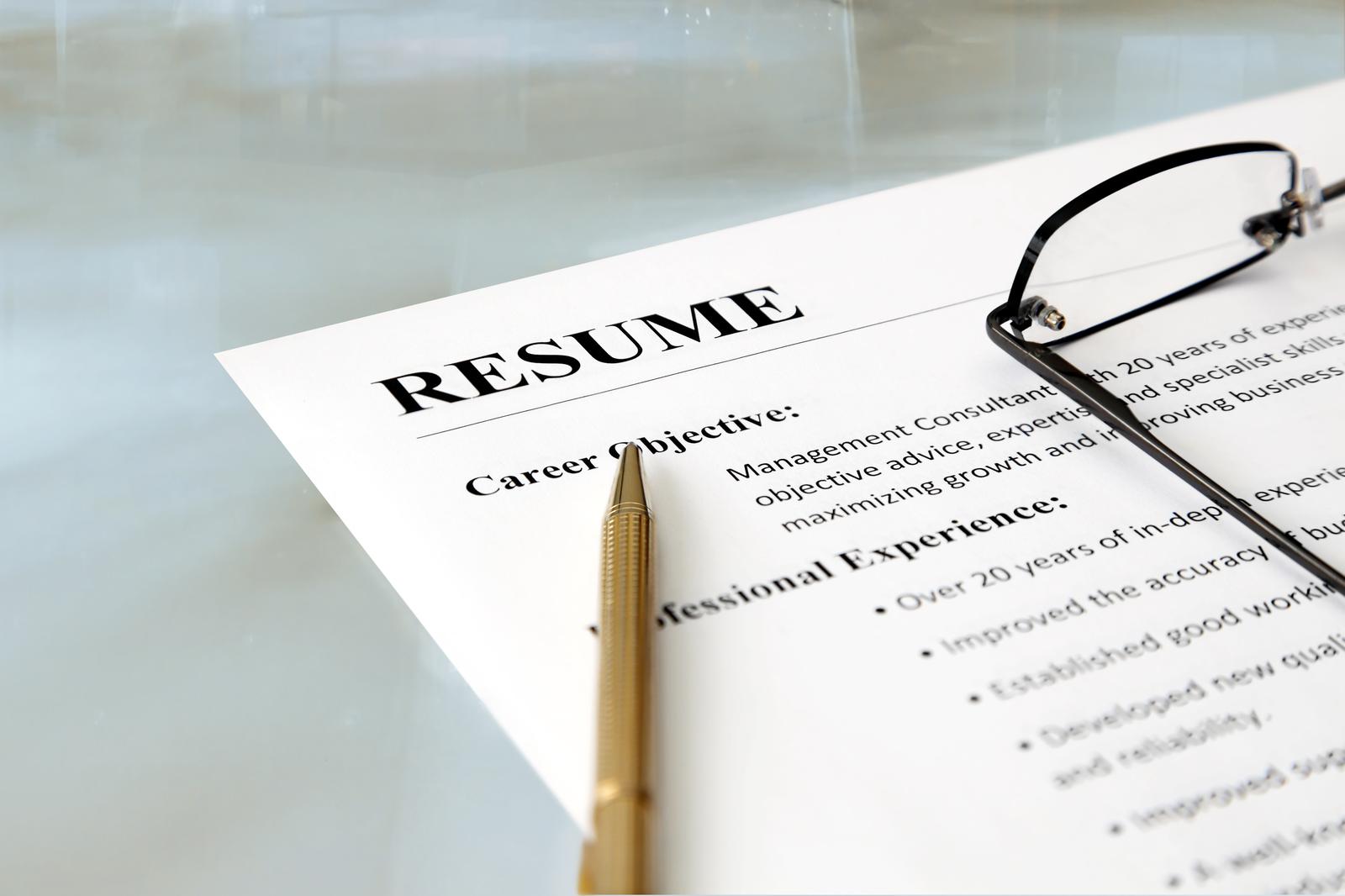
Review what your resume emphasizes
Read the preview to check whether the relevant responsibilities and results are easy to find. Edit descriptions that bury them in less useful detail.

A tailored copy for every opening
Make a copy of your master resume in My Library for each opening and shape it around that job ad. Your original is left alone.
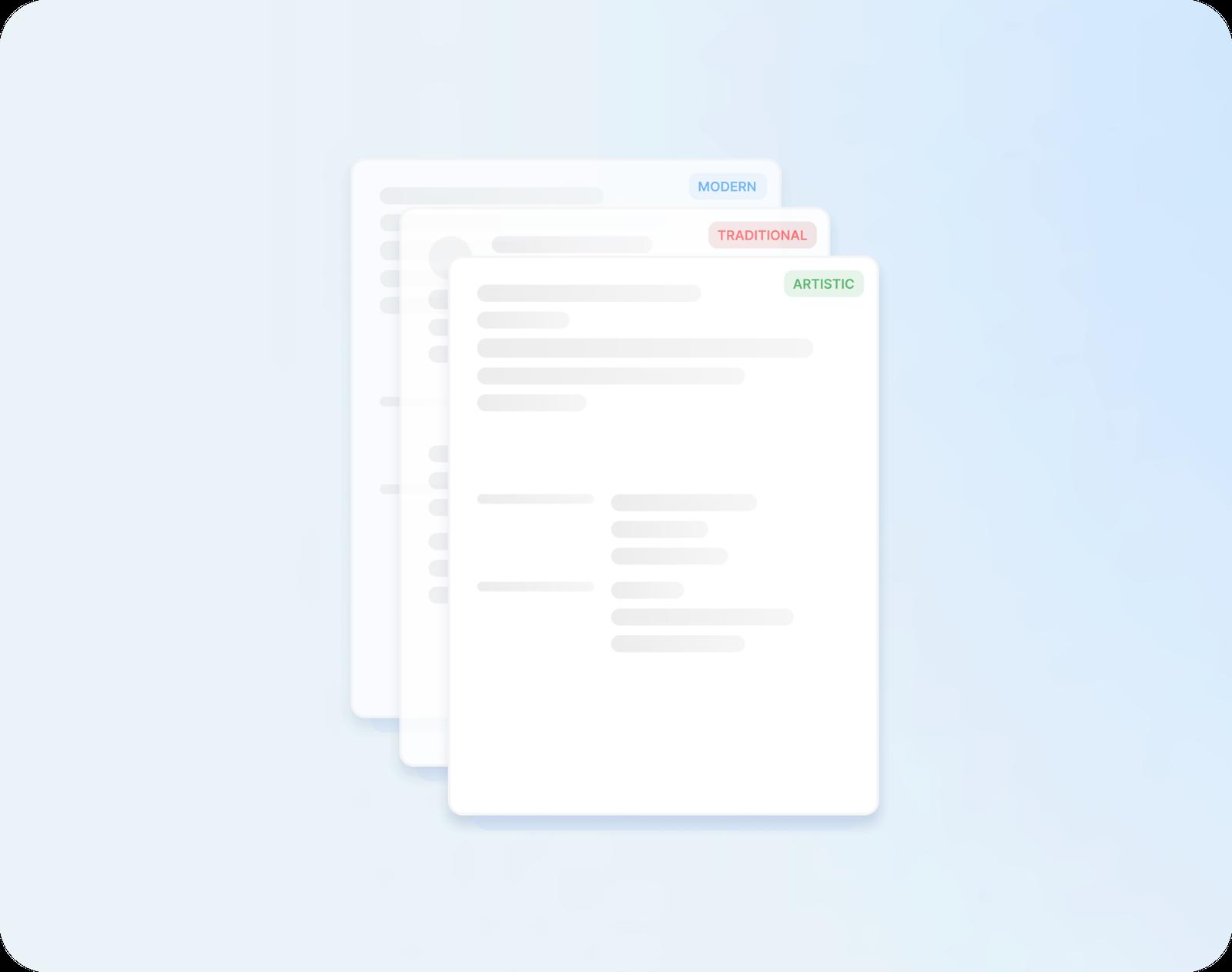
Clean designs you can swap
Try a design with your experience in place. Check headings, dates and longer descriptions before choosing the look you want.
Research on writing and hiring
“Great resume builder, I'll be using it again”

“I needed a resume fast, great and very useful”

Quick answers for a standout resume
What does a good resume look like?
A good resume makes your relevant experience easy to scan. Keep contact details, job titles and dates easy to find. Use work descriptions to show responsibilities or results you can support, and include a summary when it adds useful context.
How can I make my resume stand out to recruiters?
Describe the work you did, with a result or concrete responsibility that fits the opening. Use a real figure when it adds useful context. Remove claims you could not explain with an example in an interview.
What do recruiters notice first on a resume?
Make the top of the resume useful on its own: include accurate contact details and a clear account of your relevant experience. Keep job titles and dates easy to find throughout. You cannot control the order in which someone reads it.
Does every bullet point need a number?
Only where you have a real figure to give. Let other bullet points name a clear outcome instead, such as a process you set up or a problem you solved. Mixing the two keeps the page easy to read and every claim believable.
How many bullet points should each job have?
Give the most relevant roles enough detail to show your fit, even when they are older. Shorten unrelated or repetitive descriptions and remove bullets that add nothing useful to this application.
Should a resume have a summary or an objective?
A summary suits most people with a work history, because it shows what you've already done. An objective, which states the job you're after, can help a student or career changer with little related experience. Either way, aim it at one role and stop at two or three lines.
Build from an example in your field
Take a look at this week’s mix





- 13 examples
- 5 examples
- 17 examples
- 21 examples
- 48 examples
- 23 examples






Show all industries (A–Z)Show fewer
- Aerospace & Defense, 8 examples
- Agriculture, 23 examples
- Apparel & Textiles, 13 examples
- Architecture, 15 examples
- Artificial Intelligence, 6 examples
- Arts & Entertainment, 24 examples
- Automotive, 21 examples
- Beauty & Personal Care, 17 examples
- Biotechnology & Life Sciences, 7 examples
- Business Services, 23 examples
- Chemical Engineering, 4 examples
- Childcare, 14 examples
- Construction, 106 examples
- Creative, 15 examples
- Customer Service, 17 examples
- Education, 94 examples
- Energy, 39 examples
- Environmental Science, 5 examples
- Finance, 63 examples
- Food & Beverage, 68 examples
- Government, 48 examples
- Healthcare, 160 examples
- Hospitality, 35 examples
- Human Resources, 18 examples
- Insurance, 10 examples
- Legal, 12 examples
- Logistics, 37 examples
- Manufacturing, 68 examples
- Marketing, 8 examples
- Media, 20 examples
- Military, 24 examples
- Mining & Metals, 9 examples
- Nonprofit, 8 examples
- Pharmaceuticals, 12 examples
- Public Relations, 10 examples
- Real Estate, 7 examples
- Retail, 38 examples
- Robotics, 11 examples
- Sales, 14 examples
- Security Services, 19 examples
- Social Services & Counseling, 21 examples
- Social Work, 14 examples
- Sports & Fitness, 96 examples
- Technology, 67 examples
- Telecommunications, 6 examples
- Tourism & Travel, 9 examples
- Transportation, 38 examples
- Veterinary, 9 examples
Job seekers rate our resume builder
from 3,900+ reviews