Top 7 Considerations for Professional Resume Design-in-2026
Seven resume design rules for 2026, covering white space, two-line bullet points, sans-serif fonts at 11pt or larger, single-column layouts, dropping headshots and logos, and clean portfolio links.


The 2026 Resume Blueprint: Navigating the Era of Hyper-AI Filtration
In 2026, the "black hole" of job applications will be replaced by something far more sophisticated: Autonomous Talent Scanners (ATS 2.0). While a visually stunning resume still captures human attention, the definition of "good design" has fundamentally shifted. In today’s market, AI filters don't just look for keywords; they use neural mapping to determine if your resume is "readable" across diverse LLM (Large Language Model) architectures. If your design is too complex, the AI effectively renders you "invisible," flagging your file as corrupted or non-parsable before a human ever sees it.
The goal for 2026 is a "Liquid Design"—a resume that flows perfectly through AI scanners while remaining high-impact for the 70% of recruiters who now review candidates via augmented reality (AR) glasses or fold-screen mobile devices. The stakes are well documented: Harvard Business School research found that automated hiring systems screen out millions of qualified candidates before a human ever reviews them.
1. Cognitive White Space and AI Readability
In 2026, white space is no longer just about aesthetics; it is about "cognitive load management" for both humans and AI. Modern AI parsers use "zonal analysis" to categorize your experience. If your text is too dense, the AI can suffer from "hallucination errors," misattributing a skill from 2022 to a job you held in 2025. Generous margins and spacing provide the "anchor points" these algorithms need to accurately map your career trajectory. For the human recruiter, who is likely skimming your profile on a high-resolution mobile interface, white space prevents "scroll fatigue." If you want to take this principle to its logical conclusion, consider whether a minimalist resume design is the right fit for your field.
- Why: AI parsers in 2026 require clear physical separation to distinguish between distinct data clusters (e.g., separating "Technical Skills" from "Professional Experience").
- How: Maintain margins of 1 to 1.5 inches. Use a 1.2 or 1.5 line spacing for body text. Ensure there is at least 12pt of "breathable" space between the end of one job description and the start of the next.
- Example: Instead of a wall of text describing your time at Google, use three focused bullets with 6pt of spacing between each to ensure the AI "OCR" (Optical Character Recognition) doesn't merge the lines.
- Key Takeaway: White space is the "punctuation" of your design; it tells the AI where one thought ends and the next begins, preventing you from becoming an unreadable block of data.
2. Dynamic Bullet Points vs. Neural Summaries
The era of the "Summary Paragraph" is dead. In 2026, recruiters use AI assistants to summarize your resume for them. If you provide long paragraphs, you are forcing an AI to interpret your meaning, which can lead to vital accomplishments being filtered out. Bullet points are the "data packets" of a modern resume. They should be punchy, front-loaded with results, and stripped of "filler" words (a, the, that) which only serve to dilute your "keyword density" score in modern ATS algorithms.
- Why: Bullet points allow Applicant Tracking Systems (ATS) to instantly index achievements and match them against the job’s "Success DNA" profile.
- How: Limit bullets to two lines maximum. Use the "Action + Metric + Outcome" formula. If a section feels heavy, utilize sub-bullets to create a visual hierarchy.
- Example: "Spearheaded the integration of Generative AI tools, resulting in a 40% reduction in manual data entry and saving 20 hours per week for the regional team."
- Key Takeaway: Use bullets to serve "bite-sized" data to the AI, ensuring your most impressive metrics are indexed accurately and instantly.
3. High-Fidelity, Screen-Optimized Fonts
In 2026, we have moved beyond simple "web-safe" fonts to "high-fidelity" typography. With the prevalence of 8K mobile screens and AR overlays, the font you choose impacts the "optical character recognition" (OCR) success rate. Classic sans-serif fonts remain king because they lack the "tails" (serifs) that can blur at low resolutions or be misinterpreted by AI scanning for specific character shapes. Avoid "variable fonts" that might not render correctly if the recruiter’s software isn't updated to the latest 2026 standards.
- Why: Modern hiring managers—over 60 percent of whom—view resumes on mobile or wearable devices. Clean fonts ensure no legibility loss during screen scaling.
- How: Use "System Standard" sans-serifs like Inter, Roboto, or the classic Arial and Verdana. Keep the base size at 11pt; anything smaller risks being skipped by AI "eye-tracking" heatmaps used by top firms.
- Example: Use 12pt Inter for body text and 14pt Bold Roboto for section headings to create a clear "visual ladder."
- Key Takeaway: Font choice is a technical specification, not an artistic one; stick to high-contrast, sans-serif options to guarantee 100% AI and human readability.
4. Single-Column, Liquid Layouts
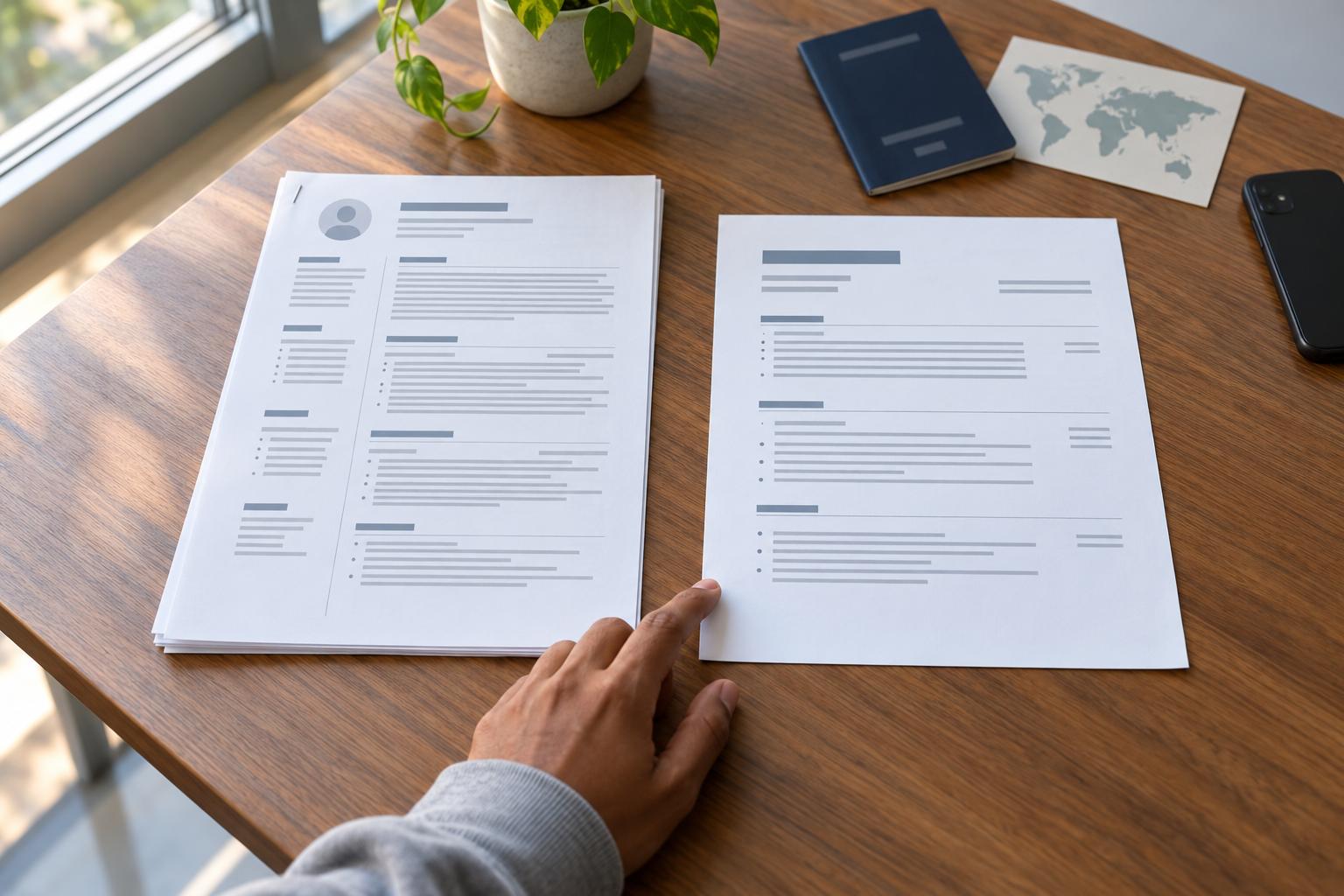
The biggest mistake in 2026 is the "Two-Column" layout. While they look like sleek magazine pages, they are a nightmare for AI. Most parsers still read left-to-right across the entire page; in a two-column setup, the AI may read the first line of your "Skills" column and the first line of your "Work History" column as a single, nonsensical sentence. To remain "visible" to the system, your layout must be linear. This also ensures your resume is "Responsive"—automatically adjusting its width whether it's viewed on a phone, tablet, or desktop. For proven single-column structures, see these resume layouts that get past ATS.
- Why: Complex layouts with sidebars often "break" when converted to the plain-text versions used by AI filters, leading to garbled information.
- How: Stick to a single-column format. Use bolding and font size to create distinction rather than boxes or sidebars.
- Example: If you are in creative industries, save the fancy layout for your portfolio link and keep the resume itself strictly linear.
- Key Takeaway: A simple, vertical layout is the only way to ensure your resume survives the "transformation" from a PDF to an AI-readable data profile.
5. The Privacy-First Approach: No Headshots or Logos
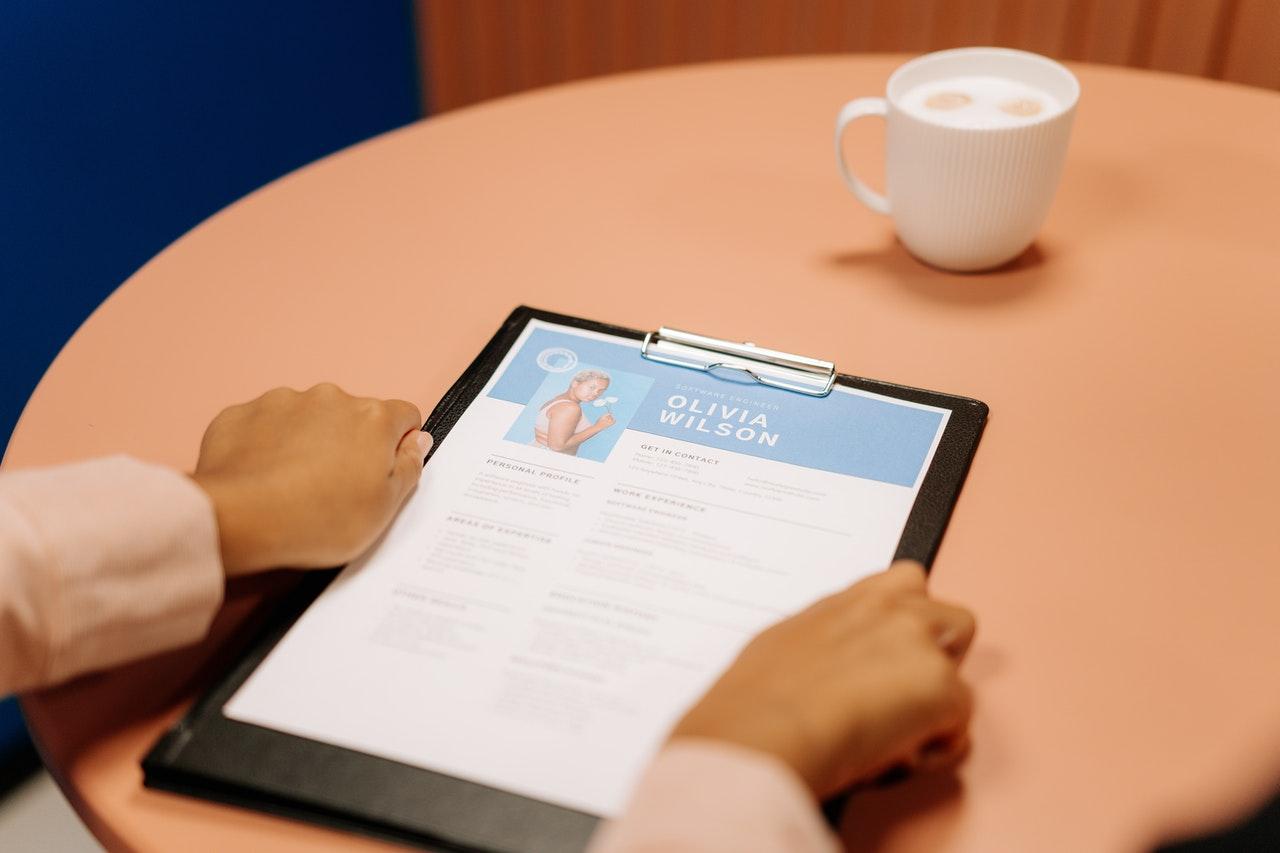
In 2026, global hiring is governed by strict "Algorithmic Bias" regulations. Many AI filters are now programmed to automatically "redact" or discard resumes that include photos to prevent visual bias (age, race, gender). Including a headshot in 2026 doesn't make you look "personable"—it makes you a legal liability for the HR department. Similarly, company logos are often protected by metadata encryption; including them can cause your file to be flagged by security firewalls or confuse the ATS's image-processing layer. The concern is not hypothetical: a landmark resume audit study on hiring bias showed that identity cues on a resume alone can dramatically change callback rates.
- Why: Including a photo can trigger a discard response to comply with anti-discrimination AI guardrails in the US, UK, and Canada.
- How: Remove all imagery, including headshots, icons, and corporate logos. Focus on text-based branding.
- Example: Instead of the "Amazon" logo, simply write "Amazon" in a bold, professional font.
- Key Takeaway: Eliminate all non-text elements to bypass bias filters and security protocols, ensuring your qualifications are the only thing being judged.
6. Hyperlinking to Your "Digital Twin"
A resume in 2026 is merely the "index" to your professional life. Recruiters now expect to see a "Digital Twin"—a verified portfolio, a GitHub repository, or a LinkedIn profile that expands on your claims. Hyperlinks are the bridges between your static resume and your live professional presence. However, ensure your links are "clean" (no tracking strings) to avoid being caught in "phishing" filters.
- Why: Recruiters spend seconds on the resume but minutes on the portfolio. A hyperlink is a "one-click" conversion for your personal brand.
- How: Use the "Insert Link" feature rather than pasting long URLs. Ensure the link leads to a mobile-optimized site.
- Example: "View my 2026 AI Project Portfolio [Link]" rather than "https://www.portfolio-site.com/user/98234/folder/index."
- Key Takeaway: Use hyperlinks to keep your resume slim while providing a gateway to the comprehensive proof of your expertise.
7. Strategic Predictability
In 2026, the "7-second rule" has been verified by biometric eye-tracking studies. Recruiters' eyes move in an "F-pattern." If you try to be "unique" by putting your contact info at the bottom or your dates on the left, you break the recruiter's flow. In a world of AI-driven speed, "predictability" is a feature, not a bug. Your resume should feel familiar; it should allow the reader (or the scanner) to find what they need without thinking. Sticking to the standard sections — knowing exactly what to include in a resume — is what makes that possible.
- Why: Research indicates that deviations from standard formatting lead to lower retention of information by hiring staff.
- How: Standardize your header. Align dates to the right. Use standard section titles like "Experience" and "Education" rather than "My Journey" or "Knowledge Base."
- Example: Header (Top) -> Summary (Optional) -> Experience (Center) -> Education/Skills (Bottom).
- Key Takeaway: Be bold in your achievements, but "boring" in your layout. Predictability ensures that your most important information is actually seen.
Conclusion: Mastering the 2026 Job Market
As we navigate 2026, the "invisible" resume is the one that tries too hard to be a piece of art. The "visible" resume—the one that lands interviews—is a masterclass in functional design. By prioritizing AI-readability, mobile-first layouts, and bias-free content, you align yourself with the automated systems that now gatekeep the professional world. Design your resume as if it were a high-performance data file: clean, optimized, and hyper-linked. When you respect the technology used to read your resume, you significantly increase the chances that a human will eventually hire you.
Get Started with Your Resume Design
Certainly the content of your resume matters. But if you have the right skills and experiences and you have presented them poorly, you’re not likely to get beyond the first-round review. You don’t need a flashy design. What you do need is solid content in a professional resume format. This signals to the recruiter or hiring manager that you are a serious contender. Moreover, it helps them locate the information they need to make a critical decision: Interview or not?
If you’re unsure how to get started, visit Rocket Resume and browse our templates that already incorporate these resume design tips. Let us help you put together a smart, attractive resume … one that gets you noticed.
Sources: Flexjobs - In the Process of Writing Your Resume? Don't Get Fancy The Ladders - You Have 7.4 Seconds to Make an Impression
Browse our resume examples
See what each section can say, then write your own resume one section at a time.