Logistics resume examples for warehouse and dispatch jobs
From the receiving dock to dispatch, these logistics resume examples help warehouse associates, inventory clerks and planners show the stage they handled and the systems they used.
- Resume examples for 37 logistics jobs
- Professional resume templates
- Easy editing as you go

How to write a logistics resume
Logistics resumes need to show where your work sits in the movement of goods. Receiving, inventory, dispatch and planning come with different duties and handoffs. Describe the operation you supported and the tasks that filled your shift. Warehouse or transportation software matters more when it is tied to a real process, and true order or shipment volume can show scale without claiming credit for the whole supply chain. On the planning side, the Bureau of Labor Statistics describes logisticians as coordinating the supply chain, reviewing operations and working with suppliers and customers.
Warehouse and dispatch resumes often go wrong in three spots:
- Your place in the flow of goods is unclear.
- Systems and metrics appear without the process you handled.
- Team results are listed without saying what you did.

Place your role in the flow
Name the operation and the stage you handled: receiving, putaway, inventory, picking, dispatch or wider coordination. A warehouse role and a planning role may share systems, but they call for different evidence. Warehouse, inventory and dispatch resume samples show how each stage is written up, and the logistics job title pages help you find your closest match.
Build My Logistics ResumePick your job title in the builder, and its suggestions start from that stage of the operation. Edit them with your own receiving, picking or dispatch duties and the counts you can stand behind.
Describe the process and handoff
Pick one process and walk it from what came in to who got it next. Explain what you checked, organized or resolved and who depended on the result. Add order, shipment or inventory counts where they make the job clearer. Start from the suggestions for receiving, inventory and dispatch work and edit them to fit your site.
One inventory clerk might put it this way:
“Traced a recurring gap between receiving records and cycle counts to a mislabeled bin range and corrected 140 location records.”
Build My Logistics ResumeOne process makes a strong work-history entry in the builder, under the job and dates where it happened. Say what arrived, what you checked and who took it next, rather than the whole operation's results.
Use operational figures with context
Use a number when you can say how it was measured and what you did to change it. Without one, a specific process fix or completed task still counts. Include forklift certification, scanners or warehouse systems that match the job description. Our articles on warehouse and supply-chain careers cover moving up from the floor.
If you can't say how a number was measured, describe the stock count or shipment task you finished instead. Forklift and equipment cards have a home in the builder's optional extra sections, where they stay out of your job entries.
Keep operational experience easy to trace
Give each role clear dates and duties, and list equipment certifications apart from software and planning skills. Your work history can then show how you used them on real shifts. Templates with a separate skills section suit this. Drove or dispatched trucks too? Transportation is one of the fields next to logistics with its own page.
Build My Logistics ResumeTry a couple of templates in the builder and compare them in the live preview. Keep the one where receiving, inventory or dispatch duties have room and the equipment list stays short.
How Rocket Resume helps
Put your stage, your systems and your own results on the page:
- Your stage of the operation. Say whether you handled receiving, storage, planning, dispatch or another stage of moving goods in each work entry.
- The process behind a system. Turn a suggestion into an account of the inventory check, carrier handoff or planning task behind a system or measure.
- Numbers you can explain. Edit achievements to state the change you made and the evidence you can support, keeping team-wide results separate.
Set up your warehouse or dispatch resume one section at a time:
- Choose a template. Start with a template that has room for forklift certifications and warehouse systems.
- Add work experience. Add each warehouse, inventory or dispatch job with dates and the process stage you handled.
- Select relevant skills. Choose skill suggestions for inventory checks, warehouse systems and carrier handoffs.
- Name your stage. In the summary, name your stage of the operation, the systems you use and the volume you handle.
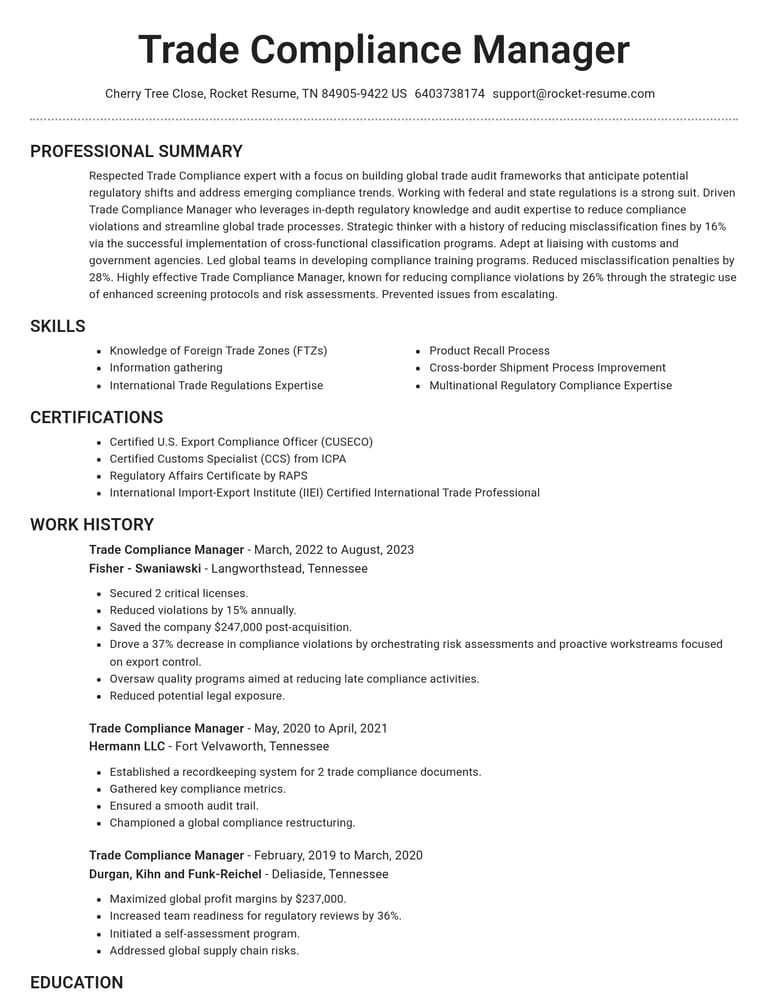
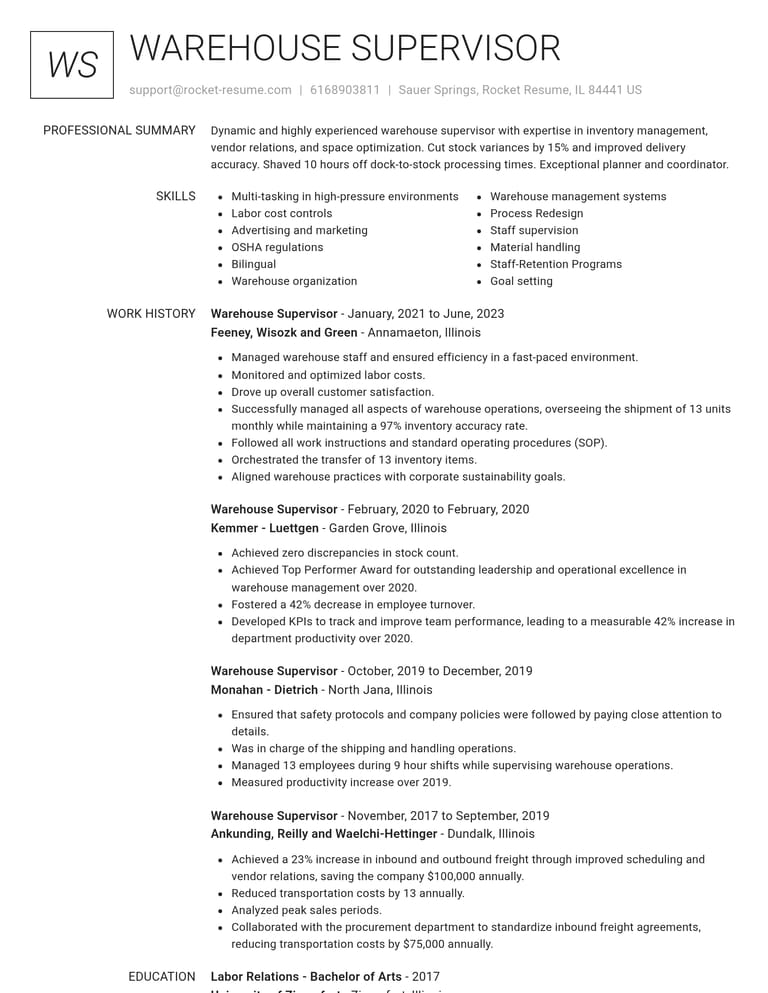
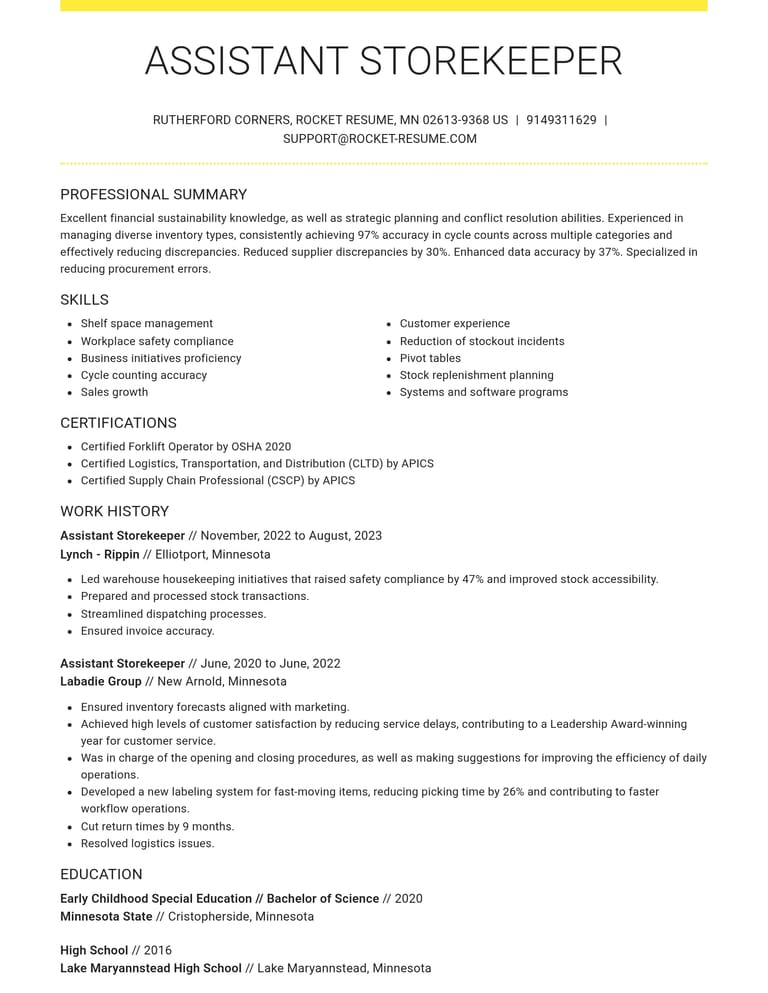
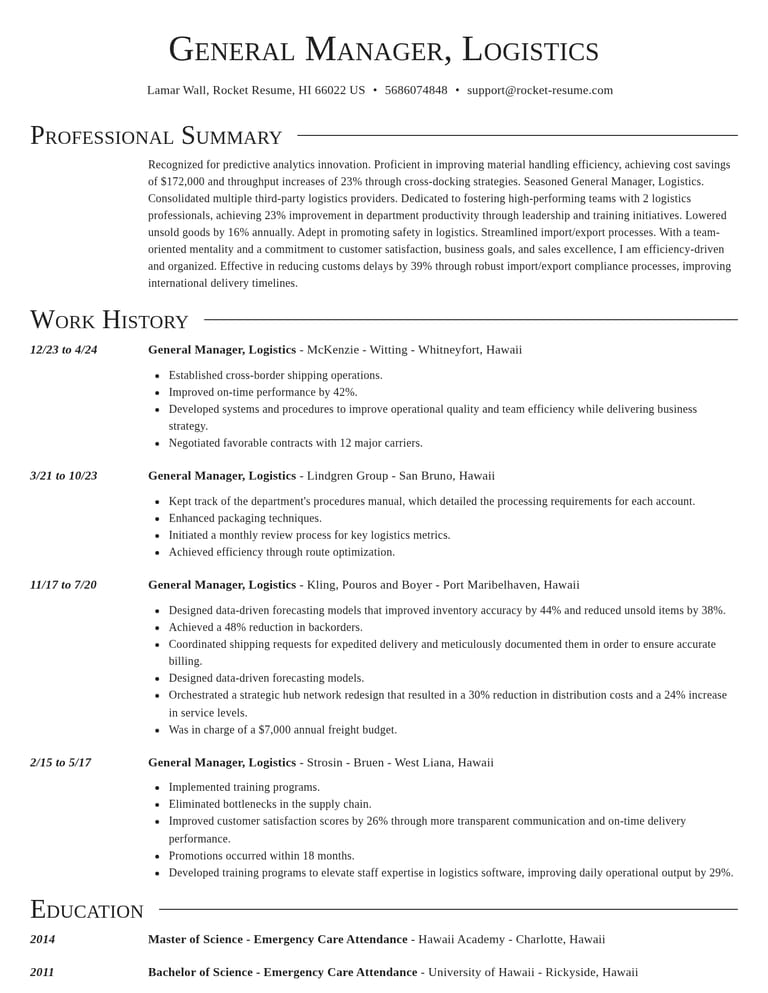
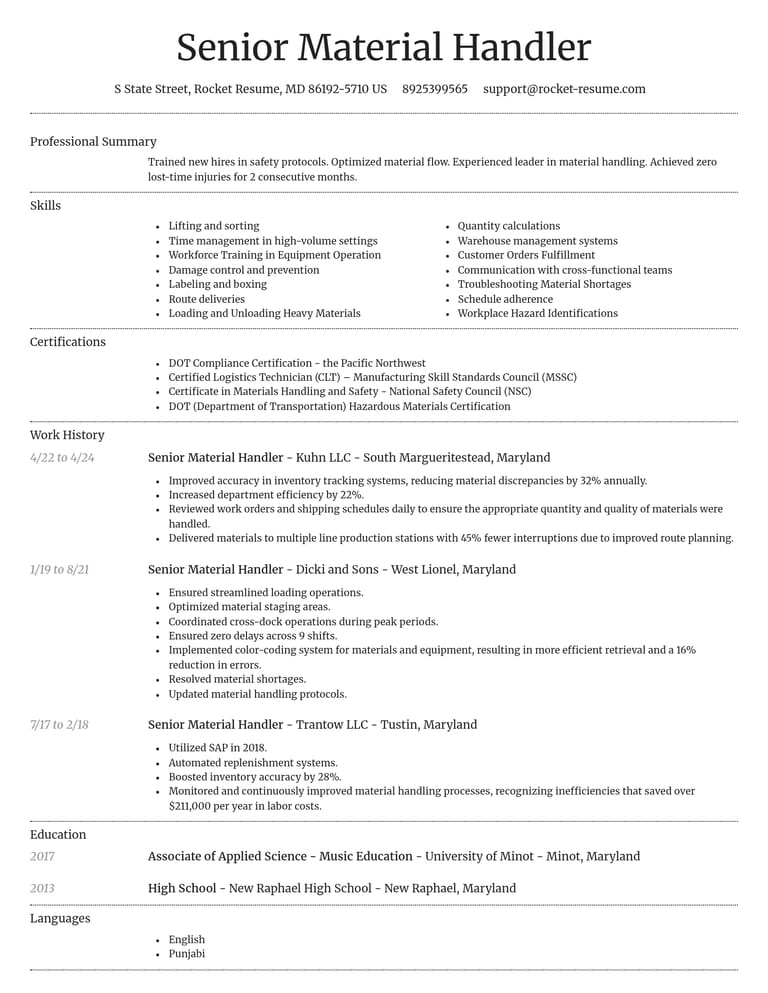
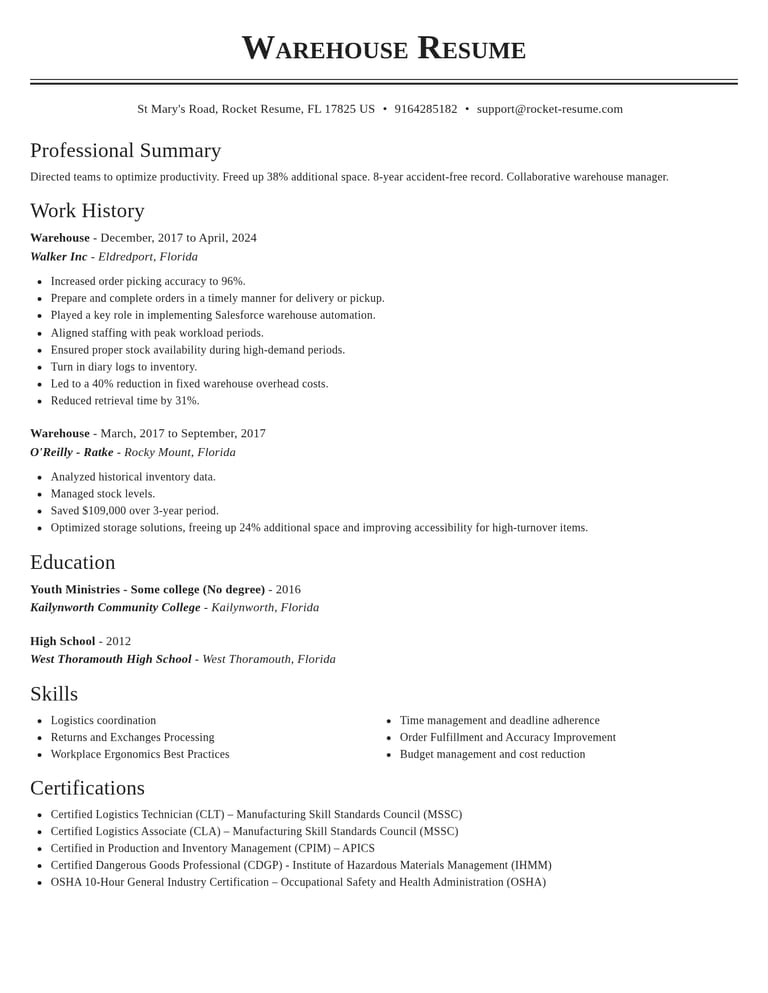
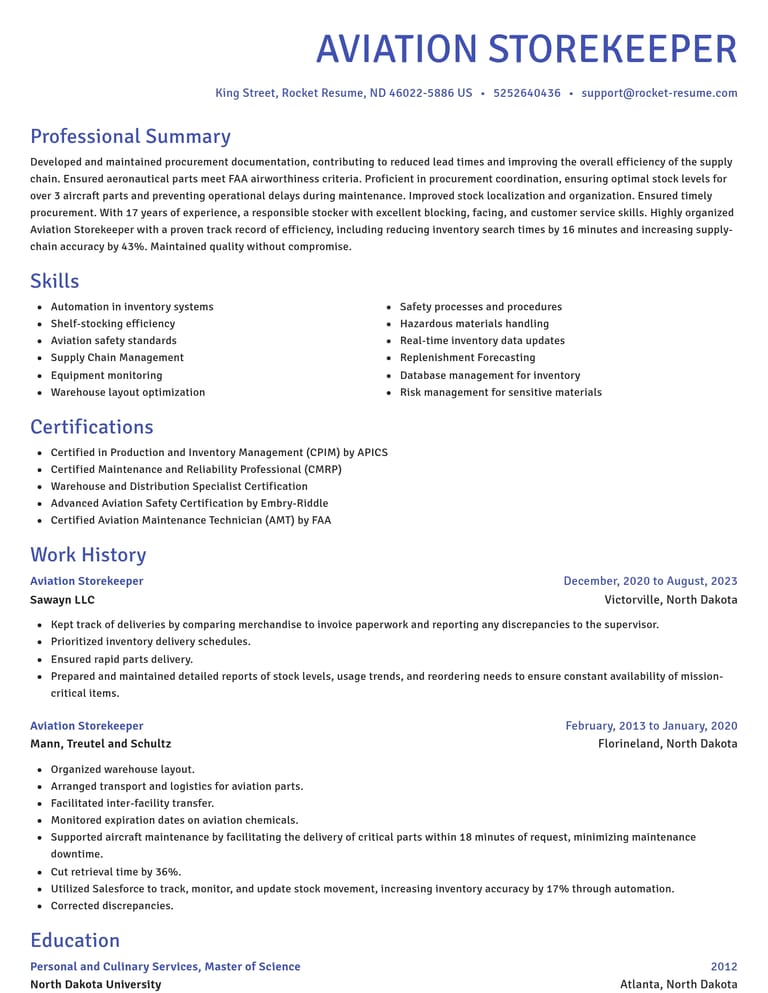
Logistics resume examples
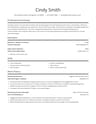
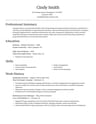
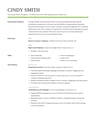
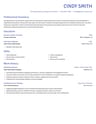
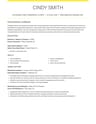
Inventory Control Coordinator resume example
More Inventory Control Coordinator resume examplesLogistics jobs: examples, templates and guides
37 jobs- Warehouse
Templates
Replace "Warehouse" with your actual role, like picker, loader or receiver, then your rate.
- Warehouse Worker
Tips
Departments you've covered (receiving, picking, packing, shipping) and your attendance through peak.
- Warehouse Supervisor
Resume
Associates per shift, recordable injuries, and the throughput or labor-cost change you led.
- Inventory Management
Examples
Inventory value and SKU count under your control, and the reorder method you ran.
- Medical Courier
Tips
Stops per route, on-time rate, and the chain-of-custody and temperature logs you keep for specimens.
- Storekeeper
Templates
Size and value of the stores you keep, receipts and issues posted per day, and the stock system.
- Trade Compliance Analyst
Resume
HTS codes you assign, export classifications (EAR, ITAR) and a CBP customs broker license if held.
Deliveries you check against paperwork, bin locations you keep, and the stock counts you support.
- Dispatch Executive
Examples
Variances you research each week, adjustments you approve and the warehouse reports you build.
Fleet size, loads dispatched a day and on-time rate, plus the load boards you book freight on.
- 3Pl Logistics Manager
Guides
Show all 37 logistics jobsShow fewer
Logistics resume skills, summaries and work history suggestions
Save suggestions for your resume
Tap the bookmark next to any suggestion to save it.
Saved itemsThe examples, skills, job titles and industries you save, together in one place.
RecommendedPages, searches and examples you used but haven’t saved.
In the builderYour saved suggestions show up in the resume builder, ready to add as you write.
You’re in controlYour saved items are private. Remove any of them at any time.
Showing 12 of 40
Delegating work
Monitoring field personnel
Hub Manager resume examples
Work experience
Adjusted operations based on real-time demand.
Achieved a 25% increase in delivery punctuality.
Shipment coordinating
Evaluating proposals
Indirect Procurement Buyer resume examples
Work experience
Developed and maintained key supplier relationships across 5 categories, resulting in 22% improvement in supplier performance scores.
Built and maintained a supplier risk profile.
Conflict resolution with suppliers
Data analysis for inventory discrepancies
Storekeeper resume examples
Work experience
Kept track of shipping and receiving records to ensure that orders were received.
Sent out invoices to customers, requesting payment every one year.
Electric fleet transition management
Backorder reduction strategies
Aviation Storekeeper resume examples
Work experience
Created a centralized inventory system.
Coordinated with procurement team.
OSHA regulations compliance
Load balancing and truck loading techniques
Professional Courier resume examples
Work experience
Achieved a perfect safety record for two years.
Achieved top performer status within 10 months by reducing delivery turnaround time by 17% in urban and rural routes.
Warehouse resume examples
Summaries
Detail-oriented warehouse leader with hands-on experience in streamlining packaging processes, saving $191,000 annually. Adept at training staff and reducing onboarding time by 28%.
Enhanced coordination between departments.
Analytical warehouse supervisor with a talent for reducing packaging waste, saving $193,000 yearly through efficiency reviews and hands-on staff training.
3Pl Logistics Manager resume examples
Accomplishments
Achieved reductions in lead time and transportation costs by analyzing existing carrier networks and making data-driven decisions with available routing technology.
Negotiated a multi-year transportation contract, securing 6% cost reduction without sacrificing service levels.
Implemented continuous improvement strategies (Kaizen) that reduced warehousing costs by 39% YoY.
Achieved 17% growth in regional sales.
Achieved savings of $158,000 through strategy execution.
Addressed fluctuating exchange rates and tariffs.
Transport Executive resume examples
Accomplishments
Directed cross-departmental collaboration for enhanced shipment tracking, reducing misrouted shipments by 47% and improving delivery accuracy.
Implemented solar-powered GPS tracking devices within 7 fleets, reducing operational costs while improving environmental sustainability.
Collaborated with national and international shipping teams to streamline customs procedures, cutting clearance delays by 34%.
Medical Courier resume examples
Summaries
Medical Courier is well-versed in all aspects of fleet management, quality control, inventory control, and customer service, both operational and financial.
Medical Courier has a background in supply chain management and is well-versed in enterprise deployment systems.
Clearing Agent resume examples
Accomplishments
Collaborated with customs officials in Chicago to ensure timely clearance, avoiding potential shipment holds and saving the company $207,000 annually.
Established a compliance tracking system leveraging SAP, which improved real-time reporting and reduced customs penalties by $114,000.
Conducted denied party screenings.
Consistently reduced compliance incidents by 62% in 2018.
Shipping Agent resume examples
Accomplishments
Developed comprehensive shipping schedule reports that allowed for better alignment with inventory management systems, reducing holding costs by 6.
Partnered with 16 third-party logistics providers to improve delivery times by 37% and increase customer satisfaction.
Logistics resume questions
What should a logistics dispatcher put on a resume?
First say what you dispatch: full truckloads, less-than-truckload freight, last-mile couriers or a private fleet, and how many drivers or loads you handle a day. Then show the planning. Interstate truck routes have to fit federal hours-of-service rules, under which a property-carrying driver generally may drive up to 11 hours after 10 consecutive hours off duty, so say that you build schedules that keep drivers legal and on time. Name the load boards, transportation management software and electronic logging devices you work in, and give an on-time or empty-mile figure. Compare the Logistics Dispatcher examples.
How do I say I did inventory on a resume?
Say which kind of counting you did and what it fixed. Cycle counts, full physical counts, receiving checks and returns processing each tell a manager something different, so name yours along with the scanner or system you used. Then give a result: variances you researched and resolved, shrink you helped reduce, or a wall-to-wall count finished ahead of schedule. Verbs like reconciled, investigated and adjusted say more than "responsible for inventory." If counts were your main job, compare the Inventory Control Coordinator and Inventory Officer examples.
What should I put on a resume for warehouse work?
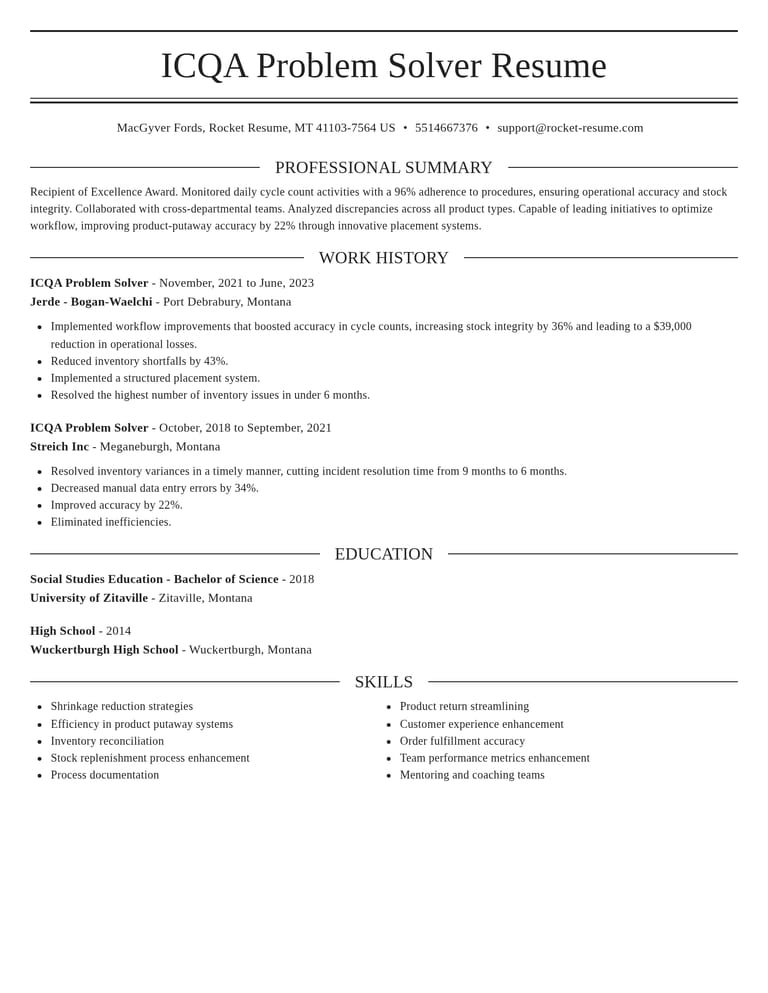
Start with the building and your side of it: a fulfillment center, cold-storage site or parts distribution center, and whether you worked inbound, outbound or returns. Then give your rate against the site's goal, such as units picked or cases loaded per hour, with your accuracy. List the equipment you're cleared on, from RF scanners and pallet jacks to forklifts, and mention peak-season overtime or cross-training in other departments. Moved into fixing count and quality problems? Compare the ICQA Problem Solver examples (ICQA stands for inventory control and quality assurance) and the Picker/Packer examples for floor roles.
Should a warehouse supervisor resume still list floor jobs?
Yes, briefly. Lead with the shift you run, its headcount and the building's volume, then let the earlier titles show how you got there. A path from Warehouse Worker to Senior Material Handler to Warehouse Supervisor reads clearly when each title adds responsibility: your own rate first, then training newer handlers and covering for the lead, then a whole team's results. Past supervisor, a Hub Manager resume adds site budgets and carrier performance, and a General Manager, Logistics resume adds several sites or a regional network.
Resume guides and career advice

Updated Jul 13, 2026
What supply chain analysts earn, from the $77,030 BLS average to over $122,390 for the top 10%, how the role now centers on AI digital twins and predictive modeling, and how to break into it.
Updated Jun 10, 2026
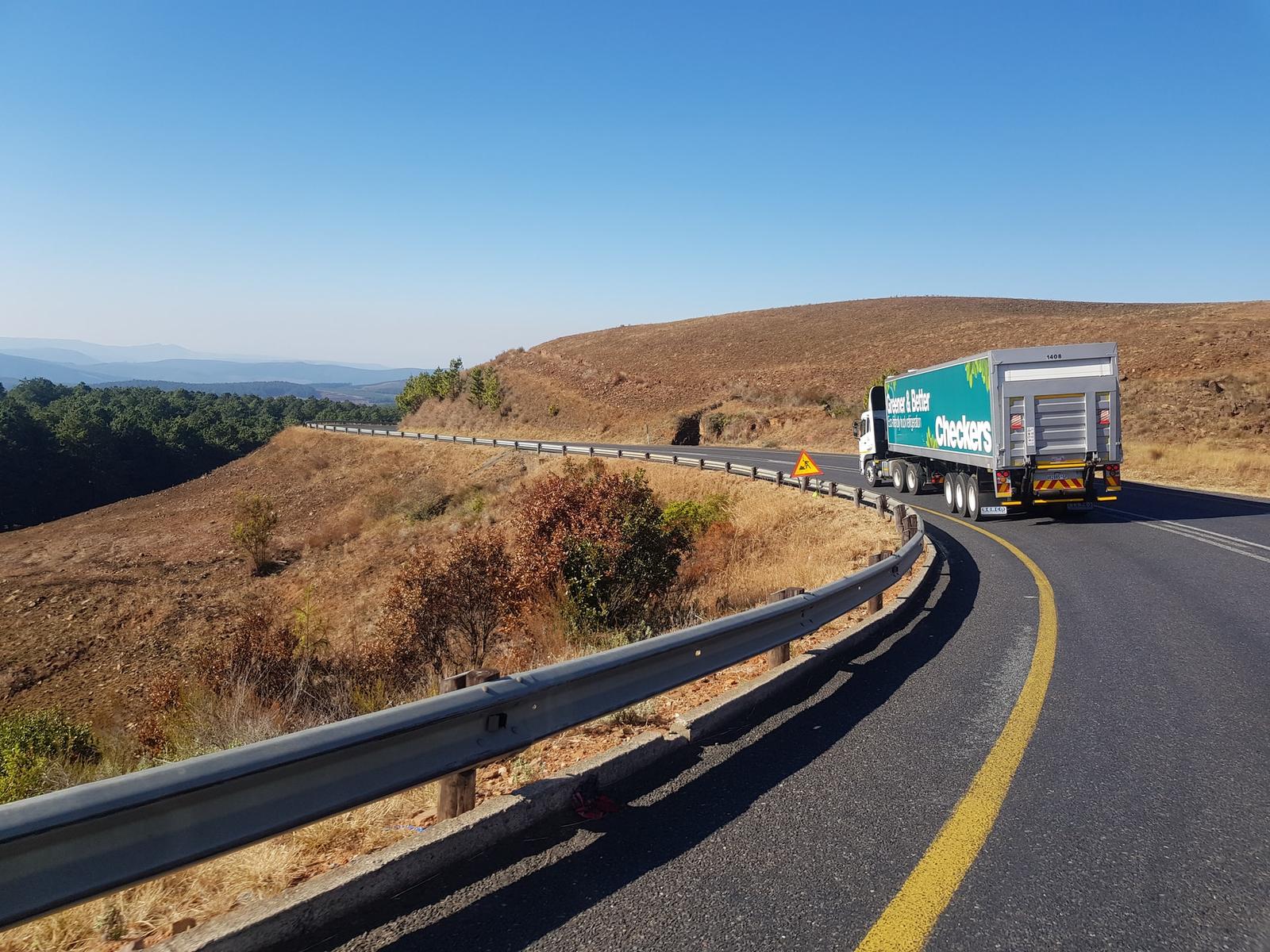
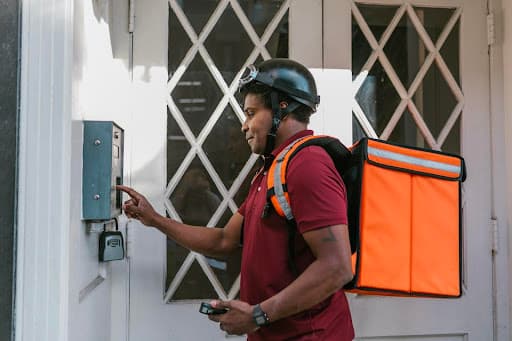
What truck drivers earn in 2026 — a $57,440 BLS median, $86,684 average on Indeed, and 65 to 85 cents per mile — plus how autonomous convoys, AI dispatch, and safety bonuses reshape driver pay.
Updated Oct 24, 2026
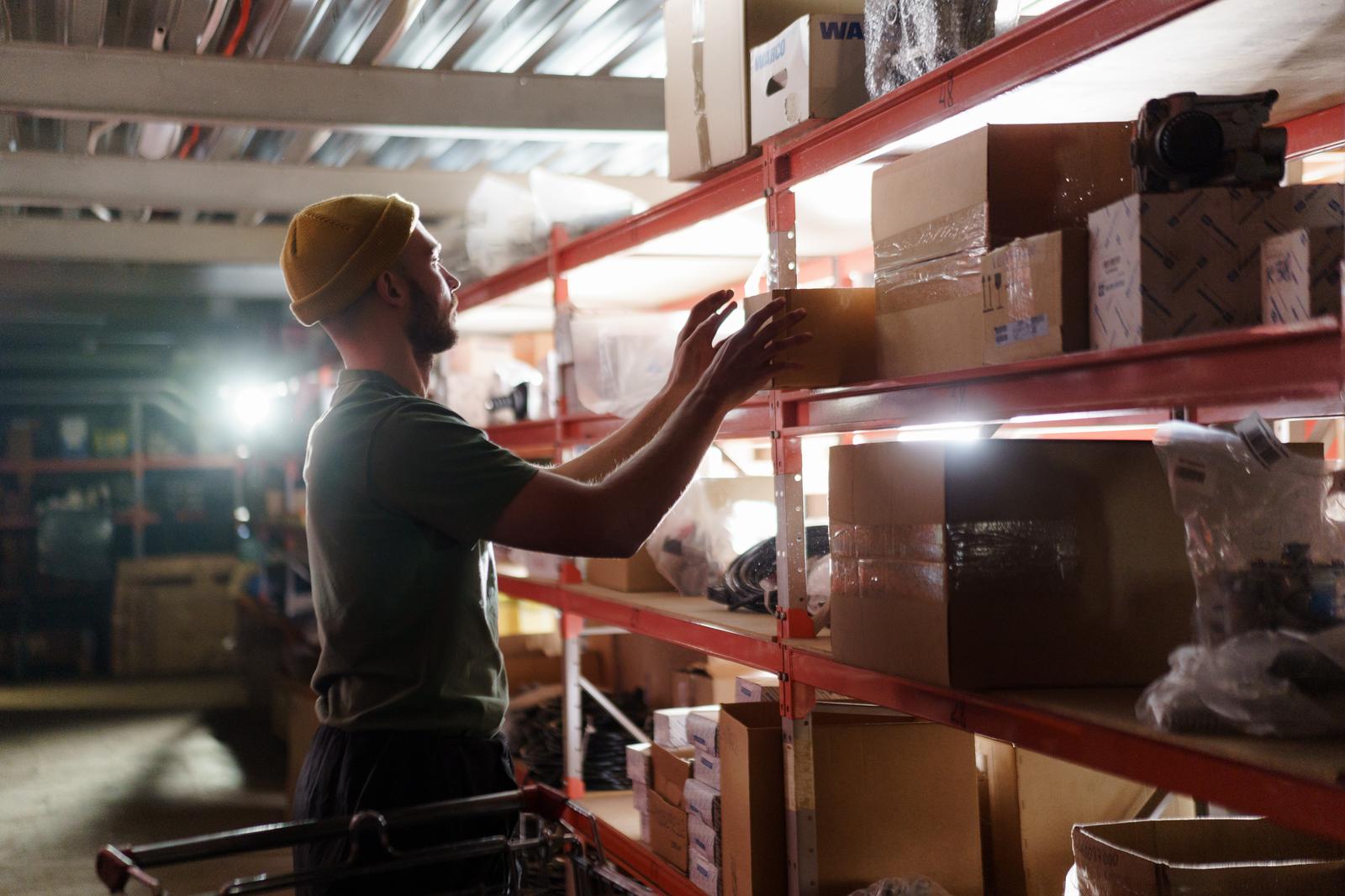
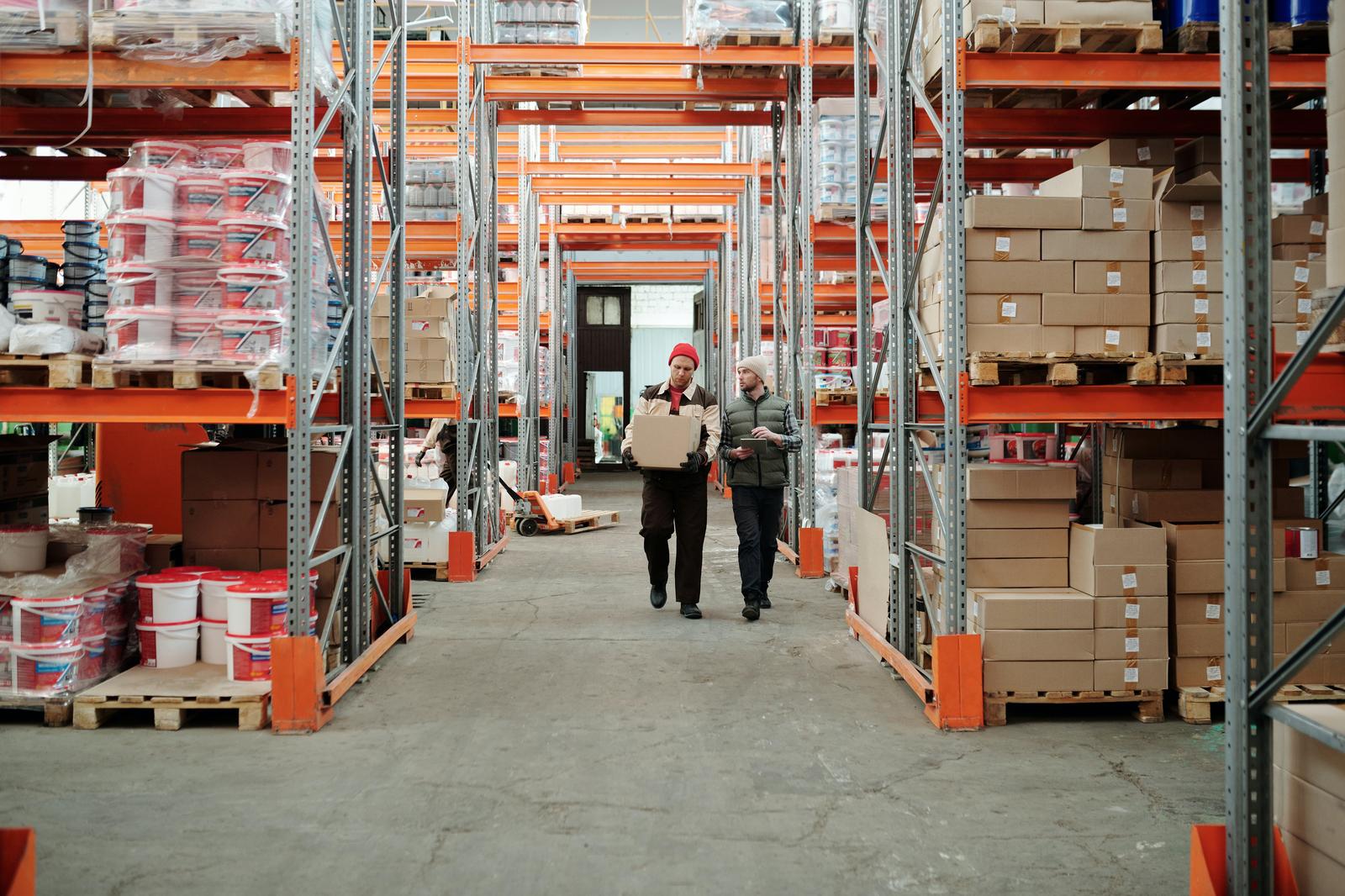
Prepare for a shipping and receiving interview with twenty common questions, answer guidance, and practical examples from Rocket Resume.
Updated Jul 24, 2026
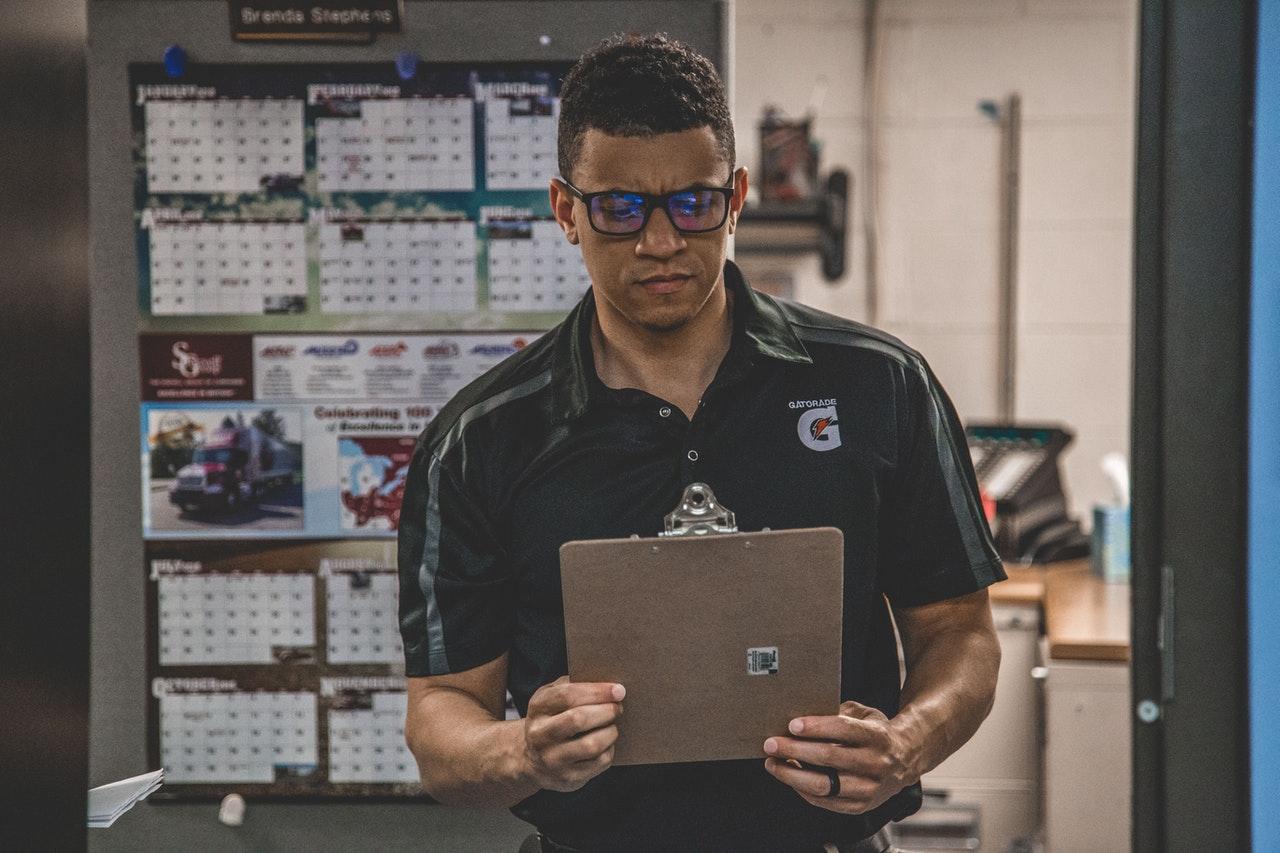
Median inventory manager pay of about $80,880, salary ranges from $43,900 entry level to over $115,000 in automated warehouses, and CPIM and CSCP certifications that can boost pay up to 20%.

Updated Oct 18, 2026

Updated Jul 14, 2026

Updated Mar 19, 2026
Updated Apr 17, 2026



Explore other industries
Related to Logistics

 14 examples
Sales Manager · Inside Sales Representative · Technical Sales Representative



All industries
This page’s industryRelated to Logistics
- Aerospace & Defense, 8 examples
- Agriculture, 23 examples
- Apparel & Textiles, 13 examples
- Architecture, 15 examples
- Artificial Intelligence, 6 examples
- Arts & Entertainment, 24 examples
- Automotive, 21 examples
- Beauty & Personal Care, 17 examples
- Biotechnology & Life Sciences, 7 examples
- Business Services, related industry, 23 examples
- Chemical Engineering, 4 examples
- Childcare, 14 examples
- Construction, 106 examples
- Creative, 15 examples
- Customer Service, 17 examples
- Education, 94 examples
- Energy, 39 examples
- Environmental Science, 5 examples
- Finance, 63 examples
- Food & Beverage, 68 examples
- Government, 48 examples
- Healthcare, 160 examples
- Hospitality, 35 examples
- Human Resources, 18 examples
- Insurance, 10 examples
- Legal, 12 examples
- Logistics, this page’s industry, 37 examples
- Manufacturing, 68 examples
- Marketing, 8 examples
- Media, 20 examples
- Military, 24 examples
- Mining & Metals, 9 examples
- Nonprofit, 8 examples
- Pharmaceuticals, 11 examples
- Public Relations, 10 examples
- Real Estate, related industry, 7 examples
- Retail, related industry, 38 examples
- Robotics, 11 examples
- Sales, related industry, 14 examples
- Security Services, 19 examples
- Social Services & Counseling, 21 examples
- Social Work, 14 examples
- Sports & Fitness, 96 examples
- Technology, 67 examples
- Telecommunications, 6 examples
- Tourism & Travel, 8 examples
- Transportation, related industry, 38 examples
- Veterinary, 9 examples