Phlebotomist resume skills checklist
Get practical guidance on phlebotomy skills for a resume, with examples, skills, keywords, and writing tips to help you build a stronger job-ready resume.

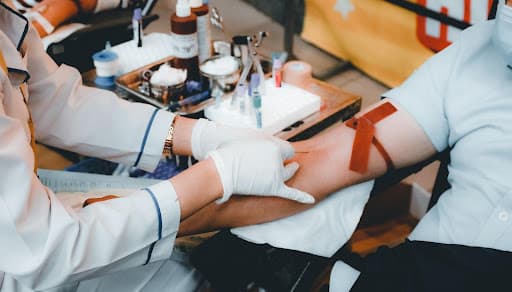
A phlebotomist draws blood from patients or donors for laboratory testing or procedures such as transfusions, according to the U.S. Bureau of Labor Statistics (BLS).
Your phlebotomist resume skills should cover the work you can do: collecting samples, identifying patients, labeling and tracking specimens, communicating with patients, keeping equipment clean, and maintaining records. Include relevant physical skills, too. As you work toward a job-ready resume, choose the skills you have practiced, then use your work history or training section to explain how you used them.
Writing tips for choosing phlebotomy skills for a resume
Use names of methods and tasks as keywords in your skills section. Under a job or training entry, describe the work behind those terms. The groups below follow the duties and qualities described by BLS and O*NET OnLine, a U.S. Department of Labor resource on occupations. Treat the resume examples as starting points and keep only details that match your experience.
Blood and other sample collection
Be specific about the collection methods you know. O*NET lists venipuncture—drawing blood from veins—using vacuum tube, syringe, or butterfly methods. It also names capillary collection by dermal puncture, such as heel or finger sticks, and collecting specimens at specified intervals for tests.
In your skills section, name the methods you have practiced. Under a job, explain which you used and whether your duties included timed collections. Keep training practice attached to the program where it took place.
Example for someone with relevant work experience: “Collected blood specimens using vacuum tube and butterfly venipuncture methods and performed finger sticks for capillary collection.”
Other sample duties deserve precise descriptions. BLS includes labeling sterile containers for samples such as urine and teaching patients how to collect them. If that was your role, describe the instructions and container labeling you handled.
Patient identification, labeling, and tracking
BLS describes verifying patient or donor identity and carefully labeling collected blood. O*NET adds matching laboratory requisition forms to specimen tubes and documenting a specimen's route from collection to laboratory analysis and diagnosis. BLS notes that some phlebotomists also transport samples.
Keep these tasks distinct when you write about them:
In your skills section | Under the job where you did the work |
|---|---|
Patient identification | Describe verifying patients' personal information. |
Specimen labeling | Explain how your duties included labeling specimens and matching tubes to laboratory requisition forms. |
Specimen tracking | Describe documenting the route of samples; add transport duties if you performed them. |
These details give O*NET’s “attention to detail” a concrete meaning on your resume. Select the tasks you actually handled rather than copying the entire group.
Patient communication and cooperation
Explaining a draw to a nervous patient is part of the work. BLS identifies clear explanations, compassion, and cooperative interactions with medical staff as important qualities.
You can name patient communication and interpersonal skills in your skills section. Give them context under a job by describing what you explained to patients or how you worked with other medical staff.
Example for someone with relevant work experience: “Explained blood collection procedures to nervous patients and provided instructions for urine sample collection.”
Use an action you can describe honestly. You do not need to claim that you eliminated anxiety or achieved a particular patient outcome.
Instrument handling and a clean work area
Include the practical tasks behind safe, clean work. BLS lists assembling, maintaining, and disposing of instruments and keeping equipment and work areas sanitary. O*NET describes organizing and cleaning blood-drawing trays, checking that instruments are sterile and needles and syringes are unused, and disposing of contaminated sharps according to applicable rules and policies.
For a skills section, consider instrument preparation, sharps disposal, and equipment cleaning if they match your experience. Under the relevant job, describe the trays, instruments, or work areas you prepared and maintained. Name the tasks you performed without adding an unsupported claim of perfect compliance.
Records and software
Recordkeeping includes entering sample information into a database, according to BLS. O*NET lists entering patient, specimen, insurance, or billing information. Its medical software category includes electronic medical record (EMR) software, donor management systems, and MEDITECH Laboratory and Microbiology; scheduling software is a separate category.
List software you have used in your skills section. Under a job, connect it to the task you performed, such as entering specimen information. If you used a system during training, say so in the training entry. Leave unfamiliar products off your resume even when they appear in an occupational list.
Dexterity and physical stamina
The physical side of phlebotomy includes handling equipment with dexterity, standing for long periods, and moving throughout the workday, according to BLS. O*NET also lists arm-hand steadiness and near vision.
If relevant to your experience, include dexterity or physical stamina in the skills section. Under a job, describe the duties that demonstrate them, such as handling blood collection equipment or moving between collection locations. Keep this focused on work you performed; avoid broad claims about your health or fitness.
List your training and certifications clearly
BLS says phlebotomy programs lead to a certificate and include anatomy, physiology, medical terminology, and laboratory work. It also notes that phlebotomists may need Basic Life Support certification.
Keep your education and credentials easy to distinguish:
- Under education or training, give your phlebotomy program's name, school, and completion status. Add relevant coursework and laboratory work you completed.
- If you hold a professional certification, list its exact name and issuing organization in a certifications section.
- If you hold Basic Life Support certification, list it as a separate credential using the name on your certificate.
State requirements differ. They may include an accredited training program, a license, certification, or other requirements. Contact your state licensing agency to confirm what applies where you plan to work, as the Bureau of Labor Statistics advises.
Show your skills before your first paid role
Start with your program and laboratory work. BLS states that all phlebotomists receive training in identifying, labeling, and tracking blood samples. Use your own training record to decide which details you can include.
Place the program under education or training and describe the tasks you practiced beneath it. Make the setting clear so the entry accurately represents your experience.
Example for a student with this training: “Practiced blood sample identification, labeling, and tracking during phlebotomy laboratory training.”
If your program is still in progress, say so. Include completed practice and coursework, and leave out methods or credentials you have not yet learned or earned.
Check your resume before sending it
- Have you named the collection methods you have actually practiced?
- Do your entries explain your identification, labeling, and tracking tasks?
- Have you shown patient communication through something you did?
- Are cleaning, instrument handling, and records duties described where relevant?
- Can you connect listed software and physical skills to work or training?
- Are laboratory training, paid work, and earned credentials clearly identified?
- Have you checked your state's requirements with its licensing agency?
- Does each example you kept accurately describe your own experience?
For help putting these sections together, see the phlebotomist resume examples.
You can use the skills and training you've identified to build a phlebotomist resume.
This page includes information from O*NET OnLine by the U.S. Department of Labor, Employment and Training Administration (USDOL/ETA). Used under the CC BY 4.0 license. O*NET® is a trademark of USDOL/ETA. Rocket Resume has modified all or some of this information. USDOL/ETA has not approved, endorsed, or tested these modifications.
Browse our resume templates
Pick a design you like, then fill in your resume one section at a time.