A school CV builder for
Build your first CV for a weekend job or apprenticeship. Add your studies and experience, then use examples to help explain what you can do.
- Lead with your GCSEs and grades
- Examples to help describe weekend work
- Traditional and modern CV designs
- Add your details one step at a time

Danny
Apr 2023
“I'll recommend it to friends and family.”

Dayani F.
Jan 2025
“Everything about this tool is amazing, I love it”

Kelvin P.
Jul 2025
“You guys were amazing, I got a new job.”

John W.
Nov 2022
“You made my resume professional”
from 3,900+ reviews

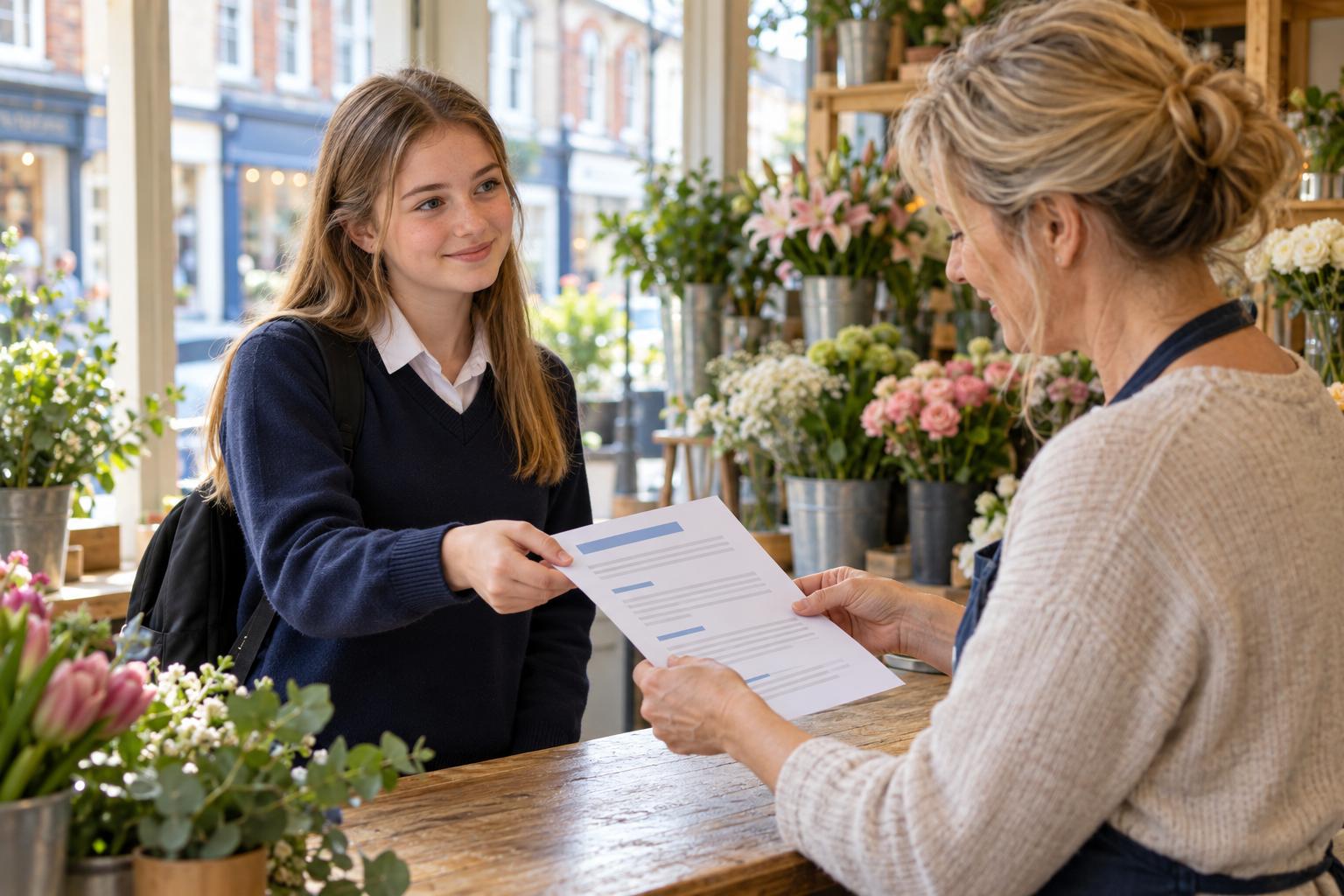
Writing a school CV around GCSEs, work experience and DofE
A school CV introduces your studies, experience and interests to an employer or training provider. You can start with schoolwork, a short placement or responsibilities outside lessons. Choose details that help explain why you’re ready for this opportunity. Our hiring research section covers wider hiring trends, rather than school-leaver results.
What goes on a school CV?
Start with the sections below. Put education near the top when it gives the clearest evidence for the opportunity.
- Contact details: name, mobile number, a sensible email and the town you live in, with no photo or date of birth.
- Personal statement, if useful: name the job or apprenticeship you want and an experience that helps you prepare for it.
- Education: your school and GCSEs or equivalents, plus A levels, BTECs or T Levels if you've stayed on.
- Work experience: your school placement, a weekend or holiday job, regular babysitting or help in a family business.
- Activities and achievements: the Duke of Edinburgh's Award, sports teams, music grades, cadets or school council.
- Skills: languages, computer skills or a first aid course, each one something you could prove.
Whichever of the CV designs further down you pick sets your sections out with clear headings and even spacing, and our full CV writing guide has tips for every part.
How do I show GCSEs and predicted grades?
Separate grades you’ve achieved from predicted results your school has given you. Label predicted grades clearly and use the qualification names and grading scale from your records. Put requested subjects, such as English or maths, where they’re easy to find. The FAQ explains what to change after results day.
How do I write up work experience week and a Saturday job?
Give each placement or job a clear title, employer and dates, then say what you actually did. Distinguish tasks you carried out from work you only observed. These fictional examples show the level of detail to aim for:
- Work experience at a vet’s surgery, one week: cleaned consulting rooms under supervision and watched the team prepare for appointments.
- Saturday sales assistant at a local bakery: served customers and restocked shelves.
- Babysitter for neighbouring families: helped children with homework and followed their evening routines.
Let these bullet points carry your skills: "served customers at the till" proves more than writing "customer service" in a list. Our article on hard and soft skills explains the difference.
Where do Duke of Edinburgh, clubs and volunteering go?
Use an Activities and achievements section. If you have a Duke of Edinburgh’s Award, state the level and whether you’ve completed it or are working towards it. Describe the volunteering or team responsibility most relevant to the vacancy. For a club role, explain your contribution rather than listing membership alone.
How do I adapt my CV for an apprenticeship or college?
Start from one main CV and move the details each opening cares about to the top:
- Weekend or holiday job: list the days you're available, such as Saturdays and the summer holidays, and lead with anything involving customers or teamwork.
- Apprenticeship: name the field you want to learn, check the stated entry requirements and show relevant subjects, practical projects or work experience.
- Sixth form or college: follow the provider’s application instructions. Keep your qualifications, predicted results and activities handy for any form it asks you to complete.
For ideas, browse the examples by industry, such as retail or hospitality, and borrow only the suggestions that honestly fit your own work.
Turn your grades and weekend job into a CV with Rocket Resume
Choose one experience to start with, such as a weekend job or placement. The builder offers suggestions you can edit. Keep the details that match your experience, then add your school and qualifications. Check your dates and grades before you finish.
- Answer the experience question, then choose a design. You can change the design later while keeping your text.
- Enter any weekend or holiday job and pick from the examples for that title. Your school and GCSE grades go in next.
- Change any examples that don't sound like you, and move education above work experience if your grades say more.
- Proofread every line, download it and print copies for shops that accept CVs over the counter.
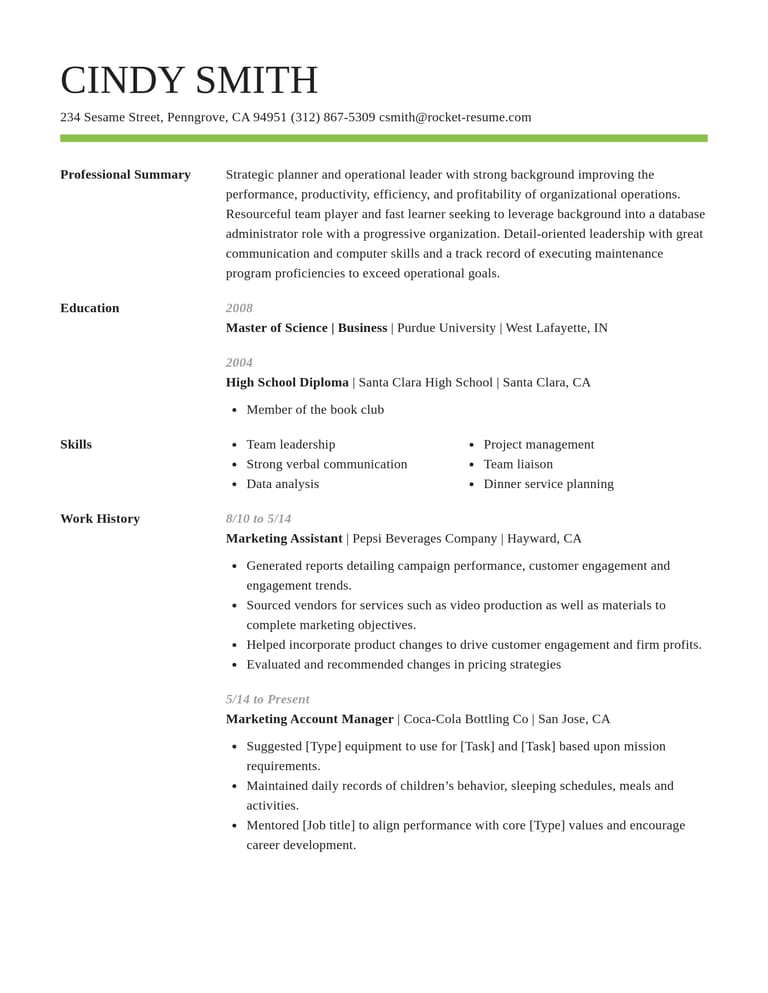
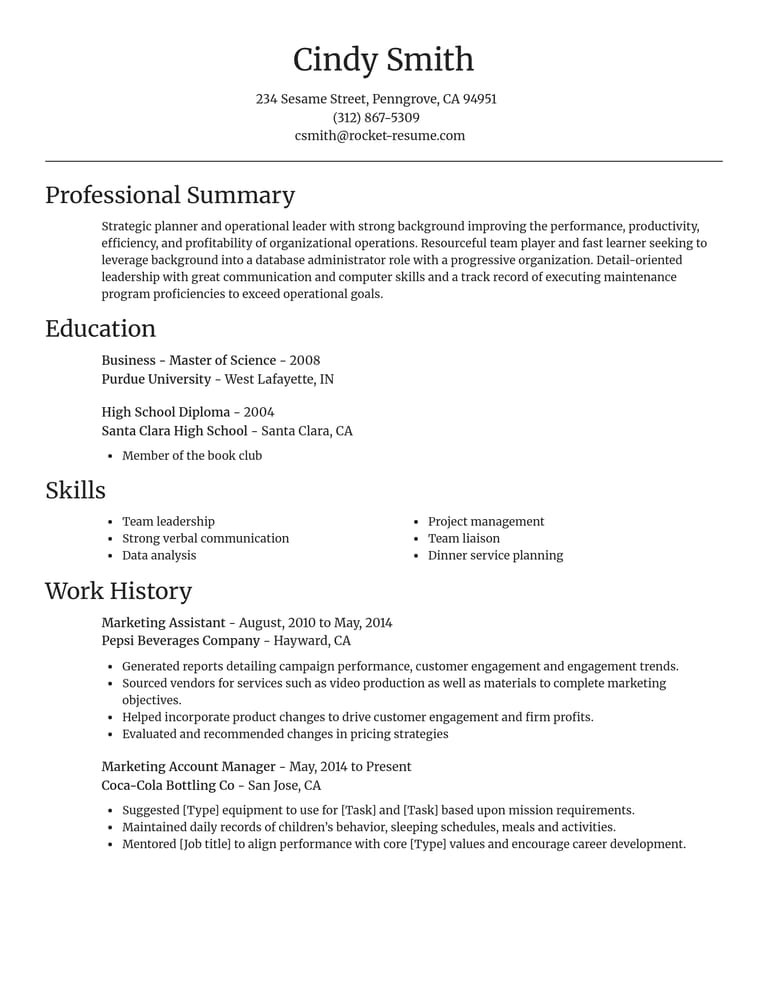
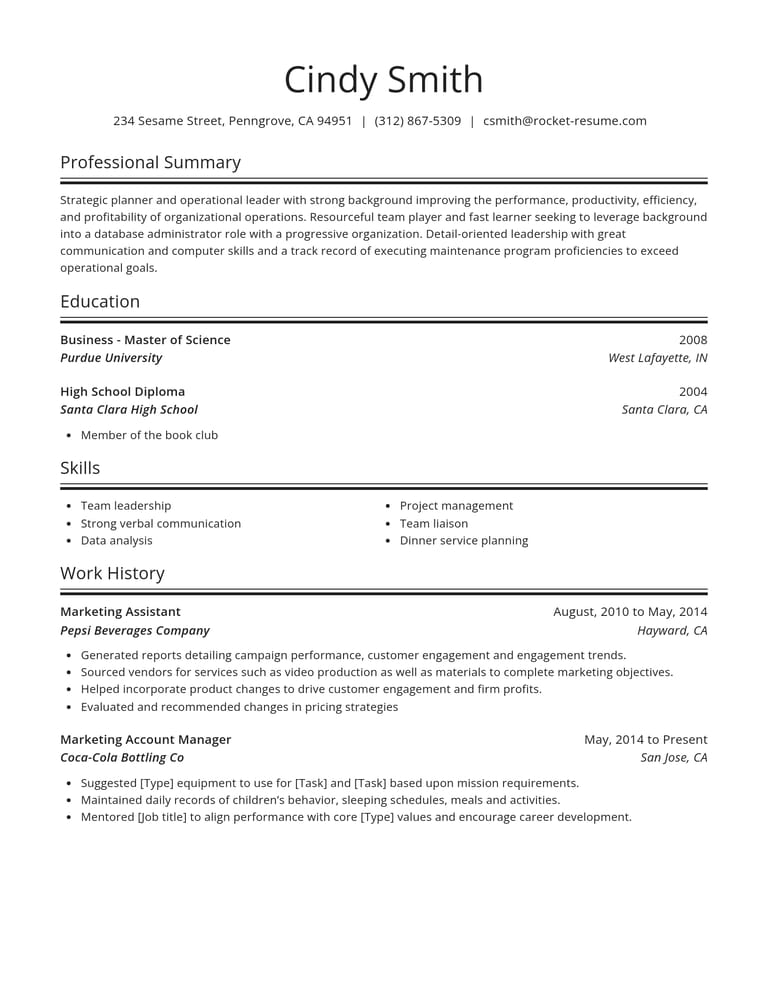
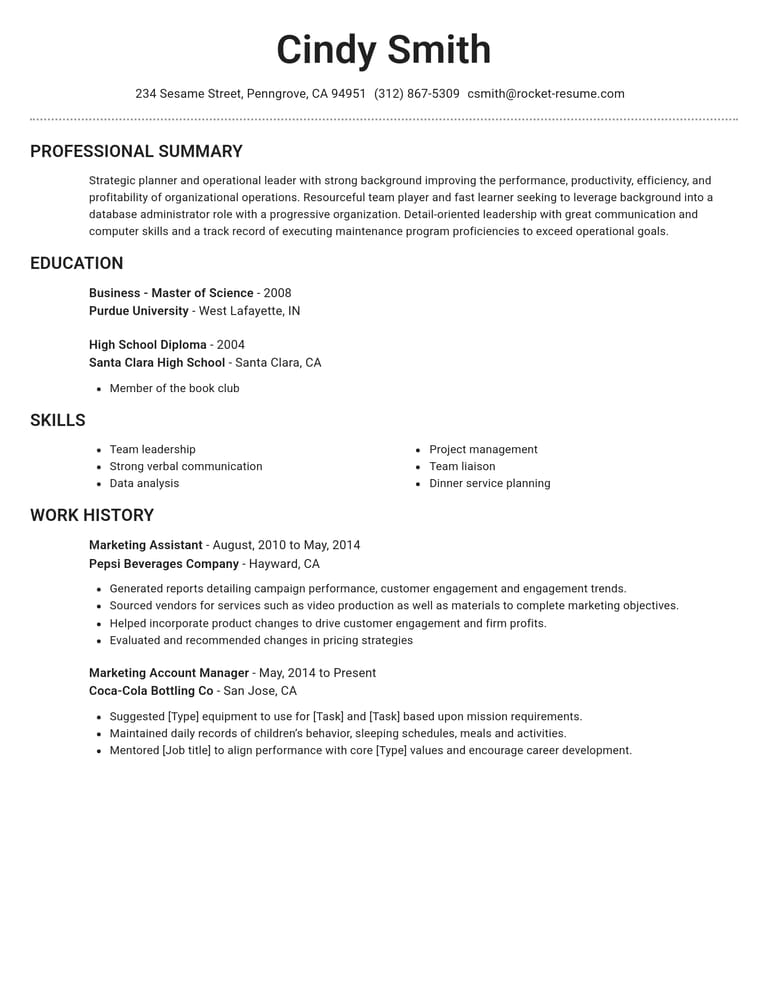
Pick the look of your school CV
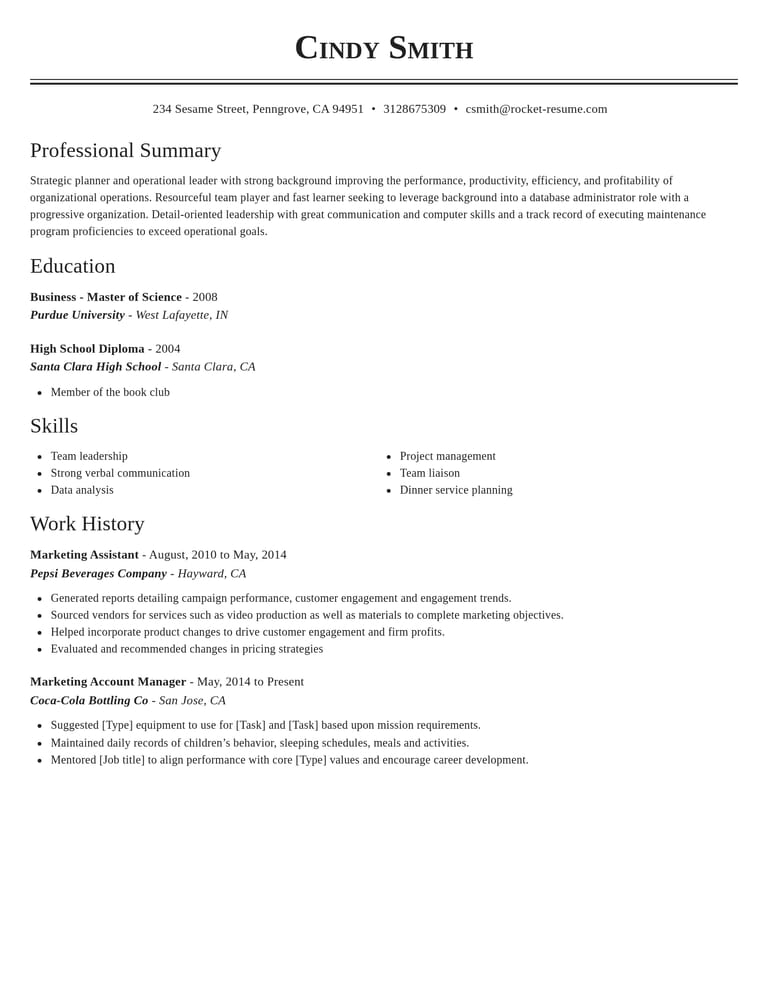
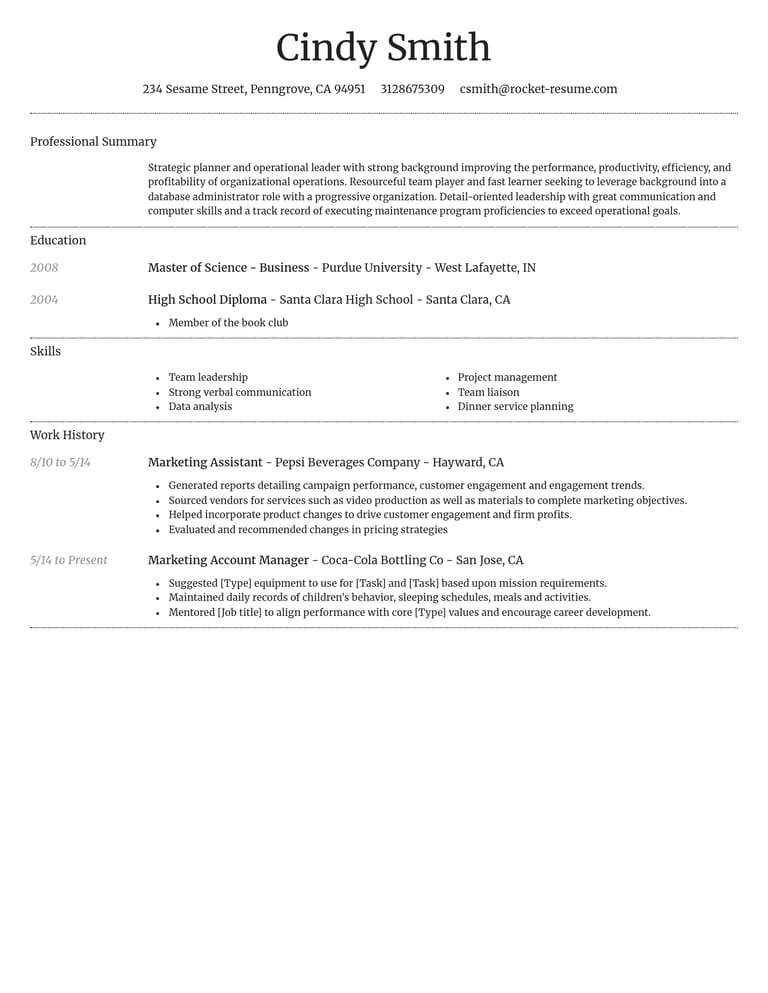
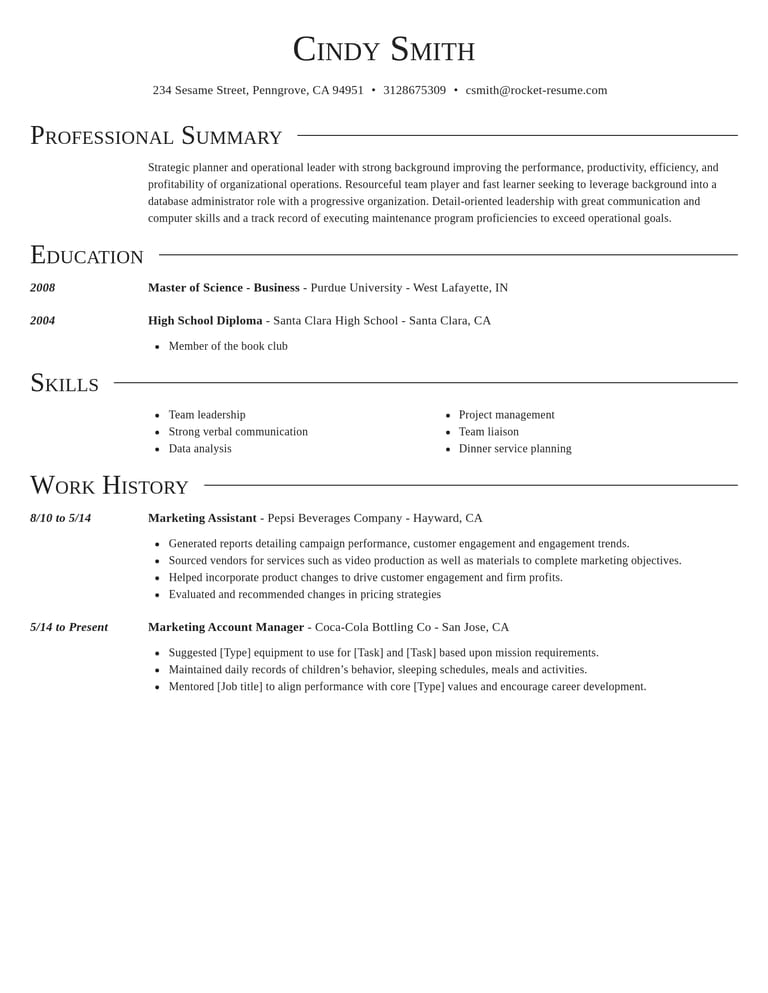
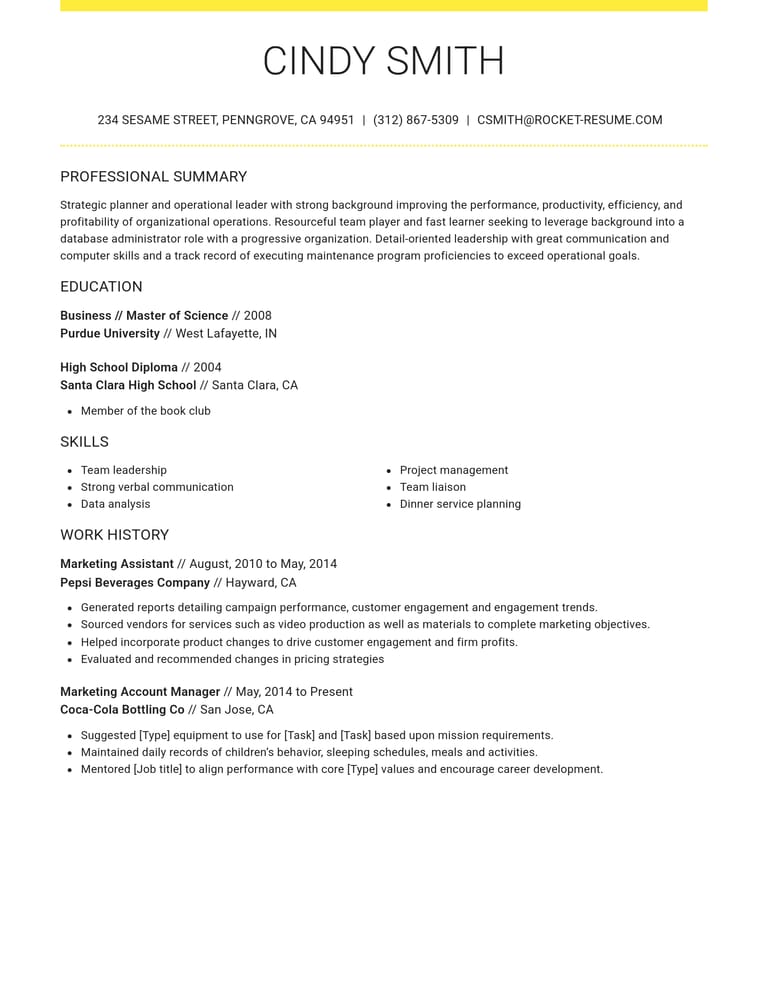
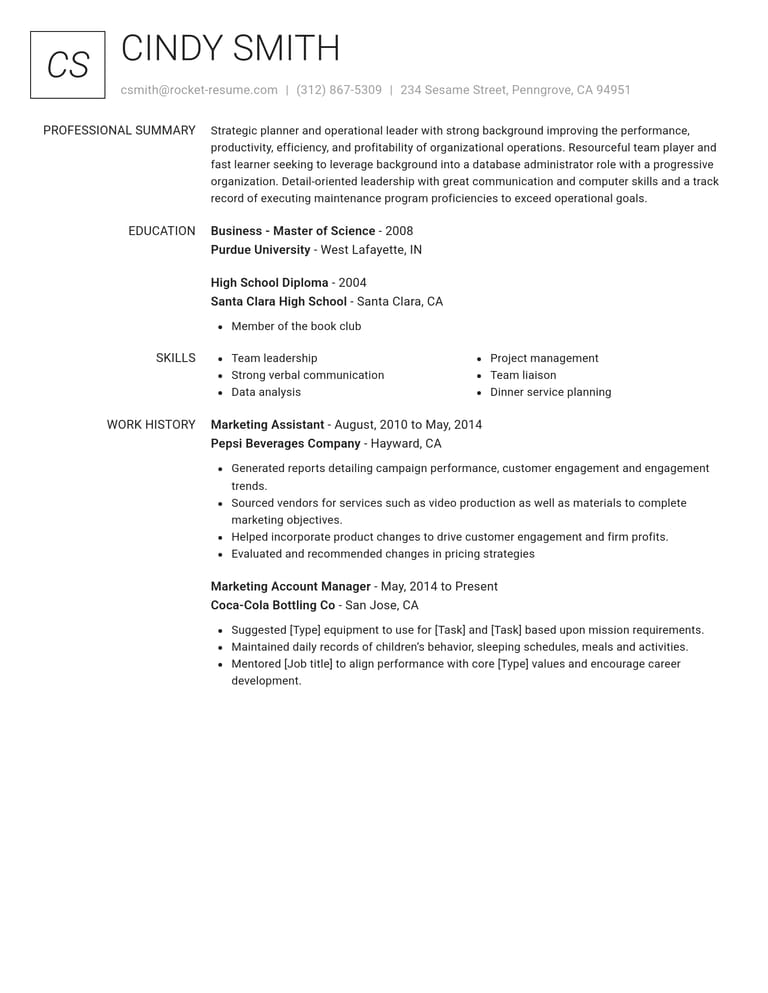
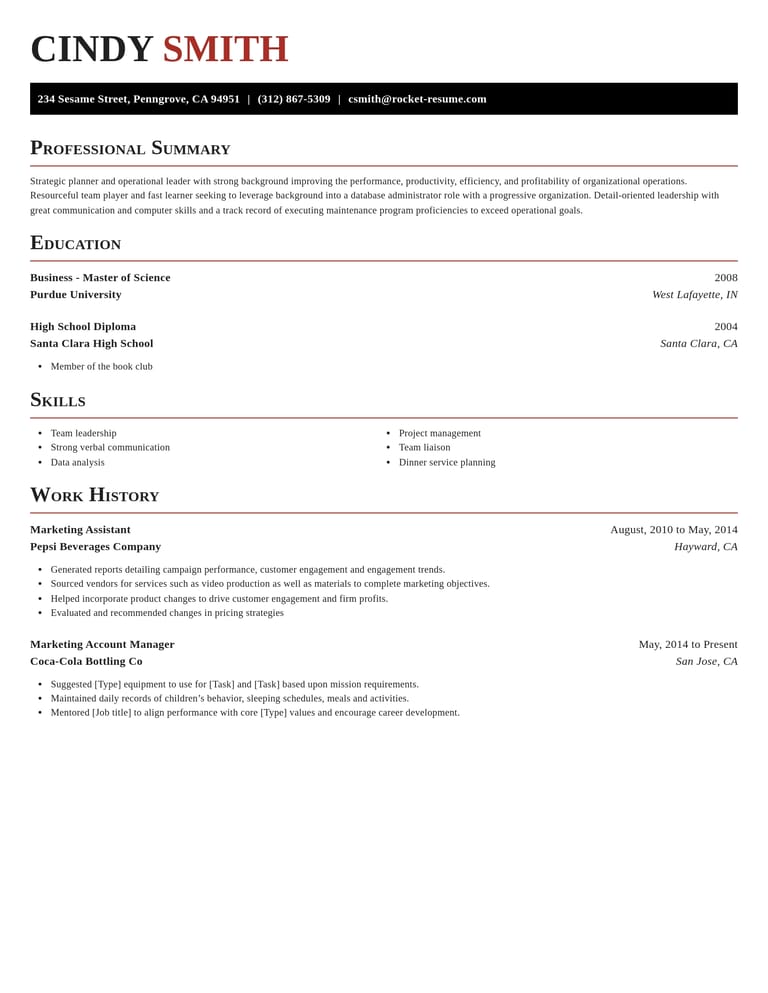
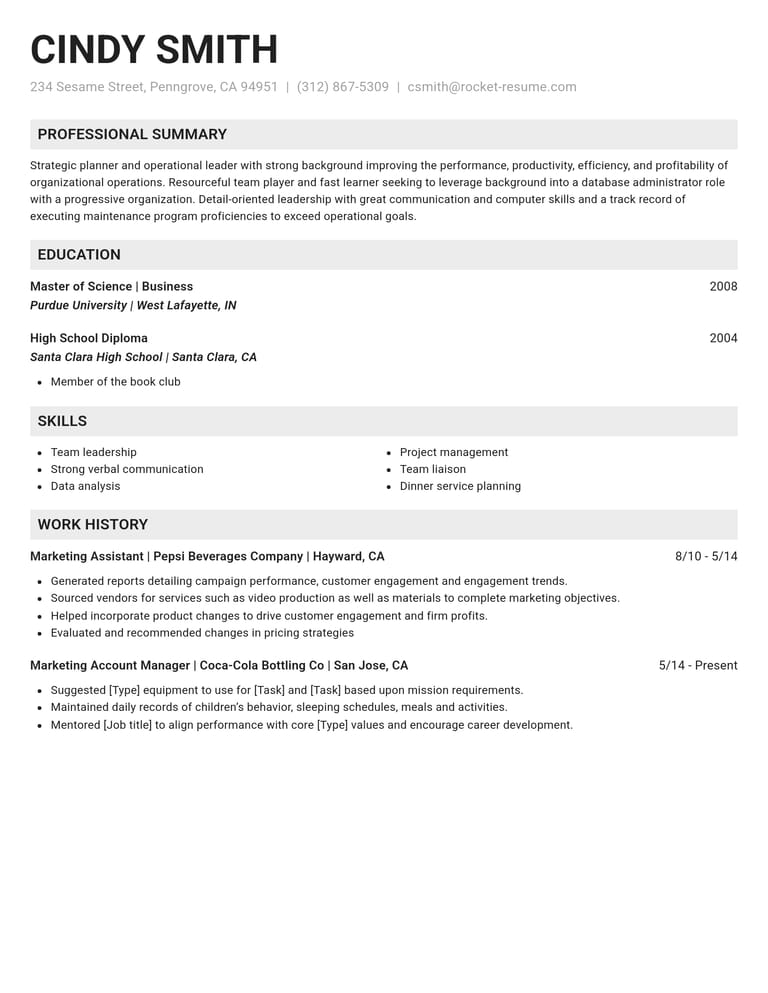
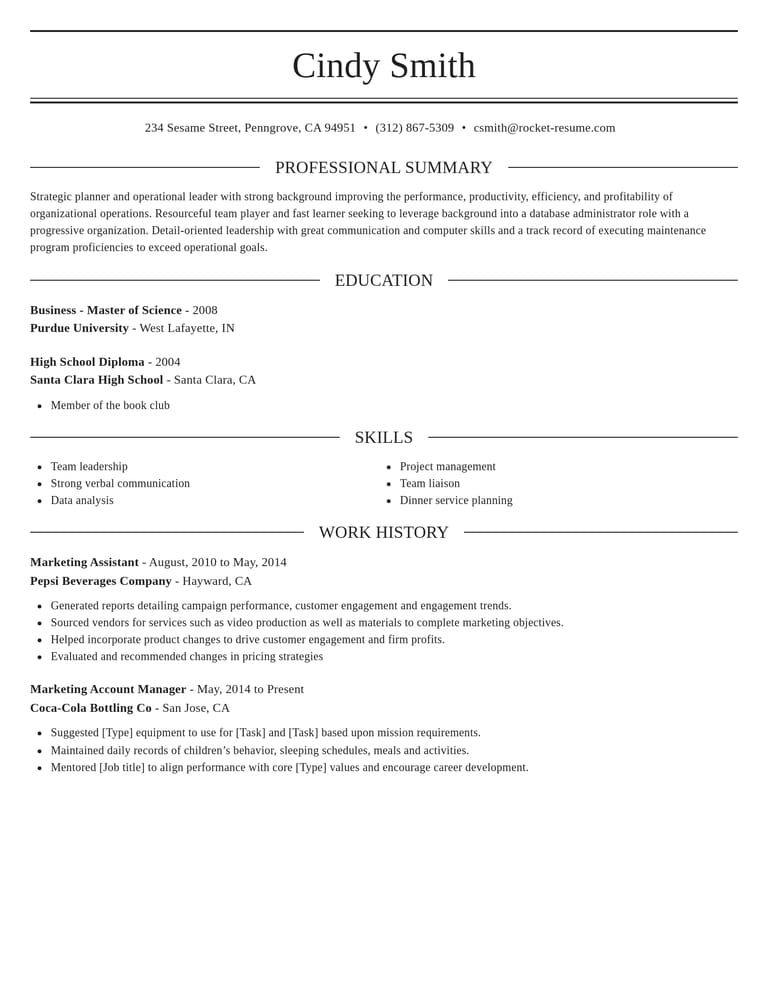
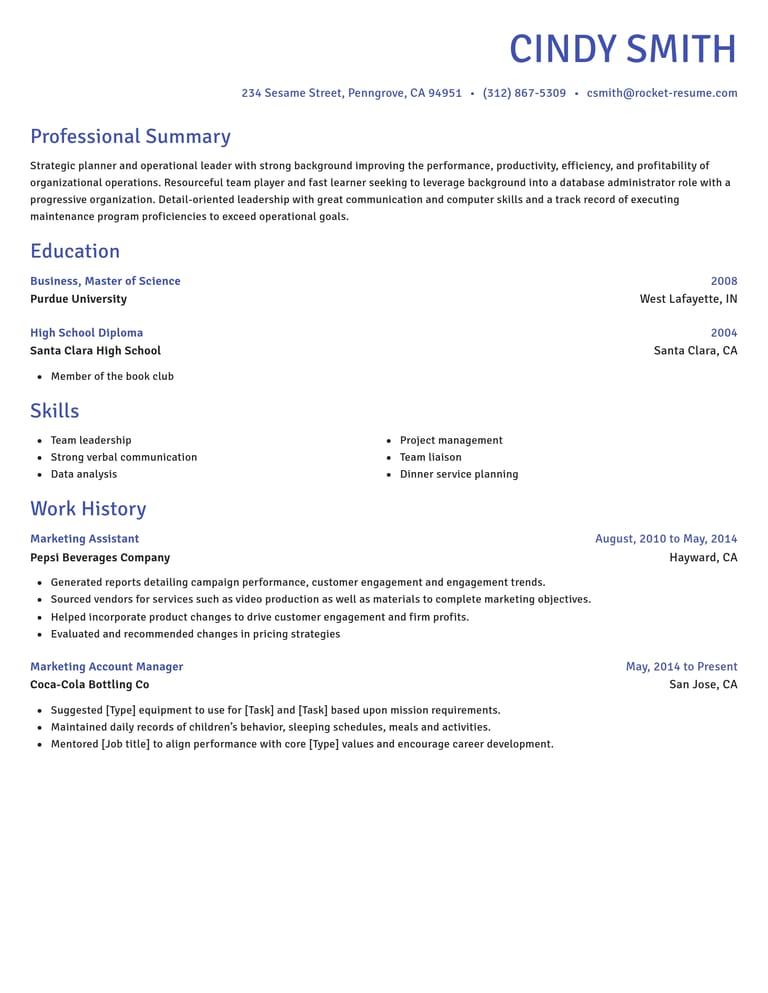
What the builder handles on a pupil's first CV
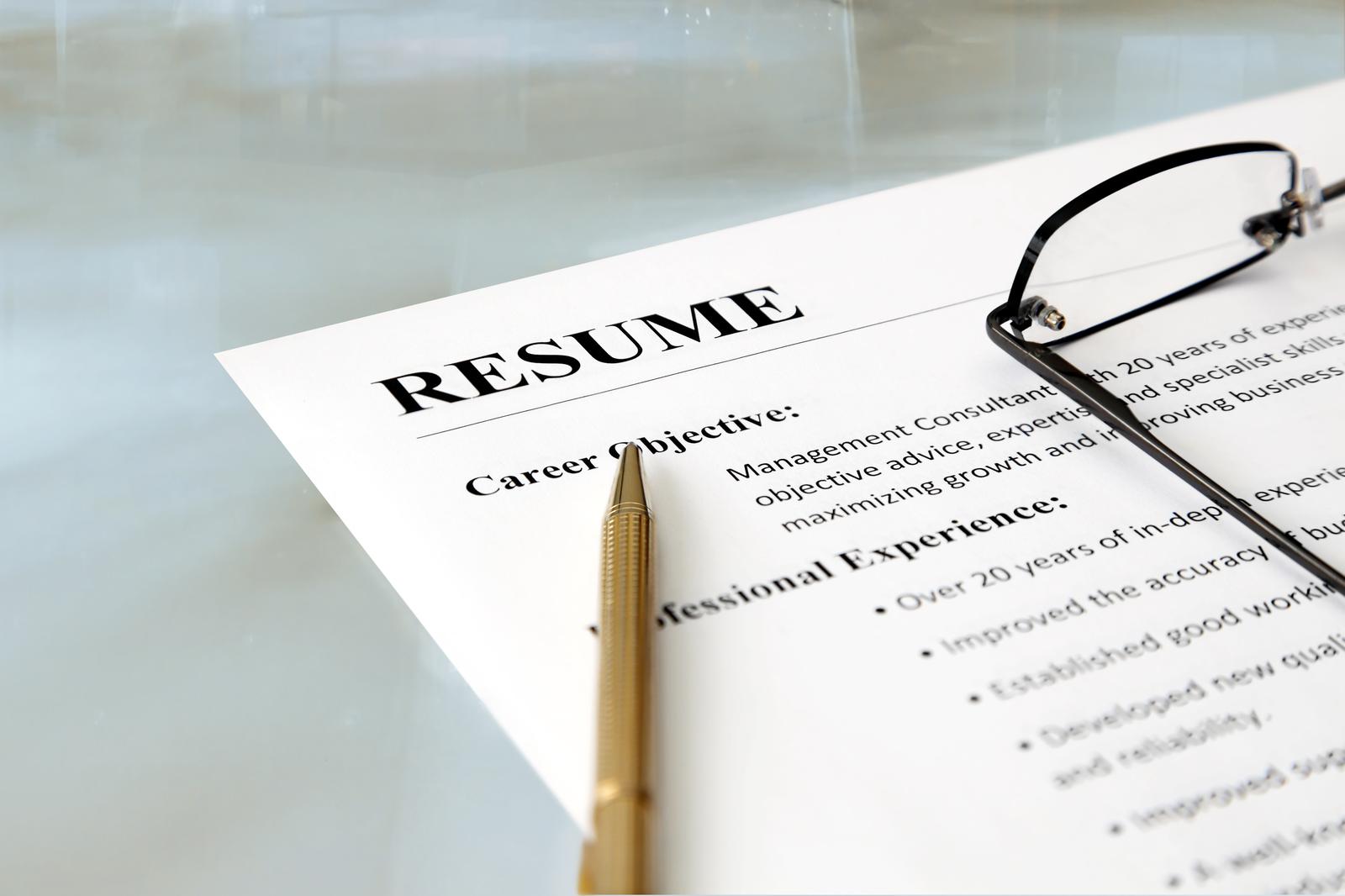
Move your grades up the page
On the final screen, drag education above work history so an employer sees your school and GCSE grades before your jobs.

Examples for your first jobs
Add your job title and look for suggestions that fit the work. Edit each example so it says what you actually did.
A finished look for a short CV
Each professional design handles headings and spacing, so a CV with school, one placement and a few activities still looks complete.

A copy for each opening
Copy your CV inside My Library so an apprenticeship version leads with your subjects and a shop version with weekend work.
Why clear wording matters, even on a first CV
“Great resume builder, I'll be using it again”

“I needed a resume fast, great and very useful”

School CV questions from pupils and leavers
What should a school leaver put on a CV?
Your contact details, a short personal statement, your school and grades, any work experience or part-time job, your activities and achievements, and a few skills with proof behind them. Leave off a photo and your date of birth.
What goes on a CV at 15 or 16 with no job?
Your school and GCSE subjects come first, then work experience week, your Duke of Edinburgh's Award, clubs or teams, and any help in a family business or regular babysitting. Add a line about what each one involved. In the builder, answer No experience at the start.
Should I put predicted grades on my CV?
Use predicted grades your school has provided and label them as predicted. Don’t make up a prediction for a result you’re waiting for. Replace predictions with achieved results when you receive them.
Do I need a personal statement on a school CV?
A short introduction can help if it says something useful about this application. Name relevant experience and what you’re applying for. For example, if you’ve worked weekend bakery shifts, connect that customer service experience to the café role you want.
Do sixth forms and colleges ask for a CV?
Check the provider’s instructions. If it uses an application form, your CV can help you gather dates, grades and activities before you complete it. Send a CV when it’s requested or accepted.
How long should a school CV be?
Most pupils and school leavers fill one page. If yours spills onto a second, cut the weakest details first, such as primary school details or hobbies unconnected to the job.
Can I hand my CV in to shops for a Saturday job?
Ask whether the shop accepts CVs in person or wants you to apply online. If it accepts a copy, choose a quiet time and explain what work you’re looking for. Respect the answer if it isn’t taking CVs.
Pick your industry, then build your CV
This week’s industry picks





- 14 examples
- 17 examples
- 38 examples
- 14 examples
- 9 examples
- 106 examples






Show all industries (A–Z)Show fewer
- Aerospace & Defense, 8 examples
- Agriculture, 23 examples
- Apparel & Textiles, 13 examples
- Architecture, 15 examples
- Artificial Intelligence, 6 examples
- Arts & Entertainment, 24 examples
- Automotive, 21 examples
- Beauty & Personal Care, 17 examples
- Biotechnology & Life Sciences, 7 examples
- Business Services, 23 examples
- Chemical Engineering, 4 examples
- Childcare, 14 examples
- Construction, 106 examples
- Creative, 15 examples
- Customer Service, 17 examples
- Education, 94 examples
- Energy, 39 examples
- Environmental Science, 5 examples
- Finance, 63 examples
- Food & Beverage, 68 examples
- Government, 48 examples
- Healthcare, 160 examples
- Hospitality, 35 examples
- Human Resources, 18 examples
- Insurance, 10 examples
- Legal, 12 examples
- Logistics, 37 examples
- Manufacturing, 68 examples
- Marketing, 8 examples
- Media, 20 examples
- Military, 24 examples
- Mining & Metals, 9 examples
- Nonprofit, 8 examples
- Pharmaceuticals, 12 examples
- Public Relations, 10 examples
- Real Estate, 7 examples
- Retail, 38 examples
- Robotics, 11 examples
- Sales, 14 examples
- Security Services, 19 examples
- Social Services & Counseling, 21 examples
- Social Work, 14 examples
- Sports & Fitness, 96 examples
- Technology, 67 examples
- Telecommunications, 6 examples
- Tourism & Travel, 9 examples
- Transportation, 38 examples
- Veterinary, 9 examples
Is your role missing here?

See how others found the builder
from 3,900+ reviews