Compare CV examples for
Choose a CV example close to the job you want and the experience you have. Use it to plan your sections, then fill them with your own work.
- Sample CVs for real jobs
- The usual CV layout, part by part
- Create it in your phone's browser
- Suggestions for your role

CV examples to compare by role
Pick the example nearest your own work to see a complete CV for that role, or find yours in the full list.
- Talent acquisition recruiter CV example(opens in new tab)
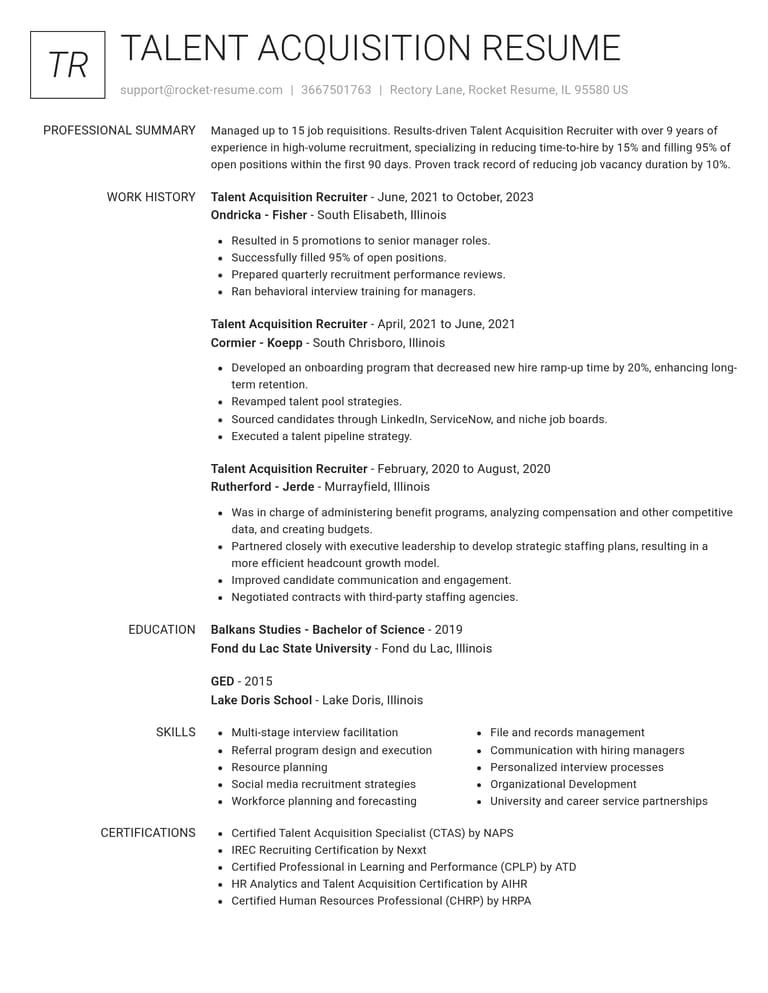
Finding and screening candidates, arranging interviews and working with hiring managers to fill open roles.
- Social worker CV example(opens in new tab)
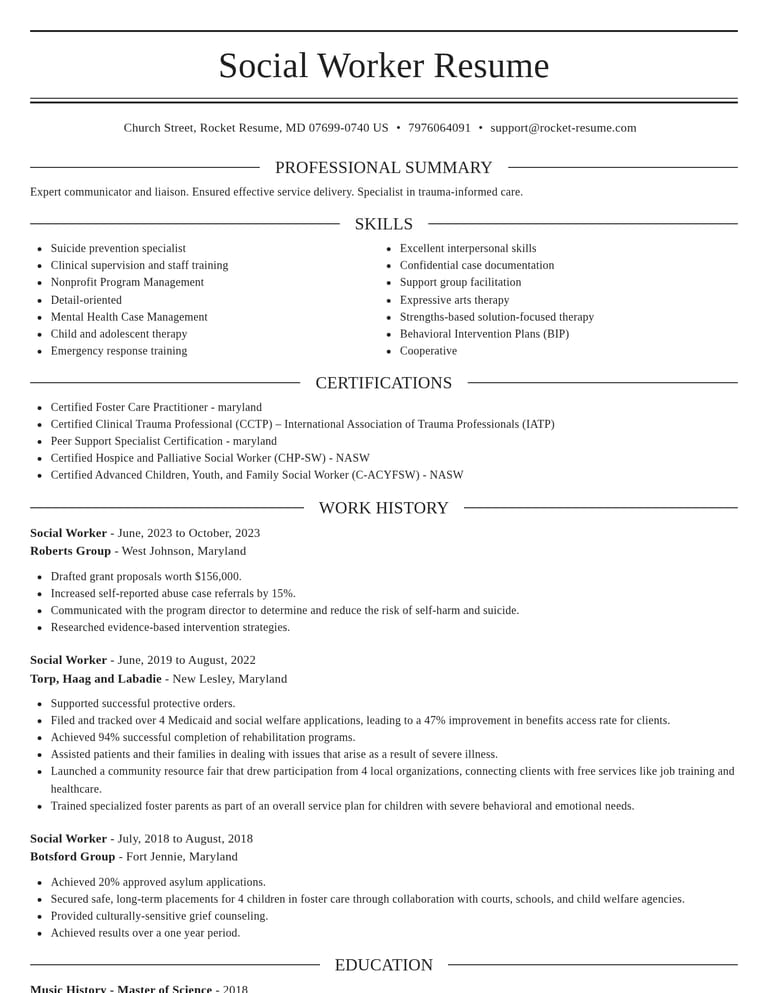
Managing a caseload and arranging support such as housing, health care or counseling.
- Fleet supervisor CV example(opens in new tab)
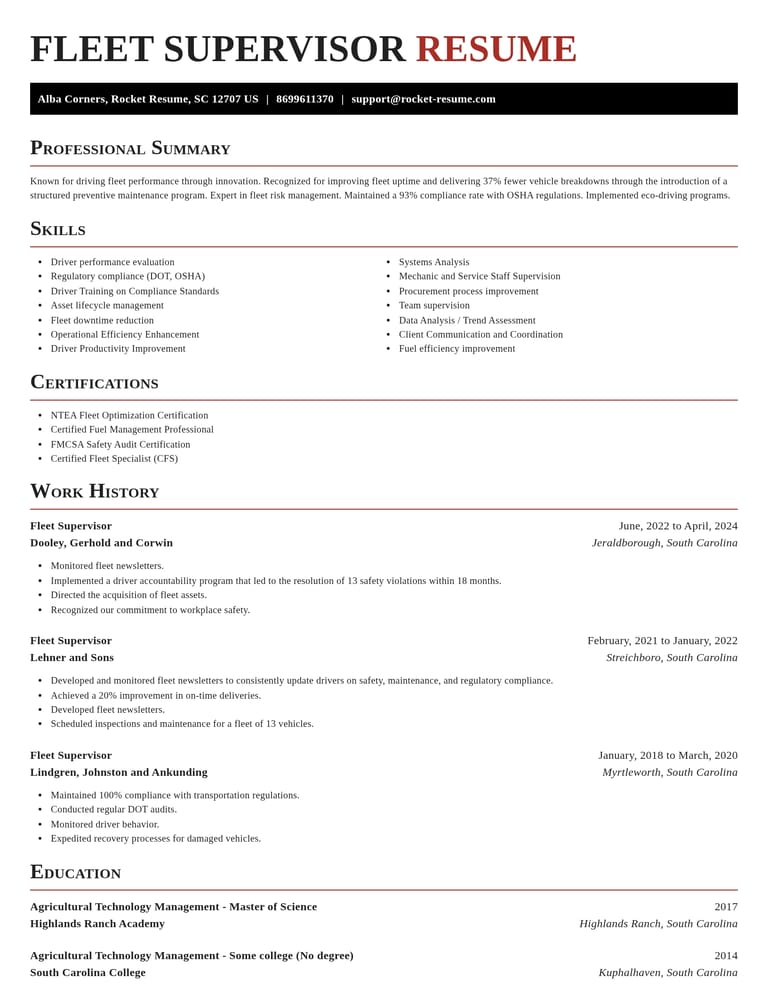
Overseeing a company's vehicles: tracking each one, filing environmental reports and keeping fleet costs down.
- Growth manager CV example(opens in new tab)
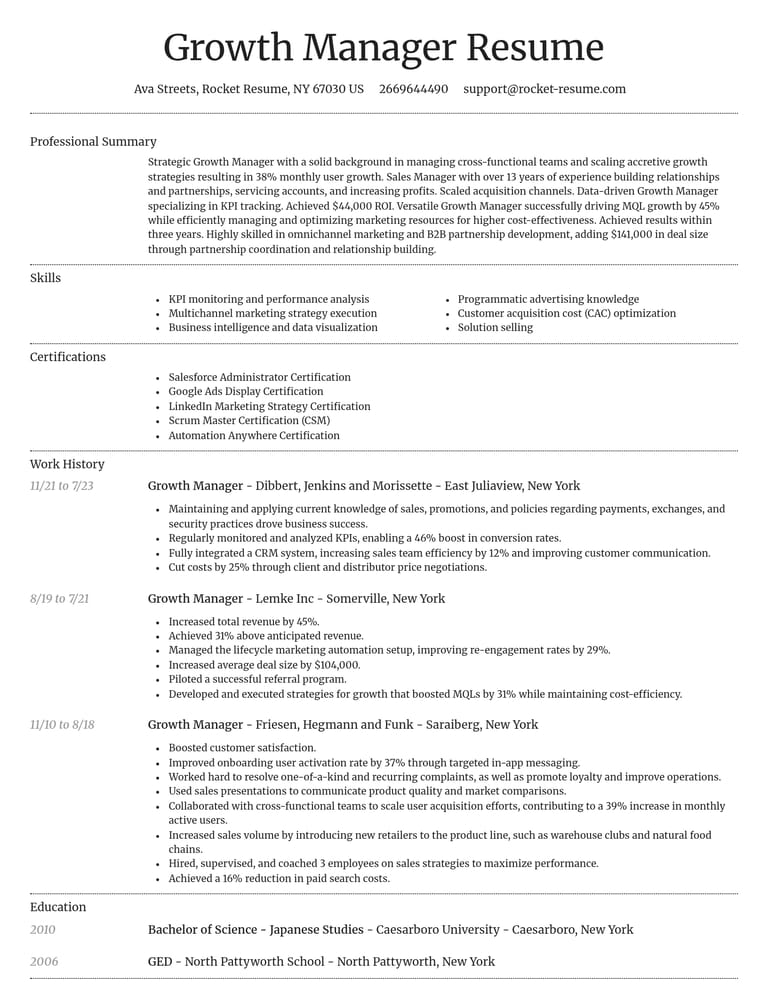
Leading sales teams to revenue targets, running customer retention programs and keeping budgets in check.
- SEO intern CV example(opens in new tab)
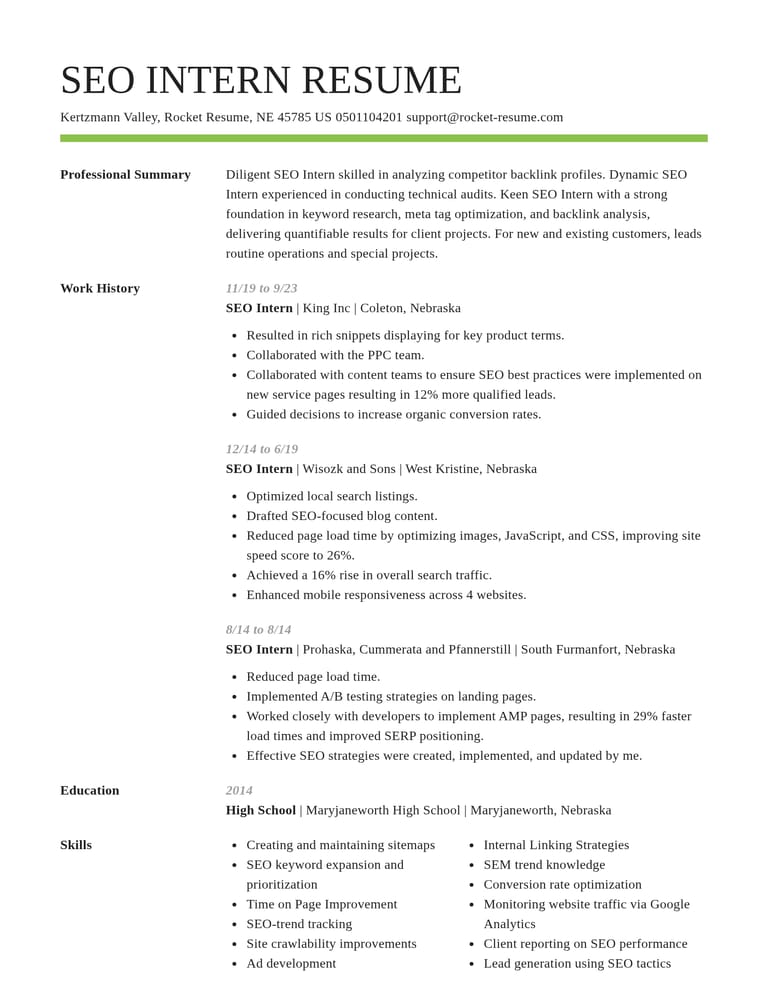
An entry-level CV built on tasks and tools: keyword research, site maps, meta tags and search reports.
- Mechanic CV example(opens in new tab)
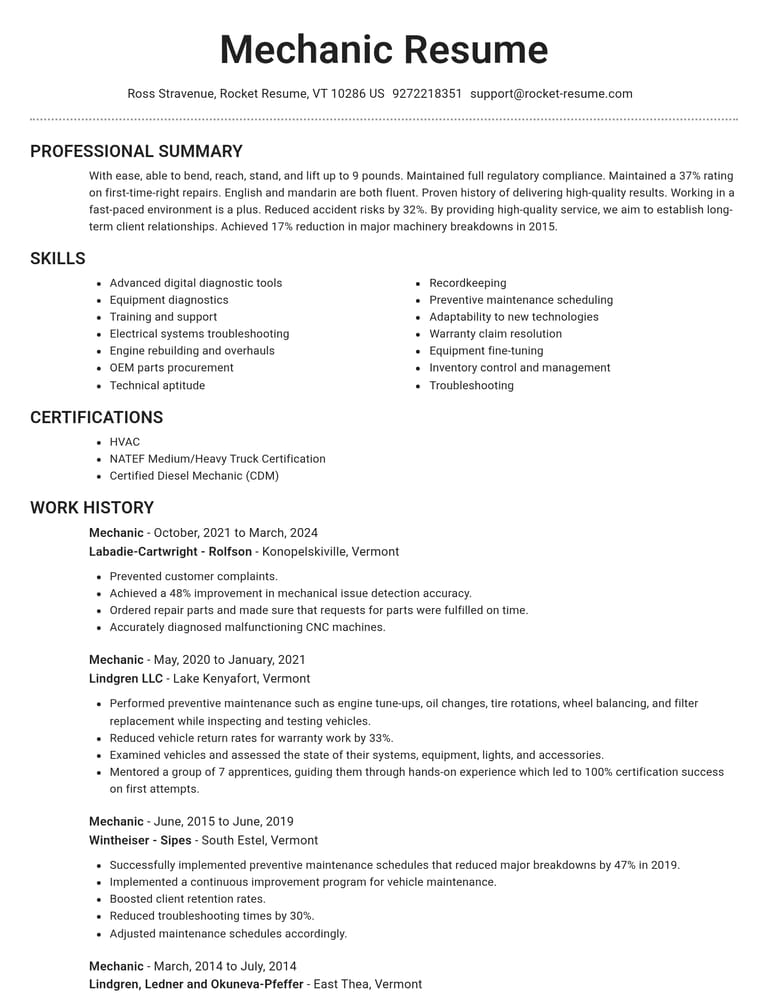
Inspecting vehicles, diagnosing faults, making repairs and keeping service records.
- Junior financial controller CV example(opens in new tab)
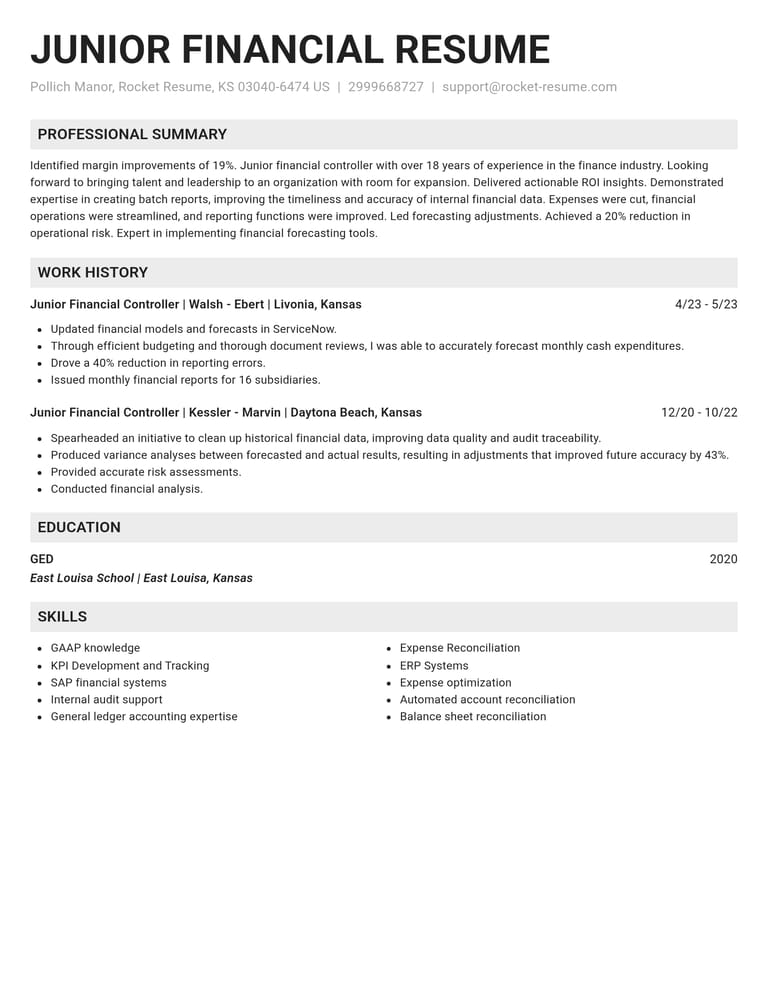
Early-career finance work: reporting packages, reconciling discrepancies and chasing overdue invoices for senior managers.
Examples worth borrowing from these CVs
Save suggestions for your CV
Tap the bookmark next to any suggestion to save it.
Saved itemsThe examples, skills, job titles and industries you save, together in one place.
RecommendedPages, searches and examples you used but haven’t saved.
In the builderYour saved suggestions show up in the CV builder, ready to add as you write.
You’re in controlYour saved items are private. Remove any of them at any time.
The usual CV layout, part by part
These sections are a useful starting point for a job CV. Put the evidence most relevant to the application near the top. Academic CVs may need a different structure.
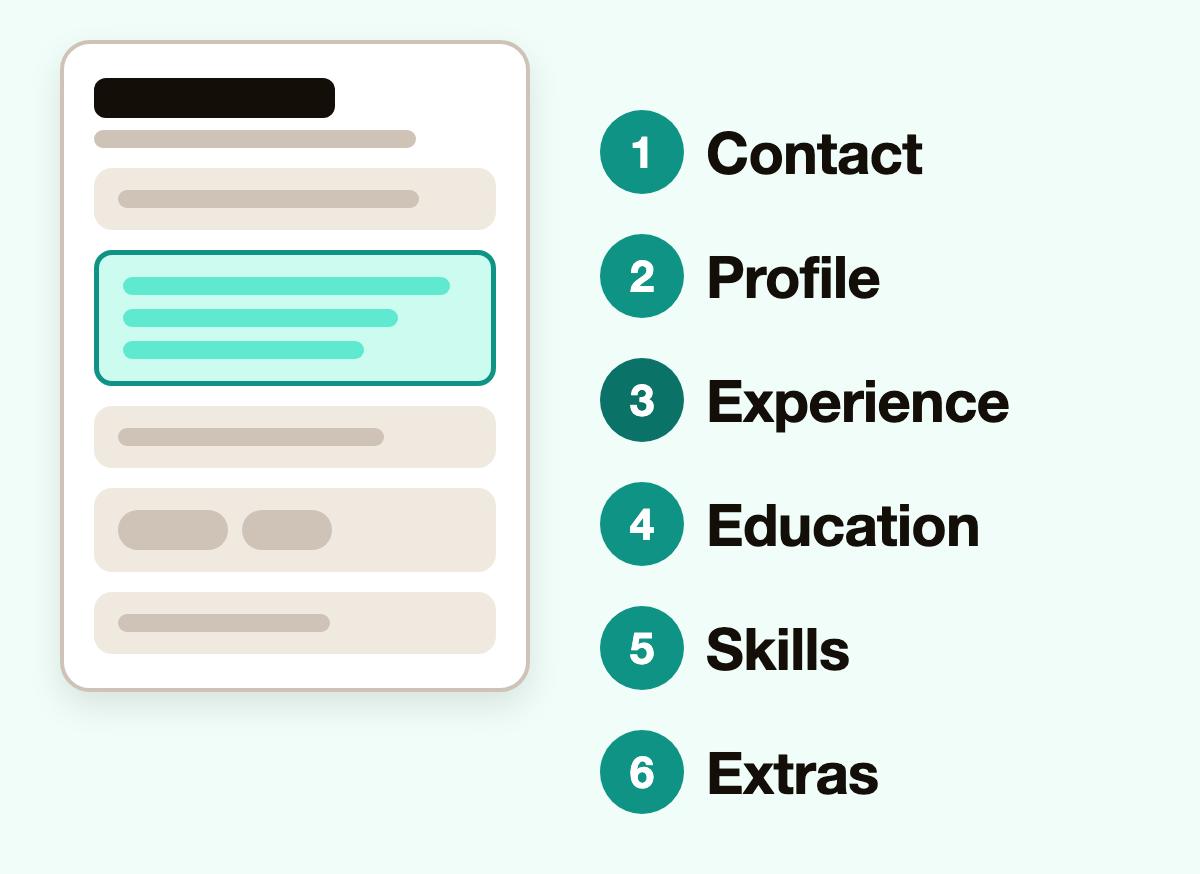
- Name and contact details
How to reach you: your name, phone, email and location, placed at the top where a recruiter looks first.
- A short profile
Two to four lines on who you are, your strongest skills and the job you want next.
- Work experience
Your jobs from newest to oldest, each with dates, employer and a few bullet points on what you achieved.
- Education and training
Qualifications with the most recent first, plus courses or certificates that support the role.
- Skills
Skills from the job ad that your experience backs up, from software to spoken languages.
- Extras
Certifications, memberships or volunteering, when they strengthen your case for this particular job.
Make your CV with the example beside you
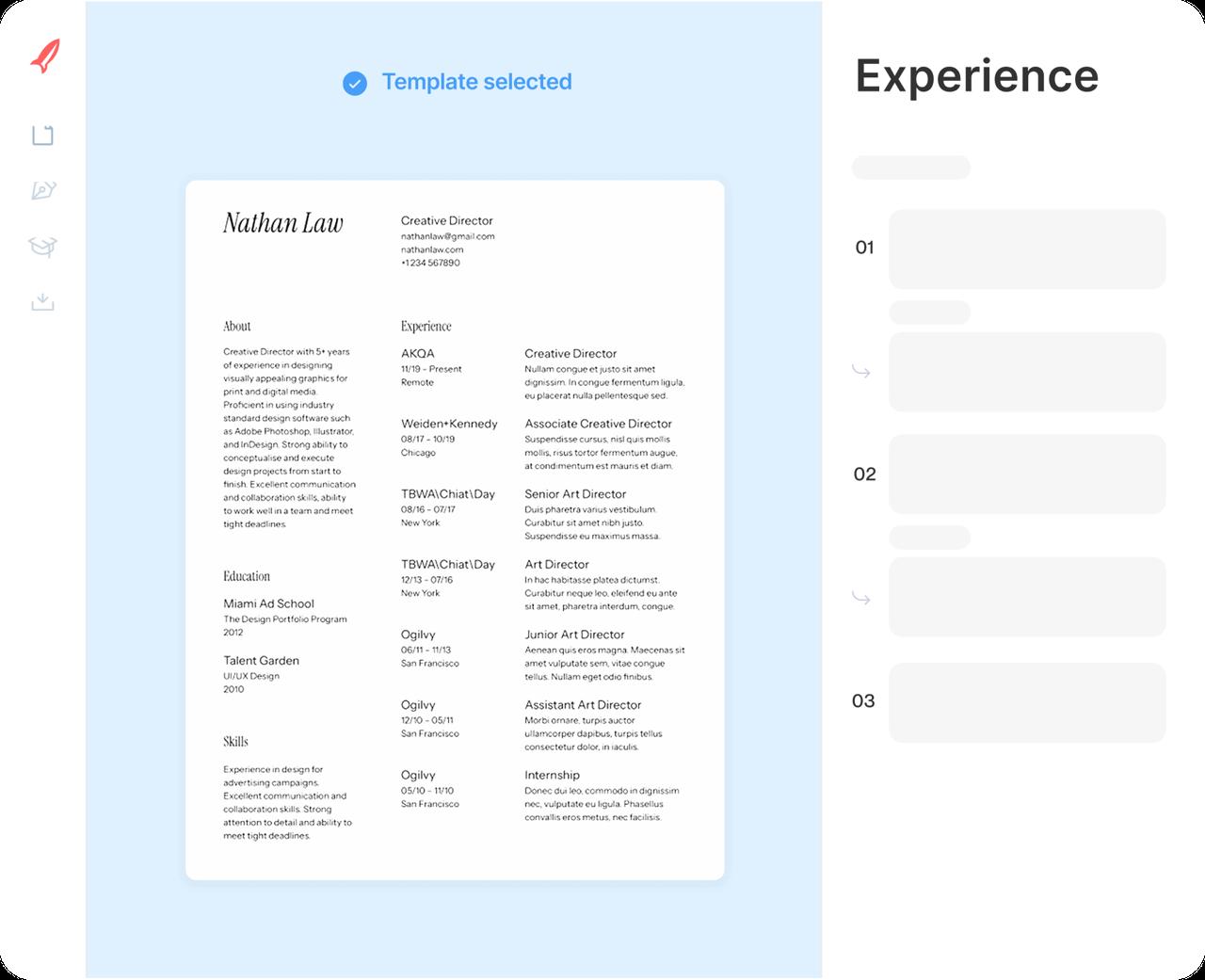
Step 1
Pick your example and a design
Keep the example for your job open, answer a quick question about your experience and choose a design.
Step 2
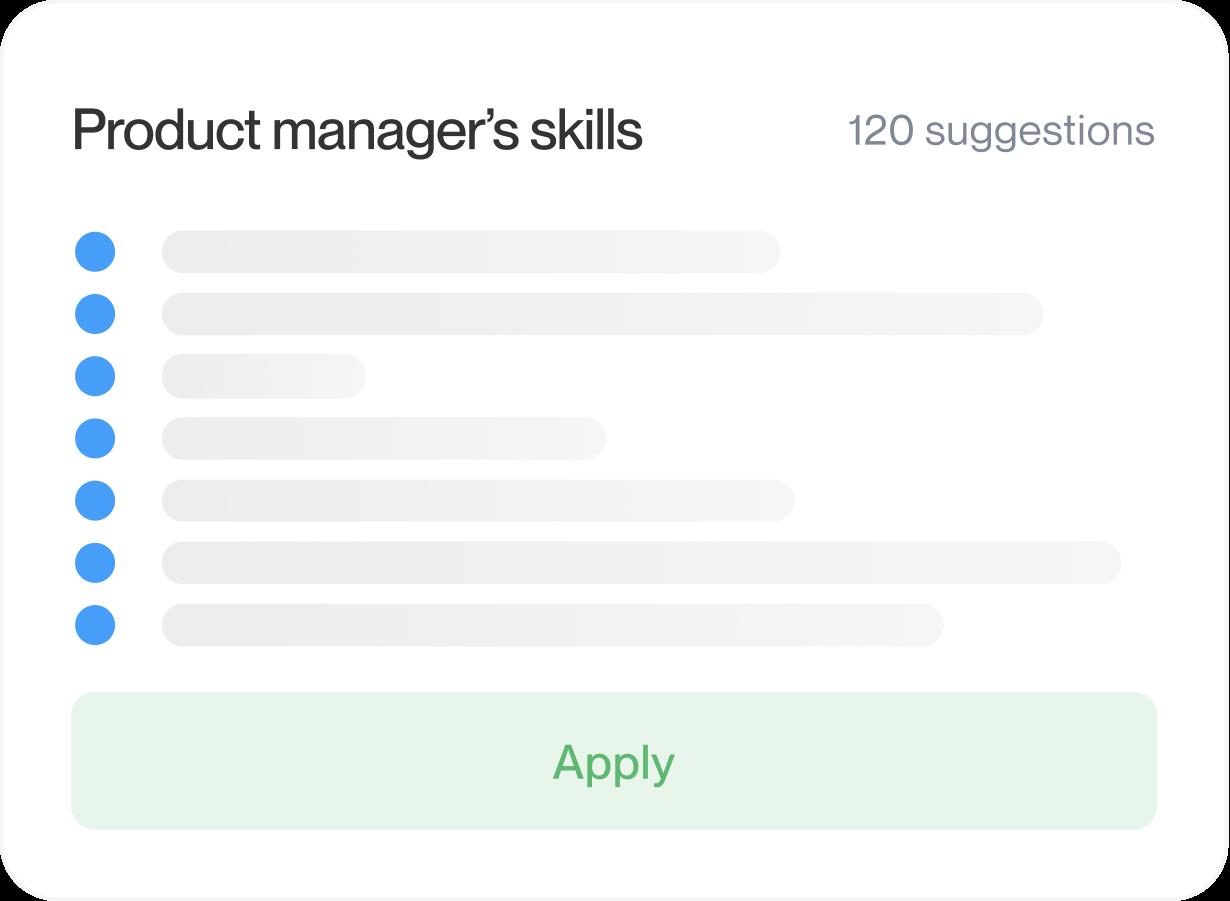
Fill in each part
Work from contact details to skills. Suggestions appear for each job title you enter; reword them with your own results.
Step 3
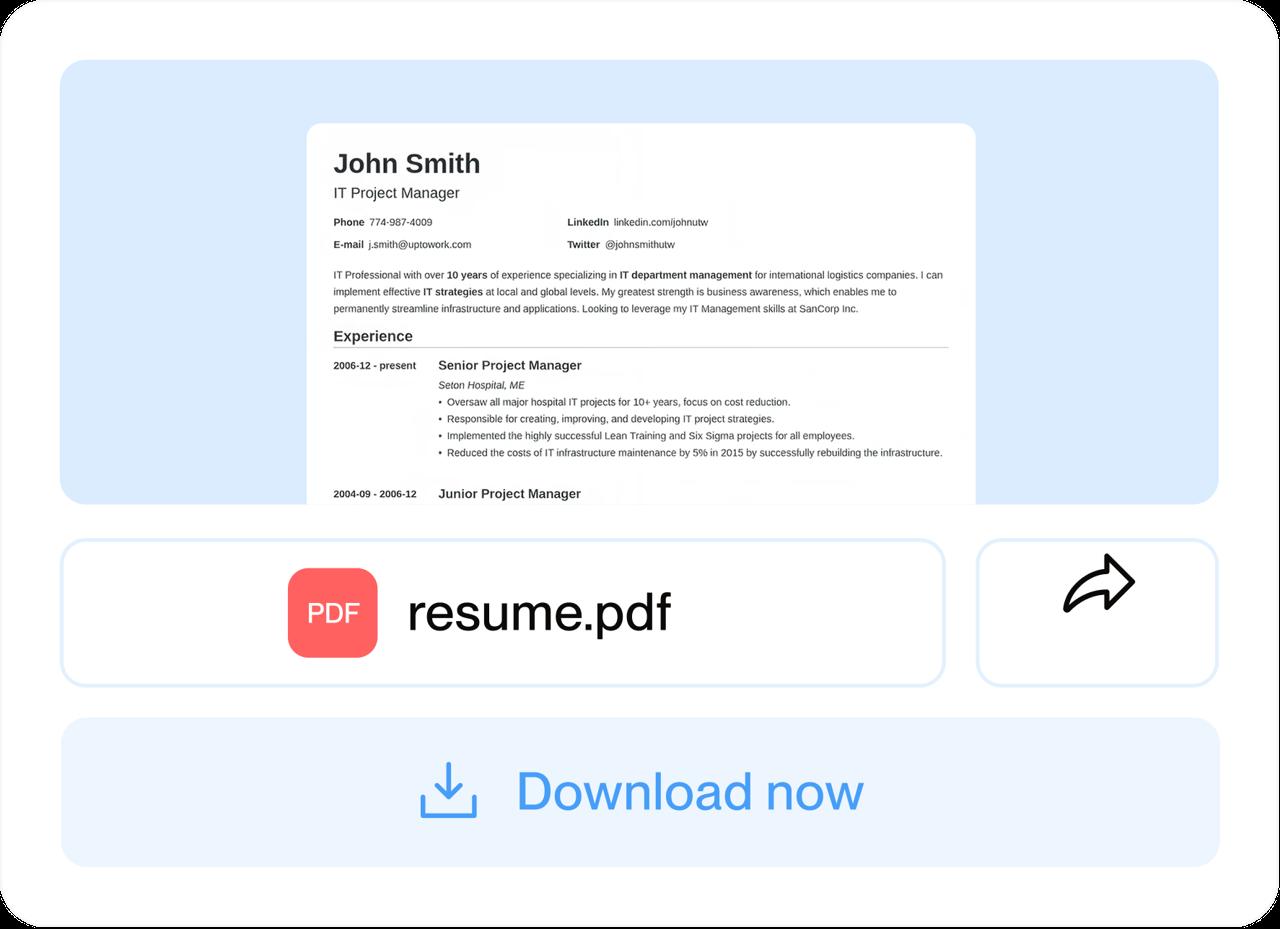
Check it and download
Reorder sections if your education or skills should come first, check every date in the preview, then download your CV.
Step 1
Pick your example and a design
Keep the example for your job open, answer a quick question about your experience and choose a design.
Step 3
Check it and download
Reorder sections if your education or skills should come first, check every date in the preview, then download your CV.
Step 2
Fill in each part
Work from contact details to skills. Suggestions appear for each job title you enter; reword them with your own results.

How to choose a CV example worth following
Start with the job you want, then check whether the example reflects experience like yours. A senior sample can show what a role involves, but it should not lead you to claim responsibilities you haven’t held.
Same job, or a close neighbor
Pick the example for the role you’re applying for, not the one you hold now. If yours is hard to find, choose a title from the same field with similar daily work, so the duties and skills still fit. Someone moving up from supervisor to manager, for instance, learns more from a manager’s CV than from another supervisor’s.
Same level of experience
A manager’s CV leads with results, team size and budgets. An entry-level CV leans on education, projects and the tools you’ve learned. Compare the SEO intern example with the growth manager one above to see the difference. Following the wrong level makes a CV feel either thin or overstated.
Examples you can honestly match
Read each bullet and ask whether you’ve done something like it. If you have, rework it with your own numbers. If you haven’t, skip it, however good it sounds. Interviewers can ask about any line, so keep only what you can talk about; a plain line with a real story behind it beats a polished one you can’t explain.
What makes a useful work example
Look for a clear action and, where you can support it, the result. Hypothetical example: “Reviewed delivery routes and changed stop order, which reduced repeat journeys.” That shows an action and an outcome; it does not state the fleet size or the amount saved. Add those details only if you know them.
A layout you can scan in seconds
You should spot every job title, employer and date at a glance. If you have to hunt for them, look for a clearer example before you copy its layout. Check where each job’s dates sit, too: the same spot on every entry makes a career easy to follow. The usual order in the layout section above is the safest model for most job applications.
How many examples should I compare?
Start with two or three: one for your target job, one for similar work and, if useful, one at your experience level. Compare them with the job advert. A detail appearing in just one example may still be essential for your application.
Same country, same conventions
Check the employer’s instructions and use an example for the country where you’re applying. For UK job CVs, a short introduction normally follows your contact details. Write dates consistently; spelling out the month avoids ambiguity.
Then make the CV example your own
Borrow the structure and leave the details behind. Once you’ve chosen your example:
- Keep a section order that suits your strongest relevant experience.
- Replace every made-up detail with your own facts.
- Cut anything that does nothing for the job you want.
- Read it aloud to catch anything that still sounds borrowed.
For format and length, our CV writing guide covers both in detail. For examples sorted by field, with a tip for each, visit CV examples by job title.
CV format questions
Which CV format works best for a job application?
For most applications, reverse-chronological: your most recent job first, then earlier ones. Functional and combination formats group experience by skill, but most employers find a job-by-job history easier to follow.
What is an example of a curriculum vitae?
A CV example shows how someone might organise their experience, education and skills. The featured examples here focus on job applications. An academic CV may also need research, publications and teaching, so choose a model for that purpose.
Should I copy an example's layout exactly?
Use it as a starting point. Keep clear headings and consistent dates, but change the order if education, projects or recent work provide stronger evidence for the job. Write the content from your own experience.
How many pages should a CV be for a job?
Follow the application’s length instructions first. For a UK job CV, one or two pages is a useful starting point. Keep relevant experience and cut repetition. Academic and research applications may call for a longer record.
How should I write the dates on my CV?
Pick one style, such as the month and year, and use it for every job, course and certificate. Put the dates in the same spot on each entry, so a reader can follow your timeline at a glance.
Should a CV example match my level of experience?
Yes, as closely as you can. A graduate CV example leads with education and projects, while a senior one spends its space on results and the teams you led, so an example at your stage shows you what to put first.

Ratings from people who used the CV maker
from 3,900+ reviews