12 Volunteer Experiences Examples for Resume-Building in 2026
Where volunteer work belongs on a 2026 resume, how to format titles, dates, and quantified bullet points, plus 12 example entries from food banks and helplines to Peace Corps and disaster response.

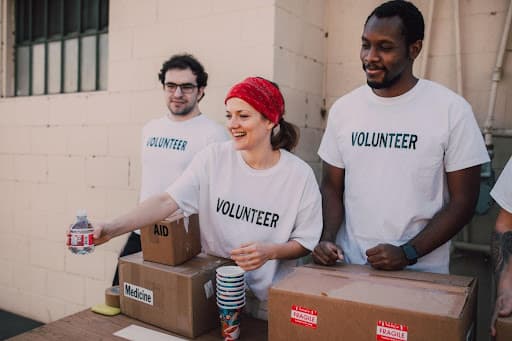
The employment landscape of 2026 has shifted fundamentally. As generative AI handles more technical execution, recruiters and high-level AI filters have pivoted their focus toward "Human-Centric Intelligence"—the empathy, ethical judgment, and community-minded leadership that machines cannot replicate. Volunteer work is no longer just a "nice-to-have" addition; it is the primary evidence of your soft skills and social responsibility. Understanding hard skills vs. soft skills is the first step to presenting that evidence well.
Here is the comprehensive guide to optimizing your volunteer experience for the 2026 job market.
Where to Include Your Volunteer Experience on Your Resume
In 2026, the placement of your volunteer work is a strategic decision that signals your professional priorities. If you are unsure which sections belong at all, start with our guide to what to include in a resume. With the rise of "Fractional Work" and "Portfolio Careers," the line between paid and unpaid work has blurred. Modern Career History sections of your resume are now often viewed as "Experience" sections, where the value created matters more than the paycheck received. If your volunteer role involved managing a decentralized autonomous organization (DAO) or leading a sustainability initiative, it carries the same weight as corporate employment. Conversely, for established professionals, a dedicated "Impact & Philanthropy" section can demonstrate the high-level leadership and board-governance skills that AI-driven executive search tools prioritize.
- Why: AI screening algorithms in 2026 are programmed to look for "holistic competency." They don’t just scan for keywords; they analyze the "density" of your experience across different environments to predict cultural fit.
- How: Audit your volunteer work. If you used "Hard Skills" (data analysis, coding, project management), put it in Career History. If it demonstrates "Core Values" (mentorship, community organizing), create a specific Volunteering section.
- Example: A software engineer who spends weekends teaching AI ethics to underprivileged youth should list this under Career History to highlight specialized communication and ethical oversight skills.
- Key Takeaway: Treat high-impact volunteer work as a professional "job" by placing it in your Career History to ensure it is weighted equally by AI filters and human recruiters.
How to Present Your Volunteer Experience on Your Resume
In an era of information overflow, less is often more. However, "less" must be "smarter." In 2026, your resume acts as a data source for Large Language Models (LLMs) used by HR departments. To impress, you must bridge the gap between human storytelling and machine readability. You are not just listing tasks; you are documenting your "Social ROI" (Return on Investment). Every entry must follow a structured format that highlights the organization, your specific title, the timeline, and—most importantly—the quantifiable impact of your contributions. And if volunteer work is your main experience so far, our guide to building a resume with no work experience shows how to make it carry the whole document.
- Why: Modern recruiters spend fewer than 8 seconds on a manual review, but AI "Personality Passports" analyze the sentiment of your bullet points to determine your drive.
- How: Use a clean header: [Organization Name] | [Specific Title] | [Dates]. Follow with 1–3 high-impact bullet points using the "Action + Context = Result" formula.
- Example: Instead of "Helped at a shelter," use "Directed logistical operations for a 200-bed shelter, reducing food waste by 15% through a new digital inventory system."
- Key Takeaway: Format for clarity and impact, ensuring your "Social ROI" is immediately visible to both human eyes and automated scanning tools.
Job Title
The generic "Volunteer" title is a relic of the past. In 2026, your title must reflect your function. Modern applicant tracking systems categorize candidates by functional expertise. If you are a marketing professional volunteering your time to manage a non-profit’s social media, your title should reflect that expertise. This allows you to claim "years of experience" in a skill even if that experience was unpaid.
- Why: Specific titles allow you to bypass filters that look for professional seniority and specialized skill sets.
- How: Use a "Functional Volunteer Title." If you did the work of a coordinator, call yourself a "Project Coordinator (Volunteer)."
- Example: "Sustainability Consultant (Volunteer)" instead of "Green Team Volunteer."
- Key Takeaway: Use specific, professional titles to ensure your volunteer work contributes to your overall "Years of Experience" in your primary field.
Start Date and End Date
Consistency is the most valued currency in the 2026 job market. Employers are wary of "job hopping" and look to volunteer work to see long-term commitment. You only need to provide the month and year, but the duration speaks volumes about your reliability and emotional intelligence (EQ).
- Why: Long-term volunteering signals "Grit" and "Loyalty," two traits that are highly sought after in the volatile 2026 economy.
- How: List the Month/Year to Month/Year. Use "Present" if the role is ongoing to show you are currently active in your community.
- Example: Jan 2024 – Present (Signals ongoing commitment and current community engagement).
- Key Takeaway: Use clear dates to demonstrate longevity, which acts as a proxy for reliability and organizational commitment.
Responsibilities and Accomplishments
The 2026 resume is a "Proof of Work" document. You must go beyond a list of duties and provide "Evidence of Impact." With the prevalence of AI-generated resumes, employers are looking for the "human fingerprint"—specific, anecdotal, and data-backed achievements that prove you were actually there making a difference. Whenever possible, align your phrasing with the job description to satisfy the applicant tracking system while using metrics to satisfy the human recruiter.
- Why: Data doesn't lie. Quantifiable achievements (percentages, dollar amounts, headcounts) provide a "truth signal" that separates your resume from generic, AI-written templates.
- How: Use the "XYZ Formula": Accomplished [X] as measured by [Y], by doing [Z].
- Example: "Mentored 10 junior developers (X), resulting in a 20% faster project completion rate (Y), by implementing weekly code-review workshops (Z)."
- Key Takeaway: Prioritize quantifiable metrics and "human-only" skills (empathy, crisis management, ethics) to prove your value in an AI-driven economy.
Volunteer Experience Resume Examples & Breakdowns
In 2026, these descriptions serve as a template for "Human-AI Collaboration" and "Social Impact." Adapt these examples by inserting specific data relevant to your history. Structured commitments through formal national service programs like AmeriCorps are among the most resume-credible volunteer experiences you can document, and common roles like Soup Kitchen Volunteer translate directly into the entries below.
1. Food Bank/Soup Kitchen Volunteer
- Managed digital queueing systems for 50+ daily visitors, reducing wait times by 20%.
- Applied high-level de-escalation and empathy skills to support vulnerable populations in high-stress environments.
2. Hospital Volunteer
- Optimized supply-chain restocking for surgical floors, ensuring 100% availability of critical PPE.
- Provided "Human-in-the-loop" emotional support, augmenting patient care plans through active listening.
3. Volunteer Vaccine/Health Administrator
- Facilitated community health literacy by explaining complex medical side effects in layman's terms.
- Verified digital health credentials and maintained data privacy standards for 100+ daily patients.
4. Helpline Volunteer
- Performed real-time crisis analytics and risk assessment to determine emergency service interventions.
- Utilized advanced active listening to support callers, maintaining a 95% "positive resolution" rate.
5. Senior Companion Volunteer
- Bridged the "Digital Divide" by teaching seniors to navigate 2026 communication technologies.
- Demonstrated accessibility awareness and physical mobility support for seniors with diverse needs.
6. Environmental Volunteer
- Leveraged social media algorithms to increase community cleanup participation by 40%.
- Applied ESG (Environmental, Social, and Governance) principles to organize beach cleaning logistics.
7. Volunteer Trainer/Educator
- Developed AI-augmented curricula that improved student test scores by 36%.
- Achieved an 88% retention rate by utilizing gamified learning and motivational psychology.
8. Volunteer Fundraiser
- Generated $12,000+ in recurring donations using targeted digital marketing and Adobe Creative Suite.
- Analyzed donor data to identify high-value contribution patterns and optimize outreach.
9. Peace Corps Volunteer
- Cross-cultural project management: coordinated hygiene and nutrition programs across diverse international teams.
- Trained local leaders in peer-education frameworks, ensuring long-term project sustainability.
10. Disaster Response Volunteer
- Coordinated rapid-response logistics for essential product distribution during climate-related events.
- Provided multilingual support (French/English) to facilitate communication in displaced person camps.
11. Volunteer Event Steward
- Managed crowd-flow biometrics and ID verification for large-scale community events.
- Acted as a primary "Human Interface" for customer service, resolving complex attendee inquiries.
12. Arts Volunteer
- Directed theater productions using "Creative Leadership" to resolve interpersonal conflicts and motivate teams.
- Executed full-funnel digital marketing campaigns to drive ticket sales and community engagement.
- Key Takeaway (Examples): Every volunteer role, no matter how "traditional," can be framed through the lens of modern skills: data management, empathy, digital literacy, and logistical optimization.
Conclusion: The 2026 Perspective
In 2026, your resume is more than a list of jobs; it is a narrative of your contribution to the world. As AI continues to automate technical tasks, your volunteer work stands as the ultimate proof of your "Human Edge." By strategically placing these experiences, using professional titles, and quantifying your impact, you signal to both AI filters and human recruiters that you are a multifaceted, empathetic, and driven professional. In the modern economy, the person who "gives back" is the person who "moves forward." Use your volunteer work to show that you don't just have the skills to do the job—you have the character to lead the company.
Leverage Your Volunteer Experience to Get Invited to Job Interviews
A well-written resume is key to job-hunting success. Not only will it land you more invites to interview, but you can use it to negotiate a higher starting salary and better work conditions. And no matter how much — or little! — experience you have, volunteer work can help you stand out from other applicants.
Make sure to fine-tune your resume so you’re highlighting the value of your past experiences, whether they were voluntary or not. You should also make sure your resume is machine-readable and professionally laid out.
Our volunteer resume templates will help you get started. They’re easy to customize to your background and come in a guaranteed machine-readable file format. What’s more, our resume builder will recommend the ideal structure based on your career history, along with recruiter-approved phrasing to describe your skill sets.
With our tools, you’ll find crafting a winning resume is easy. Plus, it takes just 10 minutes, so build your resume now.
Browse our resume templates
Pick a design you like, then fill in your resume one section at a time.