Loading random resume…
Loading templates carousel…
Loading build your own template…
Loading examples…
Loading get hired faster…
Loading experience…
Loading education…
Loading browse industries…
Loading related resources…
Loading random resume…
Loading templates carousel…
Loading build your own template…
Loading examples…
Loading get hired faster…
Loading experience…
Loading education…
Loading browse industries…
Loading related resources…
Use our advanced editor to customize & build your own resume template just right for you
Build your resume
Use guided steps to organize your experience, education, and skills.
Find words for your experience
Start with writing suggestions and edit them to reflect your own work.
Customize your resume template
Choose a template and adjust the layout to fit your experience.
Download and share your resume
Download your resume when you're ready to apply.





This page’s industry

Updated Jan 26, 2026
The seven-year path to practicing law, from a bachelor's degree and the LSAT through a three-year JD, the bar exam, and MPRE, plus lawyer salaries from $72,050 to $155,977 by specialty.

Average starting lawyer salaries by practice area, from the $63,635 Glassdoor median to $155,037 for intellectual property and $62,250 for immigration, with figures for nine specialties.

Updated Mar 18, 2026
What notaries public do in 2026, including remote online notarization, plus state requirements like training, exams, background checks, and surety bonds, and where to find signing work.
Updated Oct 17, 2026
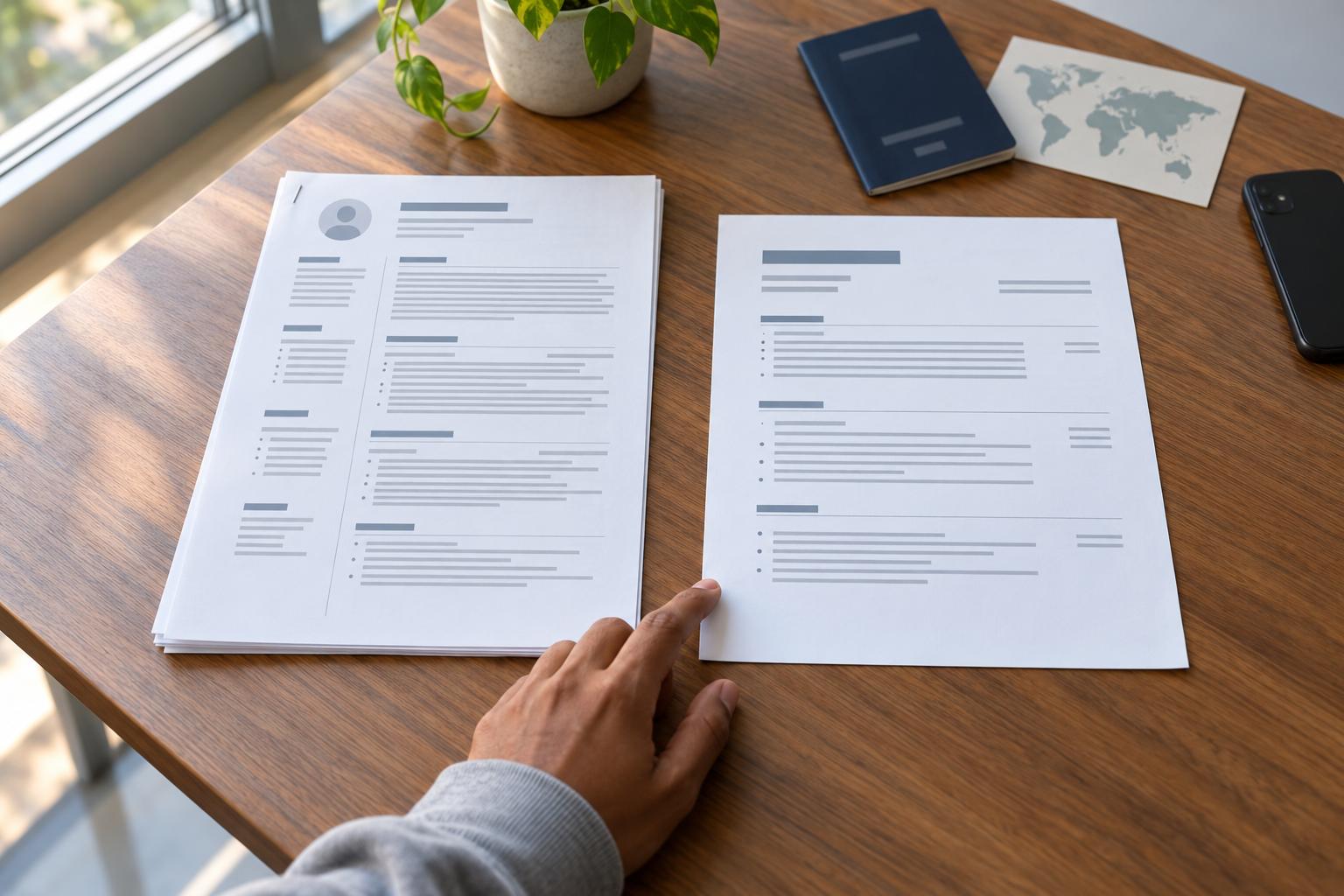
In the US, a resume is the one- or two-page document most employers want, while a CV (curriculum vitae) is the long record of an academic career used for faculty, research and some medical positions. In the UK and much of Europe, CV is simply the everyday word for a resume, so for a job there, adapt your resume's length, spelling, paper size and personal details to local custom. If a US employer outside academia asks you for a CV, send your resume unless its instructions call for more detail.