Physician assistant jobs by area: A guide for new grads
Compare physician assistant specialties, settings, and locations, with credential checks and resume examples for new graduates.

Make your clinical training clear
State what you did under supervision and list your qualifications accurately.
Explore resume outline ideasPhysician assistants work in specialties including primary care, family medicine, emergency medicine, and psychiatry, and in settings such as physicians' offices, hospitals, and outpatient clinics, according to the Bureau of Labor Statistics Occupational Outlook Handbook. Their work depends largely on the specialty or type of medical practice. Physician assistants examine, diagnose, and treat patients under a physician's supervision.
For your first job search, consider area of medicine, workplace setting, and location. This article applies the Bureau of Labor Statistics' occupation-wide information to those choices; it does not identify which jobs accept new graduates. It gives no pay figures and explains where the Bureau publishes them.
What needs to be in place before you practice
The Bureau of Labor Statistics Occupational Outlook Handbook says all states and the District of Columbia require physician assistants to be licensed. Candidates must pass a qualifying exam to become licensed. After passing, a physician assistant may use the credential Physician Assistant-Certified (PA-C).
The Bureau of Labor Statistics also says laws in most states require an agreement with a supervising physician. Collaboration is required for practice, although the physician does not need to be onsite at all times. Positions may require basic life support (BLS) certification.
Check the licensing board in the state where you intend to work for its specific requirements. Keep passing the exam and receiving a license separate when describing your status.
Compare the work by specialty
The Bureau of Labor Statistics Occupational Outlook Handbook names primary care and family medicine, emergency medicine, and psychiatry as examples of physician assistant (PA) specialties. It says many physician assistants work in primary care specialties such as general internal medicine, pediatrics, and family medicine.
The Bureau of Labor Statistics gives these examples of how duties can differ:
Area of medicine | Work a physician assistant may do |
|---|---|
Surgery | Close incisions and provide care before, during, and after an operation. |
Pediatrics | Examine a child and give routine vaccinations. |
Your supervised training can help you decide what to explore. The Bureau of Labor Statistics says PA programs include supervised clinical training in specialties such as family medicine, internal medicine, and emergency medicine. Think about the work you actually performed in those placements and which duties you want to pursue.
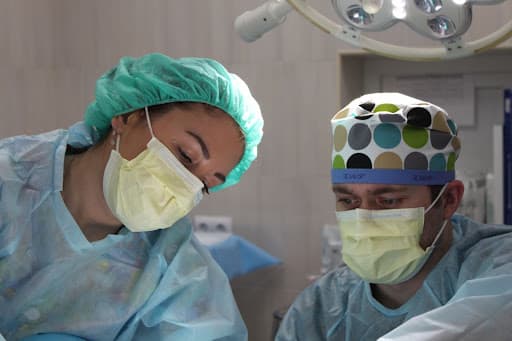
The Bureau of Labor Statistics says physician assistants, particularly those working in surgery or emergency medicine, should work well under pressure. Physician assistants must remain calm in stressful situations to provide quality care. It also notes that PAs in operating rooms often stand for extended periods. Consider those demands alongside your interest in the clinical work.
Specialty names to recognize in job titles
O*NET OnLine lists reported job titles that include Cardiology Physician Assistant, Emergency Medicine Physician Assistant, Family Practice Physician Assistant, Orthopaedic Physician Assistant, Surgical Critical Care Physician Assistant, and Surgical Physician Assistant.
Use O*NET OnLine's titles as terms to recognize while reading postings. They are titles reported across the occupation, not a list of entry-level openings or evidence that a specialty accepts new graduates. Check the individual position's requirements before treating it as a possible first job.
Which workplace settings and demands fit you?
The Bureau of Labor Statistics Occupational Outlook Handbook describes PAs working in physicians' offices, hospitals, outpatient clinics, and other healthcare settings. Its employer categories include:
- Offices of physicians
- Hospitals; state, local, and private
- Outpatient care centers
- Government, excluding state and local education and hospitals
- Educational services; state, local, and private
The Bureau of Labor Statistics also says some physician assistants make house calls or visit nursing homes to treat patients. Ask whether a position includes either kind of visit.
Most physician assistants work full time, according to the Bureau of Labor Statistics. Schedules vary and may include nights, weekends, or holidays. PAs may also be on call, which means being ready to respond to a work request with little notice. Ask what the actual schedule includes and how on-call work is arranged.
The Bureau of Labor Statistics describes patient care as potentially physically and emotionally demanding. PAs spend much of their time standing or walking while making rounds and evaluating patients. Before accepting, ask how much of the role involves rounds, walking, or prolonged standing, and consider whether those demands fit you.
Check what changes with the place
State requirements and physician collaboration
The Bureau of Labor Statistics Occupational Outlook Handbook says the amount of collaboration and the extent of physician or surgeon supervision differ by state. Its national description does not establish the rules for your intended location. Ask that state's licensing board to confirm what applies, including the supervising physician agreement that the Bureau says laws in most states require.
Rural and medically underserved communities
In some areas, especially rural and medically underserved communities, PAs may be the primary care providers at clinics where a physician is present only part of the week, according to the Bureau of Labor Statistics. In those locations, PAs collaborate with the physician as needed and as required by law. Ask how that collaboration works at the clinic you are considering.
The National Health Service Corps (NHSC) Loan Repayment Program
The National Health Service Corps Loan Repayment Program (Health Resources and Services Administration) offers loan repayment assistance that licensed primary care providers in eligible disciplines serving in a Health Professional Shortage Area (HPSA) can receive. The National Health Service Corps says licensed behavioral health providers in a mental HPSA may also qualify. Its eligible disciplines include physician assistants in primary care and in mental health and psychiatry.
The National Health Service Corps ties the service obligation to an NHSC-approved site within an HPSA. It describes an approved site as a facility that provides complete outpatient services to people living in HPSAs and meets NHSC site requirements and qualifications. Verify the particular site's approval with the National Health Service Corps.
The National Health Service Corps lists these eligibility requirements:
- Be a U.S. citizen, whether U.S. born or naturalized, or a U.S. national.
- Be a provider, or eligible to participate as a provider, in Medicare, Medicaid, and the State Children's Health Insurance Program, as appropriate.
- Be fully trained and licensed in the eligible discipline and the state where you are applying to serve.
- Be a health professional in an eligible discipline with qualified student loan debt for education that led to your degree.
- Be working at, or have accepted employment at, an NHSC-approved site by the program's application deadline.
The National Health Service Corps uses selection factors and funding priorities to make award decisions. An award involves a contract and a service obligation; the agency says participants who terminate must repay all funds received under the contract. It accepts applications in cycles. Check the National Health Service Corps page for whether a cycle is open and for its amounts and terms before relying on loan repayment in your plans.
Where to find pay and employment figures
This article does not give starting pay, pay by state or metropolitan area, job-growth figures, or projected openings. Use the Bureau of Labor Statistics Occupational Outlook Handbook for national PA pay and the outlook, including projected openings. Its pay information covers the occupation as a whole and does not give new-graduate starting pay.
For employment and wages by state, metropolitan area, and nonmetropolitan area, the Bureau of Labor Statistics points to its Occupational Employment and Wage Statistics program. Those estimates also cover all physician assistants, rather than new graduates specifically. Do not read an occupation-wide wage estimate as the starting salary for a particular job.
For state projections, the Bureau of Labor Statistics names Projections Central. It holds projections developed by state Labor Market Information or Employment Projections offices and allows comparisons of projected occupational growth among states.
The Bureau of Labor Statistics projects PA employment to grow much faster than the average for all occupations. That is an occupation-wide projection, not a forecast of your chances of being hired in a particular specialty or community.
Specialty training you can consider later
Some PAs pursue additional education in a specialty, according to the Bureau of Labor Statistics Occupational Outlook Handbook. It describes postgraduate programs in specialties such as emergency medicine and psychiatry. Entry requires graduation from an accredited program and the PA-C credential. Additional certification in specialty areas is also available.
Aim your resume at the area you want
Start with your actual stage: still completing the program, graduated with the exam or license ahead, or holding PA-C and an issued license. The Bureau of Labor Statistics Occupational Outlook Handbook says physician assistants typically need a master's degree from an accredited program. Name your own program and degree, and make clear whether the degree is in progress or completed. Use PA-C only after passing the qualifying exam, and list a license with its issuing state only after it has been issued. Include BLS certification if you hold it.
List your supervised clinical training by specialty, putting the placements closest to the job first. The Bureau of Labor Statistics names family medicine, internal medicine, and emergency medicine among examples of training specialties. Include only your actual placements, and describe duties as supervised training.
Keep relevant patient care work from before the program. The Bureau of Labor Statistics says program applicants typically have direct patient care experience and that programs may require experience as a medical assistant, EMT, paramedic, or in another patient care occupation. Use your actual prior title and describe what you did.
Show skills through the care you helped provide
The Bureau of Labor Statistics gives these examples of important qualities: communication skills, compassion, detail oriented, emotional stability, interpersonal skills, and problem-solving skills. O*NET OnLine lists skills including critical thinking, active listening, judgment and decision making, and social perceptiveness, along with work styles including empathy, stress tolerance, and cooperation.
To put those qualities into practice on your resume, describe an action you took during supervised training: how you listened to a patient's history, explained treatment, evaluated information, or worked with the care team. Make clear what you did under supervision. These suggestions draw on the Bureau of Labor Statistics' typical duties and qualities and O*NET OnLine's occupation-wide tasks and skills; include only actions you actually performed.
To arrange those supervised clinical examples in your application, explore resume ideas.
O*NET OnLine lists software including eClinicalWorks EHR software, Epic Systems, Medical procedure coding software, MEDITECH software, Microsoft Office software, Microsoft Excel, Microsoft Word, Microsoft Outlook, and Teleconferencing software. Include only software you have used. O*NET OnLine does not connect these tools to particular duties, specialties, or employers, or identify them as requirements for a given job.
Resume examples to adapt to your stage
These examples apply the Bureau of Labor Statistics' education and credential descriptions and O*NET OnLine's tasks to supervised training. Replace the degree status, specialties, duties, and credential status with your own. Add your actual program and degree name, and, if licensed, the issuing state. Remove anything that does not describe you.
Example to adapt while finishing the program:
Physician assistant student completing a master's degree. Supervised clinical training in family medicine included obtaining patient histories and explaining prescribed treatment to patients.
Example to adapt after graduation, before the exam and license:
Physician assistant program graduate with a master's degree; qualifying exam and state license pending. During supervised clinical training in internal medicine, recorded patient histories and physical examination findings.
Example to adapt after receiving PA-C and a license:
Physician Assistant-Certified (PA-C) with an issued state physician assistant license and a master's degree. During supervised clinical training in emergency medicine, examined patients and interpreted diagnostic test results under supervision.
For more examples, see our healthcare resume examples.
Before you apply or accept
Use the Bureau of Labor Statistics Occupational Outlook Handbook's licensing and working-condition points, and the National Health Service Corps' program requirements, to confirm:
- What the licensing board requires in the state where you plan to practice.
- Whether state law requires a supervising physician agreement and what must be in place.
- Whether the schedule includes nights, weekends, holidays, or on-call work.
- Whether the position requires basic life support certification.
- If you want loan repayment, whether the site is NHSC-approved and whether a National Health Service Corps application cycle is open.
This page includes information from O*NET OnLine by the U.S. Department of Labor, Employment and Training Administration (USDOL/ETA). Used under the CC BY 4.0 license. O*NET® is a trademark of USDOL/ETA. Rocket Resume has modified all or some of this information. USDOL/ETA has not approved, endorsed, or tested these modifications.
Prepare for the setting you want
Choose placement examples relevant to the specialty or clinical setting.
Explore resume samples