Phlebotomist Resume Skills Checklist: What Employers Want in 2026
A phlebotomist skills checklist for 2026 resumes, from venipuncture volume and NIR vein visualization to infection control, plus hybrid formatting, ATS phrasing, and metric-backed examples.

Mastering Your Phlebotomy Career: The Definitive 2026 Resume Skills Guide
Phlebotomy remains a vital and highly rewarding career where your technical expertise directly impacts patient outcomes and saves lives. As we navigate 2026, the healthcare landscape has shifted dramatically, elevating the role of the phlebotomist from a traditional laboratory technician to an advanced, tech-integrated clinical practitioner. Amid automated healthcare systems and evolving protocols, the demand for highly skilled phlebotomists is at an all-time high, offering immense job security. The official phlebotomist job outlook backs this up with steady projected growth and solid pay data.
However, compensation expectations have shifted upward in response to inflation, increased regulatory standards, and expanding clinical responsibilities, meaning the competition for premier hospital positions is fiercer than ever. To command top-tier wages and secure the most coveted roles, your resume must be exceptional. It must explicitly showcase a blended mastery of next-generation automated tools, advanced venipuncture techniques, and the crucial human-centric empathy required to ease patient anxieties.
How to Best Present Your Phlebotomist Resume Skills
Impressing modern healthcare recruiters and hospital networks requires more than just listing your technical competencies on paper. In 2026, hiring managers and talent acquisition software skim resumes in a matter of seconds. To ensure your application commands attention, your presentation strategy must be deliberate, highly visible, and data-driven.
1. Choose the Right Resume Structure
The architecture of your resume dictates how effectively a recruiter absorbs your value proposition. While traditional chronological formats still hold weight for linear careers, the complexity of modern healthcare demands a layout that immediately spotlights advanced clinical capabilities. For the majority of practitioners in 2026, the hybrid resume will be the best choice.
A hybrid format begins with a robust, targeted "Core Competencies and Technical Skills" matrix at the top of the page, immediately followed by a chronologically detailed professional history. By elevating your specialized skills—such as near-infrared vein visualization technology or pediatric venipuncture—to the header section, you capture the attention of busy recruiters instantly. Once they see you possess the exact modern toolkit they require, they will confidently proceed to read your employment history. For concrete alternatives, compare these resume layouts that get past ATS before committing to a structure.
- Why: In 2026, recruiters manage high volumes of applications and utilize rapid-screening methodologies; a hybrid structure ensures your highest-value technical assets are seen first.
- How: Restructure your layout by placing a 6-to-9-bullet technical skill grid directly beneath your professional summary, ensuring it precedes your chronological employment history.
- Example: Place advanced terms like "VeinViewer NIR Technology Proficiency," "LINC/Epic EHR Lab Module Integration," and "High-Volume Stat Draws" at the very top of your document.
- Key Takeaway: Using a hybrid resume structure places your most valuable technical assets at the immediate forefront, ensuring recruiters notice your qualification for 2026 standards before they even look at your past job titles.
2. Use Recruiter-Approved Phrasing for Your Phlebotomist Resume Skills
The reliance on artificial intelligence and automated tracking systems in healthcare recruitment has reached unprecedented levels. Hospital human resource departments utilize advanced Applicant Tracking Systems (ATS) to filter out resumes that fail to match explicit contextual keywords.
If a 2026 job posting looks for "biohazard vector containment" or "hazardous waste mitigation" but your resume relies on older terminology like "cleaning up used needles," the software will automatically discard your application, regardless of your actual competency. To bypass these automated gatekeepers, you must mirror the precise language found in the job advertisement and align your phrasing with contemporary industry vocabulary. These good-vs-bad examples of tailoring your resume to each listing show how sharply the right phrasing separates applications. Utilizing our resume builder will dramatically simplify this process by automatically injecting optimized, recruiter-approved phrasing tailored specifically for modern phlebotomy and clinical laboratory roles.
- Why: Modern ATS algorithms filter out highly qualified candidates who use outdated or informal terminology, making precise industry-standard phrasing a prerequisite for human review.
- How: Carefully analyze the target job description, extract their specific multi-word technical phrases, and seamlessly blend those exact keywords into your skills and experience sections.
- Example: Upgrade informal phrases like "handled blood samples" to recruiter-approved phrases like "executed strict blood specimen chain-of-custody protocols via RFID tracking."
- Key Takeaway: Aligning your resume vocabulary with modern recruiter phrasing and utilizing automated optimization tools is vital to surviving ATS algorithms and getting your resume into human hands.
3. Back Your Phlebotomist Skills Up with Evidence
Anyone can claim to possess elite phlebotomy skills, but in an era where clinical accuracy and efficiency dictate hospital funding, claims without proof are disregarded. To differentiate yourself from the applicant pool, every assertion of skill on your resume must be backed by verifiable evidence, metrics, or professional milestones.
In 2026, your evidence should ideally be divided into clear, impactful categories:
- Quantifiable data: e.g., "Maintained a 99.8% specimen integrity rate across an average of 45 high-volume blood draws per shift."
- Certifications and advanced training: e.g., "Completed 12 hours of specialized, accredited training in near-infrared (NIR) vascular imaging and digital patient consent modules on [recent date]."
- Achievements and leadership responsibilities: e.g., "Spearheaded the infection control and sanitation audit for a multi-disciplinary team of seven outpatient phlebotomists."
- Contextual anecdotes: e.g., "Formally commended by clinic leadership for achieving zero-incident draws with highly anxious pediatric and neurodivergent patient demographics."
When hard data isn't readily accessible, leveraging structured anecdotes and clear responsibilities ensures your skills remain memorable and authoritative. Leading each bullet with strong action verbs keeps those statements crisp and achievement-oriented.
- Why: Quantifiable proof and structured evidence validate your capabilities, assuring employers that hiring you will reduce specimen rejection rates and improve patient satisfaction metrics.
- How: Audit your past work history and transform basic task descriptions into achievement-oriented statements by adding specific numbers, percentages, certifications, or formal commendations.
- Example: Transform "Responsible for drawing blood and keeping the lab clean" into "Executed 40+ daily venipunctures with a <0.2% contamination rate while strictly maintaining OSHA and joint-commission compliance standards."
- Key Takeaway: Validating your phlebotomy skills with data, certifications, and concrete anecdotes transforms your resume from a list of duties into a compelling record of professional success.
A Phlebotomist Skills Checklist for Your Resume
While you possess a diverse array of clinical and clerical capabilities, resume space is valuable real estate. In 2026, you cannot afford to crowd out highly specialized skills with generic baseline traits. Your resume must remain laser-focused on the high-demand technical and behavioral competencies that modern healthcare networks prioritize.
Use this curated 2026 phlebotomist skills checklist to ensure your application contains the definitive competencies employers seek.
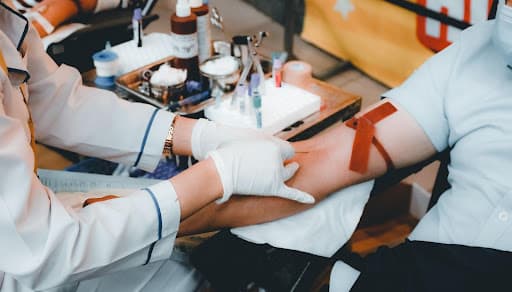
Venipuncture Site Selection and Blood Draws
This remains the foundational pillar of your practice, but in 2026 it extends beyond basic needle placement. Employers expect mastery of complex vascular access, including difficult venous access (DVA) management, and familiarity with advanced assistive tools like ultrasound or infrared vein finders. Back this skill up by emphasizing volume, accuracy, and diverse patient demographics.
- Why: Seamless, first-stick venipuncture maximizes operational throughput, reduces patient trauma, and directly lowers clinical operational costs.
- How: Explicitly state your total estimated career draws or average daily volume alongside your experience with diverse anatomical site selections.
- Example: "Successfully performed 3,000+ clinical blood draws utilizing straight needles, butterfly assemblies, and near-infrared vein visualization on diverse patient profiles."
- Key Takeaway: Frame your core venipuncture capabilities around high volume, low error rates, and the seamless integration of modern vascular location technologies.
Hygiene Control and Contaminated Items Disposal
Biosecurity and infection control standards have become exceptionally strict. Employers look for candidates who can seamlessly manage biohazard risks without disrupting workflow velocity. Review the target job listing closely and alter your terminology to match their compliance framework. Most of these requirements trace back to OSHA's bloodborne pathogens standard, the federal regulation governing sharps handling and contaminated-waste disposal.
Key 2026 variations of this skill include:
- Advanced PPE utilization and sterilization mechanics.
- Biohazard waste mitigation and sharp object disposal.
- Strict infection control protocols (ICP).
- Multi-stage site decontamination and aseptic techniques.
- Why: Strict adherence to modern sanitation prevents costly cross-contamination, safeguards healthcare staff, and ensures institutional compliance with evolving OSHA and Joint Commission standards.
- How: Document your explicit training alignment, your zero-incident safety records, or your role in maintaining sterile laboratory conditions.
- Example: "Maintained 100% adherence to OSHA biohazard waste disposal guidelines and updated infection control protocols across 18 months of high-volume hospital service."
- Key Takeaway: Emphasizing your absolute compliance with modern biohazard mitigation protocols proves to employers that you are a low-risk, highly disciplined professional.
Sample Management and Blood Specimen Storage
The integration of automated laboratories means that a phlebotomist's duty doesn't end at the draw. Accurate specimen management, pre-analytical processing, and tracking are critical. Depending on the hospital’s ecosystem, this may be phrased as "specimen triaging," "digital sample labeling," or "barcoded inventory logging." Match the phrasing of the employer's specific EHR (Electronic Health Record) system.
- Why: Mislabeled specimens or improper storage parameters lead to sample degradation, forcing stressful re-draws and delaying critical diagnostic timelines.
- How: Highlight your familiarity with digital lab management systems, centrifuging protocols, refrigeration requirements, and tracking technology.
- Example: "Managed digital accessioning, centrifuging, and cold-chain storage parameters for 50+ daily specimens utilizing Epic Beaker LIS software."
- Key Takeaway: Showcasing precise technical proficiency in sample processing and laboratory information systems proves you can handle the data-driven demands of modern medicine.
Patient Identification and Confidentiality
With the expansion of digital health networks, patient data privacy remains paramount. A deep, practical execution of two-factor patient identification and strict information security is mandatory. Your resume must explicitly display compliance with federal regulations, healthcare ethics, and modern privacy frameworks, such as HIPAA privacy rules.
- Why: Failure to accurately identify patients or protect sensitive health data carries severe legal liabilities, financial penalties, and systemic reputational damage for healthcare institutions.
- How: Explicitly reference your continuous compliance certifications, adherence to two-factor verification protocols, and data protection practices.
- Example: "Enforced flawless 100% compliance with HIPAA regulations and institutional two-factor patient verification procedures across all shifts."
- Key Takeaway: Prioritizing data privacy and rigorous patient verification on your resume establishes you as a trustworthy, legally compliant practitioner.
Confirming and Recording Patient Consent
In 2026, informed patient consent is tightly woven into both legal compliance and digital healthcare applications. Phlebotomists must swiftly confirm, document, and log consent—including specialized clauses for minors or impaired individuals—into the facility's system prior to any invasive procedure. Scan job listings for exact phrases like "electronic consent verification" or "informed consent logging."
- Why: Documenting proper consent protects the medical facility from battery claims and aligns clinical workflows with modern medical ethics standards.
- How: Tie your consent workflows directly to your draw metrics or highlight any specific continuing education modules you have completed regarding medical law and ethics.
- Example: "Validated and digitally logged informed patient consent for over 1,200 outpatient procedures while maintaining absolute ethical standards."
- Key Takeaway: Explicitly listing consent verification demonstrates a sophisticated understanding of medical law, ethics, and patient-first clinical care.
People Skills
They might be categorized as soft skills, but in today's patient-driven healthcare market, interpersonal skills are highly valued hard assets. As a phlebotomist, you are the face of the laboratory. You routinely encounter individuals suffering from severe needle phobias, language barriers, cognitive impairments, or intense anxiety that manifests as irritability.
Elevate your resume by highlighting your specialized capability to manage complex human variables. Detail your experience drawing blood from vulnerable populations, including pediatric, geriatric, neurodivergent, or non-English-speaking demographics.
- Why: Exceptional patient rapport significantly reduces draw-failure rates due to movement, elevates hospital patient-satisfaction scores, and fosters a safe clinical environment.
- How: Provide contextual examples or anecdotes where your communication directly defused patient anxiety or solved a challenging clinical interaction.
- Example: "Recognized for exceptional bedside manner and de-escalation techniques when performing blood draws on highly anxious pediatric and neurodivergent patients."
- Key Takeaway: Demonstrating advanced empathy and communication skills proves you can successfully manage challenging patient behavior, converting stressful clinical visits into efficient, positive experiences.
Conclusion
In 2026, phlebotomy has evolved into a highly dynamic, technologically integrated career path that balances advanced technical skills with compassionate, patient-centered care. As compensation models and job requirements expand across the healthcare sector, securing top-tier positions requires an intentional approach to your professional presentation. By structuring your resume using a hybrid format, aligning your technical vocabulary with modern ATS algorithms, and backing every skill with clear metrics and evidence, you position yourself as a highly qualified candidate. Incorporating this comprehensive checklist—spanning advanced vascular access, strict biohazard containment, digital specimen tracking, and specialized interpersonal care—ensures your application stands out to modern healthcare networks. Optimize your resume for these 2026 standards, and you will confidently secure the rewarding, high-paying career advancements you deserve.
Get Invited to Interview with a Phlebotomist Resume that Shows Off Your Skills
It doesn’t matter how skilled a phlebotomist you are if your resume doesn’t back you up. You need to quickly demonstrate that you have the skills and experience for the job.
(Many employers also screen resumes with applicant tracking systems, i.e. software that filters out resumes.)
Your resume has to be machine-readable, professionally laid out and customized to the role in question. It should include all the key skills mentioned in the job description, as well as your career history and qualifications.
Writing an excellent resume doesn’t have to be challenging, though. We’ve published a huge range of phlebotomist resume templates that you can use as inspiration. All our templates are machine-readable and easy to customize.
Plus, our resume builder will make the process simple. It will guide you through writing your resume, from choosing a skills-focused structure to recruiter-approved phrasing for phlebotomist resume skills and keywords.
Build your resume in 10 minutes so you can catch a recruiter’s attention and get invited to an interview.
Browse our resume templates
Pick a design you like, then fill in your resume one section at a time.