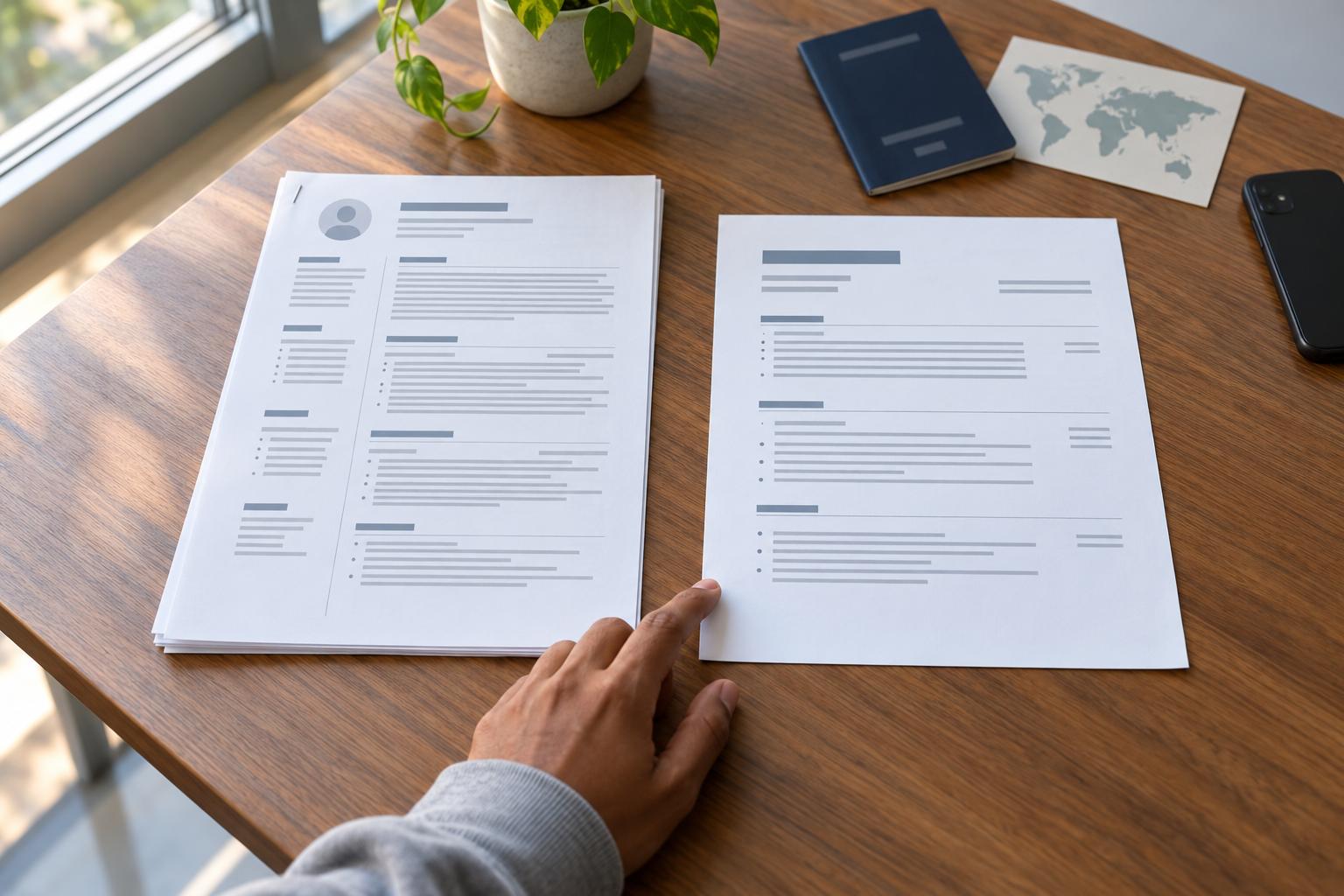
Sample Administrative Assistant Resume Break Down for Review
A section-by-section breakdown of a sample administrative assistant resume, with a pre-send checklist, keyword tactics for 2026 AI screeners, and quantified work-history bullet examples.


A well-written resume can significantly increase not only the number of job offers you receive but also your salary offer. It will ensure you catch a recruiter’s eye, secure you more invites to interview, and help set you up for interview success. In turn, you’ll find yourself well-positioned to negotiate for a higher starting salary or choose the ideal company out of multiple offers. Bureau of Labor Statistics data on administrative assistant pay and outlook shows just how wide the salary range is, so a strong application is worth real money.
In 2026, administrative assistant responsibilities and salary offers vary more drastically than ever before. With generative AI automating routine scheduling and standard email correspondence, the modern administrative assistant operates more like an operations manager or an AI-empowered coordinator. Therefore, it’s particularly important to leverage your resume if you want to apply for the most competitive, high-paying roles.
Keep reading as we explore the 2026 dos and don’ts of writing a strong resume, explicitly tailored to survive modern automated screening and AI-driven vetting. We’ll also break down an example resume so you have a model to base yours on.
Administrative Assistant Resume Checklist
Before you click send on your resume, make sure you can check off all these resume must-dos designed for the current employment landscape:
- Is there plenty of white space?
- Do you use bullet points rather than paragraphs?
- Is it concisely written?
- Have you deleted any job descriptions that don’t add value?
- Have you deleted the unnecessary sections like References and Hobbies?
- Is your resume two pages or shorter?
- Do you use exact keywords from the job listing to beat modern LLM scanners? (Here’s why that’s important.)
- Is it in a machine-readable format, i.e., .docx or .pdf, completely free of complex graphic tables?
- Have you saved the file cleanly as “Your Name Resume?”
Administrative Assistant Resume Example & Breakdown
Let’s explore the resume of a fictional administrative assistant, Anna Sistant, and why it works well in 2026. We’ll break it down section by section.
Contact Details
Why
Your contact section is the very first thing both human eyes and Applicant Tracking Systems (ATS) scan. In 2026, ATS algorithms do not just parse text; they match your geographic and digital presence to strict compliance parameters. Security-minded recruiters avoid resumes with complex, overly designed headers because old parsing systems and modern AI screeners fail to read text embedded inside text boxes or graphic elements. Keeping this section clean ensures error-free data ingestion.
How
Place your contact info at the very top as plain text. Do not use headers, footers, or tables. Include a professional email address, your phone number, your LinkedIn handle, and any relevant digital portfolio links. If you are applying for US-based roles, omit personal details like photos, age, or specific street addresses to protect against bias and automated filtering.
Example
Anna Sistant
AnnaSistant@gmail.com | (012)345-6789 | LinkedIn.com/in/AnnaSistant
Key Takeaway
The contact section must be clean, text-based, and modern. Ensure you include a professional email, phone number, and a fully optimized LinkedIn handle while omitting personal data to maximize ATS readability and compliance.
Professional Summary
Why
AI screeners read your entire summary instantly to determine contextual relevance. A strong professional summary in 2026 must immediately position you as a high-value, tech-fluent gatekeeper. It must convey not just that you can do the work, but that you understand how to leverage modern automation tools to maximize executive productivity.
How
Write a concise, high-impact block of two to five sentences. Skip pronouns (like "I" or "me") to save space and elevate the professional tone. Blend your core hard and soft skills naturally, incorporating exact phrase keywords from the job description so that AI matching algorithms award your resume a high relevancy score.
Example
Professional Summary Organized and detail-oriented Administrative Assistant with 7+ years of experience optimizing executive workflows and event logistics. Proficient in managing AI scheduling assistants, complex vendor invoicing, and multi-department reports. Expert in balancing technical tool mastery with proactive problem-solving and cross-functional team communication.
Key Takeaway
Your summary is an elevated elevator pitch that must combine hard skills, soft skills, and keyword optimization into a punchy, 2-to-5-sentence narrative that immediately captures both human interest and AI algorithmic approval.
Skills
Why
The modern skills section is no longer just a random list of buzzwords; it is a critical keyword baseline for modern ATS platforms. In 2026, screeners use Large Language Models (LLMs) to scan for specific proficiencies and contextual proof. Simply listing a skill is not enough—you must provide contextual evidence of how you applied that skill to prevent your resume from being discarded as generic, AI-generated fluff.
How
Limit your skills section to 6 to 8 highly targeted bullet points. Group your skills logically and provide brief, real-world context or metrics for your most important proficiencies. Mirror the exact technical and interpersonal terminology found in the target job listing.
Example
Skills
- Software Proficiencies: Advanced QuickBooks, Microsoft Excel (Pivot tables/VLOOKUP), and Slack/Teams integrations.
- AI Tool Integration: Proficient with ChatGPT and Microsoft Copilot for drafting routine correspondence and meeting summaries.
- Project & Event Management: Handled budgets up to $125,000 for large-scale corporate events.
- Workflow Optimization: Designed an automated digital filing system that cut document retrieval times in half.
- Interpersonal & Communication: 3+ years managing high-level client relations and executive scheduling.
Key Takeaway
Keep your skills section restricted to a concise list of up to 8 bullet points. Always back up your technical and interpersonal proficiencies with concrete, contextual evidence to satisfy advanced semantic ATS filters. If your experience leans heavily on data processing, our data entry resume guide covers how to present those proficiencies in depth.
Work History
Why
The work history section is the core of your resume. In 2026, advanced ATS systems do not just look for keyword matches; they analyze the progression of your career and look for quantifiable business outcomes. With generative AI capable of generating generic job duties, human hiring managers heavily discount resumes that only list responsibilities. To stand out, your work history must focus on your distinct accomplishments, showing exactly how you added value to your organization.
How
List your jobs in reverse-chronological order, detailing the company name, your title, and dates of employment. Begin every single bullet point with a dynamic power verb. Structure your achievements by showing the task, the action you took (including the tools used), and the quantifiable result or metric. For older, less relevant roles, compress or omit the descriptions entirely to optimize document real estate. If you are still early in your career, a junior administrative assistant resume example can show you how to frame a shorter work history.
Example
Magic Marketing Consultants Events Administrative Assistant, January 2019 – present
- Coordinated corporate events for 500+ attendees while successfully managing budgets reaching $125,000 per event.
- Implemented a centralized digital filing system, resulting in an 18% measurable increase in team operational efficiency.
- Oversaw complex corporate invoicing and monthly reporting utilizing QuickBooks, Excel, and custom internal software.
- Mentored and trained 4 junior administrative assistants on office protocols and automation workflows.
XYZ LLC Junior Administrative Assistant, June 2015 – July 2016
Key Takeaway
Your work history must feature reverse-chronological formatting, strong power verbs, and highly quantifiable achievements. Dedicate space to recent, high-impact roles while compressing older experience to keep your document within a strict, readable length.
Education
Why
As professional landscapes evolve, continuous learning is a major differentiator. In the administrative field, specialized certifications and software courses often carry equal or greater weight than traditional degrees. Showing a history of upskilling tells both the ATS and the recruiter that your skill set is current and that you are prepared to adapt to evolving workplace technologies.
How
Place your education section at the bottom of your resume if you are an experienced professional, or move it above your work history if you are a new graduate or pivoting careers. List your credentials in reverse-chronological order. Include the course or degree title, the institution, and completion dates. If applicable, consult modern guidelines to ensure you are properly formatting your GPA.
Example
Education & Certifications
- AI Productive Assistant Certification (20 hours), 2025 TechForward Academy
- Events Management and Budgeting Online Course (50 hours), 2019 Events Academy
- Advanced Excel Certification (30 hours), 2016 Excel Academy
- Administrative Assistant Certificate, 2015 Triton College
Key Takeaway
Structure your education in reverse-chronological order, highlighting recent certifications, technical courses, or degrees that validate your ongoing professional development and technical competence.
Conclusion
Navigating the job market requires a strategic approach to resume writing that satisfies both AI gatekeepers and human hiring managers. By utilizing a clean, machine-readable format free of complex design traps, you guarantee that your contact details and skills parse perfectly. Crafting a concise, keyword-rich professional summary and backing up your skills with real-world context prevents your resume from being flagged as automated spam. Furthermore, emphasizing quantifiable achievements with power verbs in your work history demonstrates a proven track record of driving operational efficiency. In an era where AI handles routine administrative tasks, framing your experience around continuous technical education and high-level project coordination will ensure you secure top-tier interviews and command a premium starting salary. Once those interviews land, practicing common secretary interview questions will help you convert them into offers.
Craft a Professional Resume in Minutes
Writing a winning resume doesn’t have to be hard work. With the right tools, you can say goodbye to double-checking font sizes or worrying over whether your file format will pass muster with applicant tracking systems.
Our administrative assistant resume templates are professionally laid out, machine-readable and easy to customize. Plus, our resume builder will walk you through tailoring them to your background. It will suggest the best structure based on your experience level, as well as recommend recruiter-approved phrasing for your skill sets.
You can craft an excellent resume in minutes with our tools, so get started now.
Browse our resume templates
Pick a design you like, then fill in your resume one section at a time.