How to Become a Beautician in 5 Steps in 2026
The five steps to a beautician license in 2026, from a diploma or GED and a 1,500-hour state-approved cosmetology program to exams, job applications, specializing, and salary expectations.

The Future of Beauty: Becoming a Licensed Beautician in 2026
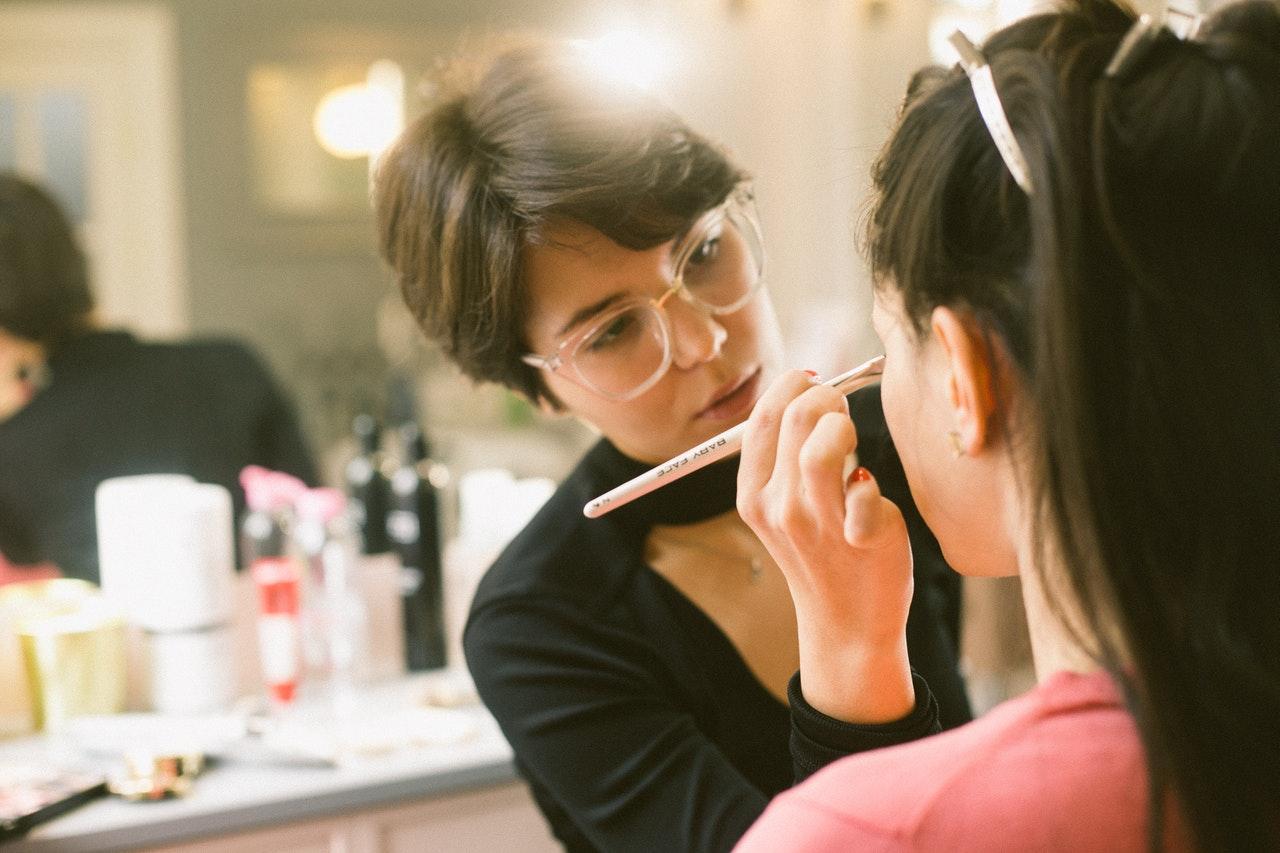
If you love making people feel great about themselves, then becoming a beautician or cosmetologist in 2026 is an incredible career choice. We have moved beyond simple vanity; today, beauty is at the intersection of wellness and high technology. You’ll spend your shifts making people smile as you do their makeup, provide advanced facials, design bio-compatible nails, or style hair using precision tools.
What’s more, you’ll work with your hands, embrace your creativity, and interact with a diverse clientele. In 2026, the role is more dynamic than ever. You aren't just an artist; you are a technician, a consultant, and a specialist in personalized aesthetics. Being a beautician is a rewarding career that blends human touch with the efficiency of the digital age.
Let’s explore how you can become a licensed beautician and apply for jobs in this tech-forward landscape, as well as how much you can expect to earn.
1. Obtain Your High School Diploma or GED
In 2026, the educational foundation of a beautician is more critical than ever because the curriculum now includes basics in digital literacy and data privacy. Before you can sign up for cosmetology training, you must finish high school or earn your GED credential. While most states maintain a minimum age of 16, there is a growing trend toward requiring students to be 18, as the complexity of the chemical and technological tools used in modern salons requires a higher level of maturity and responsibility.
- Why: High school education provides the critical thinking and communication skills necessary to handle sophisticated client management software and understand the biological science behind modern skin and hair treatments.
- How: Complete your standard secondary education focusing on chemistry and digital arts if possible, or take a state-recognized GED equivalency exam.
- Example: A student in 2026 uses their high school chemistry knowledge to understand why certain pH-balanced, AI-formulated serums react differently to various skin types.
- Key Takeaway: A diploma is the essential "entry key" that ensures you have the foundational cognitive skills to navigate a technologically advanced beauty curriculum.
2. Do a State-Approved Cosmetology Program or Apprenticeship
A cosmetology program in 2026 is a blend of traditional artistry and "Beauty Tech." You will still learn the fundamentals of nails, makeup, esthetics, and human anatomy, but your resume will now highlight your proficiency in AR (Augmented Reality) consultation tools and AI-driven skin analysis. You’ll also learn about health and safety, sanitation, management theory, and the ethics of data-driven personalization.
The average requirement remains around 1,500 hours, though many states now allow for "hybrid" models where theoretical hours are completed via immersive VR (Virtual Reality) modules. Most full-time students finish in one to two years. Alternatively, registered apprenticeship programs allow you to learn under a master cosmetologist. While this takes longer (often twice as many hours), it provides invaluable experience in seeing how AI diagnostic mirrors and robotic manicure stations are integrated into a real-world workflow.
- Why: Formal training ensures you are legally compliant and technically proficient in both manual techniques and the digital tools that define the modern salon experience.
- How: Enroll in an accredited beauty school that offers "Future-Ready" certifications or secure an apprenticeship in a tech-integrated high-end salon.
- Example: A student uses a VR headset to practice hair-cutting angles on a digital twin before moving to a physical mannequin, reducing waste and accelerating muscle memory.
- Key Takeaway: Whether through school or an apprenticeship, your training must now bridge the gap between traditional hand-skills and the digital diagnostic tools used by 2026 professionals.
3. Pass Your License Exam(s)
After finishing your program, you must pass state-mandated exams. In 2026, many states have updated their written exams to include sections on "Smart Product Safety" and "Cyber-Sanitation." Some states require a written exam, while others demand a practical demonstration. It is vital to check your specific state’s board requirements — you can look up your state’s cosmetology licensing requirements through CareerOneStop — as many now offer digital proctoring for the theoretical portion.
Furthermore, the "Continuous Education" (CE) requirements have become more rigorous. To maintain your license, you will likely need to complete annual modules on the latest beauty-tech innovations to ensure you are providing safe, cutting-edge services. Our guide to becoming a licensed cosmetologist covers the licensing and exam path in more depth.
- Why: Licensing protects public health and ensures that every practicing beautician meets a high standard of safety and technical competence.
- How: Register with your State Board of Cosmetology, utilize AI-driven test-prep apps to study, and schedule your practical assessment.
- Example: A candidate passes their practical exam by demonstrating not just a perfect haircut, but also the ability to use a digital trichogram to explain scalp health to the examiner.
- Key Takeaway: Your license is a living document; passing the exam is the start of a journey of lifelong learning and technological adaptation.
4. Apply for Beautician Jobs
With your license in hand, the 2026 job market is incredibly diverse. Beyond traditional salons and spas, you can work as a "Mobile Beauty Consultant" using AI apps to visit clients at home, or find work in "Medi-Spas" that blur the line between beauty and dermatology. Department stores, TV studios, and even tech firms (developing beauty filters and avatars) are now major employers of licensed cosmetologists.
When applying, your resume should highlight your "Tech-Adaptability." Show employers that you can manage automated booking systems and utilize AI-driven "virtual try-on" software to increase sales and client satisfaction.
- Why: Diversity in employment options allows you to find a niche that matches your personal passions, whether that is high-fashion editorial work or clinical skin health.
- How: Build a digital portfolio on platforms like Instagram or LinkedIn, highlighting your ability to use diagnostic tools and your artistic flair.
- Example: A new beautician lands a job at a high-tech "Smart Salon" by demonstrating their ability to interpret AI skin-scan data for personalized product recommendations.
- Key Takeaway: The 2026 job market rewards those who combine human empathy and artistic skill with a high comfort level in a digital environment.
5. Specialize and Upskill for Career Growth
In 2026, the "Standard Beautician" is becoming a rarity. To maximize your income, you must specialize. Many beauticians choose to focus their career on hairstyling or specialize as an esthetician, building deep expertise in one service area. This might mean becoming an expert in "Bio-Integrated Esthetics," "Digital Color Analysis," or "Robot-Assisted Lash Application." Upskilling in business management, social media marketing, and data analytics is also essential if you plan to launch your own brand or salon.
Diversifying into related fields like aromatherapy, holistic wellness, or even 3D-printed nail design can provide multiple revenue streams. The most successful beauticians of 2026 are those who never stop being students.
- Why: Specialization allows you to charge premium rates and protects your career from being commoditized by basic automated services.
- How: Take advanced certification courses in niche technologies or enroll in business-focused seminars specifically for beauty entrepreneurs.
- Example: A veteran hair stylist takes a course in "AI-Driven Color Formulation," allowing them to create hyper-personalized hair dyes that result in 30% higher client retention.
- Key Takeaway: Ongoing education is the engine of career longevity; specializing in "Beauty Tech" is the best way to future-proof your income.
How to Apply for Beautician Jobs
Once you’ve received your state license, it’s time to start applying for beautician roles. If you’re looking for work in salons or spas, you’ll want to prepare a few things:
- A portfolio with professional photos of some of your best work
- A professional resume that highlights your qualifications and experience
- A cover letter explaining why you want to work at this salon and what makes you a good fit
Large chain salons and spas often require you to fill in an online form and upload your CV. At smaller salons, however, you may be asked to email them over or even drop by in person. In that case, remember to wear something professional, smile and be prepared for a few impromptu interview questions.
Your resume should answer two questions for a salon owner: where you trained, and which state licensed you. Under each salon or spa job, name the services you did for clients, such as hair, makeup, nails or facials. If you trained as an apprentice, give the salon and your dates there.
You'll fill these in as you go through Rocket Resume's builder. Its suggested lines are a starting point, so rewrite any you keep until they sound like you. To see how other beauticians lay theirs out, browse our beautician resume examples.
How Much Does a Beautician Make?
According to the US Bureau of Labor Statistics (BLS), the industry has seen significant growth since the early 2020s. While 2020 averages hovered around $27,630, the 2026 landscape offers much higher ceilings for those who embrace technology.
In 2026, beauticians who utilize AI-upselling tools and maintain a strong digital presence often see earnings 40–50% higher than those who rely solely on manual walk-in services. Commission on personalized, "smart" beauty products and high-tech treatments has become a major part of the compensation package.
Renting a "Smart Suite" (a chair rental with integrated digital tools) is a popular path for the self-employed. While you face costs like insurance and software subscriptions, you retain the entirety of your service fees. High-end work in the metaverse, film, or specialized medical aesthetics remains the most lucrative path, often reaching six-figure salaries for top-tier specialists.
- Why: Understanding the economic landscape helps you set realistic goals and choose the career path (employee vs. independent) that fits your financial needs.
- How: Track your metrics using salon management software to see which "high-tech" services are most profitable for you.
- Example: A beautician increases their hourly take-home pay by 25% by implementing an AI-based booking system that reduces "no-shows" and optimizes their daily schedule.
- Key Takeaway: While base wages have risen, the real wealth in 2026 beauty is found in specialization, tech integration, and entrepreneurial independence.
Conclusion: The Beautician of 2026
In 2026, the beauty industry has been completely transformed by the marriage of human creativity and artificial intelligence. To be a beautician today is to be a "Beauty Architect"—someone who uses data-driven insights to provide deeply personal, transformative experiences for clients. By following the steps of obtaining a diploma, mastering both manual and digital skills in a modern cosmetology program, and committing to a path of constant upskilling, you can build a career that is both financially rewarding and emotionally fulfilling. The future of beauty is high-tech, high-touch, and full of opportunity for those ready to embrace the change.
Browse our resume templates
Pick a design you like, then fill in your resume one section at a time.