11 Resume Mistakes That Can Hurt Your Chances of Getting Hired in 2026
Resume mistakes that trigger automatic rejection in 2026, from typos in contact details and ATS-breaking layouts to listing duties instead of results, keyword stuffing, oversharing, and stale GPAs.


As we navigate the landscape of 2026, the job market has been fundamentally reshaped by Hyper-AI. While Artificial Intelligence was once a tool to help recruiters, it has now become the primary gatekeeper. In 2026, the "Invisible Candidate" phenomenon is real: if your resume doesn't resonate with the neural networks governing the hiring process, a human eye will never see it. You become digitally invisible.
To succeed today, you must treat your resume as a data packet optimized for both algorithmic ingestion and human persuasion. Here are ten critical resume mistakes to avoid to ensure you remain visible in the age of AI.
1. Incorrect Contact Information
In 2026, contact information is more than just a phone number; it is your digital handshake. AI-driven sourcing tools use your email and phone number as primary keys to cross-reference your "Professional Digital Twin"—your LinkedIn, GitHub, or portfolio. If there is a typo in your email or phone number, the AI cannot verify your identity against third-party databases, often leading to an immediate "Discard" status because your profile appears unverified or fraudulent. Furthermore, outdated email domains or unprofessional handles suggest a lack of digital literacy in an era where technical fluency is a baseline requirement.
- Why: AI verification systems use contact data to sync your application with your online presence; a single typo breaks the link.
- How: Use a professional, dedicated email (e.g., firstname.lastname@provider.com) and triple-check every digit of your phone number.
- Example: Using "skaterboy2012@aol.com" or a phone number with a transposed digit prevents the AI from "verifying" you via your professional social media.
- Key Takeaway: Your contact info is your unique digital ID; if the ID is broken, you are invisible to the system.
2. Poorly Formatted for the Automated Tracking System (ATS)
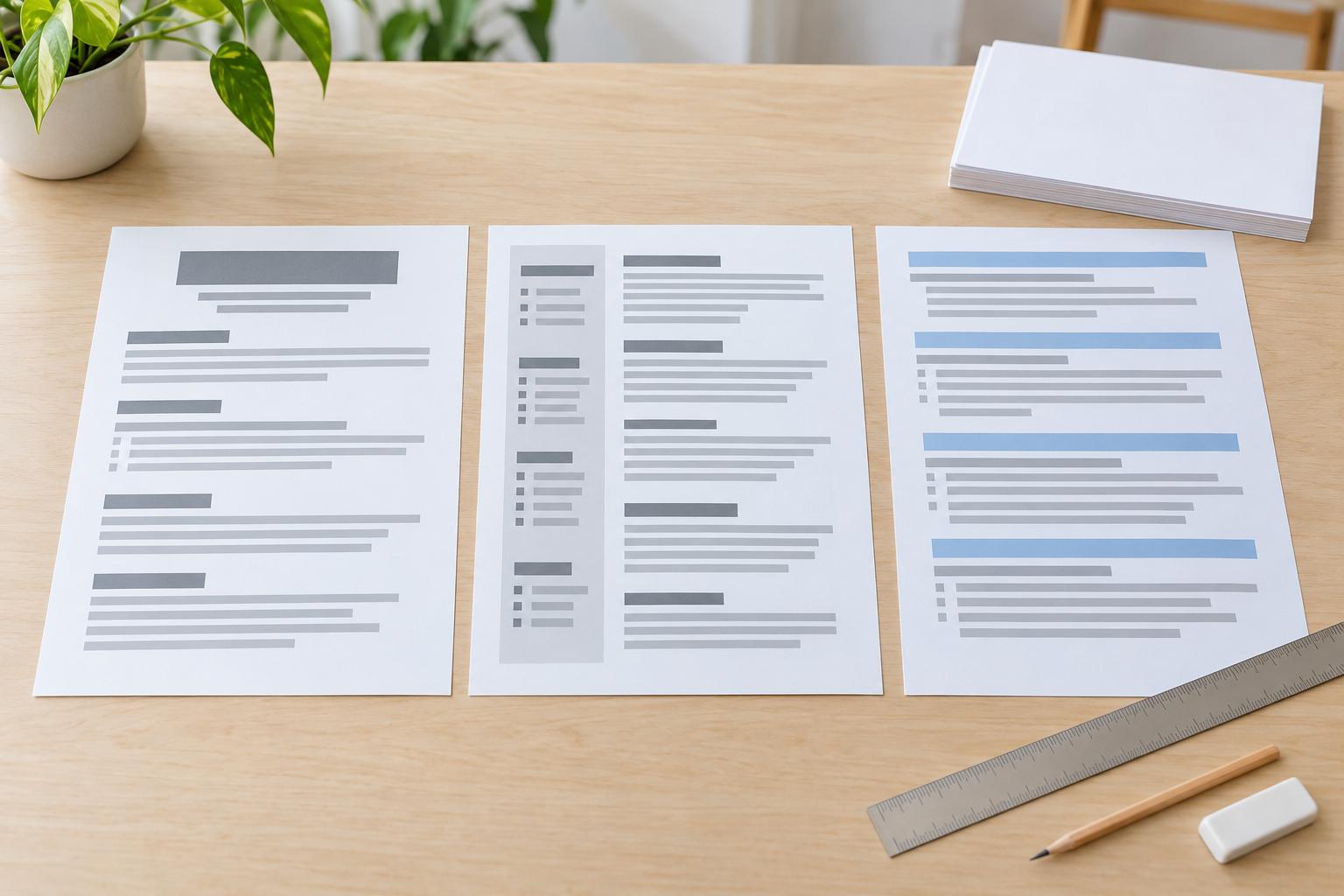
The ATS of 2026 is powered by Large Language Models (LLMs) that "read" resumes much like a human, but they still struggle with complex visual data. If your resume goes through an ATS and contains intricate headers, footers, or multi-column layouts, the AI may misinterpret the reading order. This results in a "word salad" in the recruiter's view. While some AI can now parse images, many legacy systems used by major corporations still fail on charts and graphics, leading to a "Low Readability" score that hides you from the recruiter’s dashboard. Harvard research on how automated hiring systems filter out qualified candidates documented this problem years before it reached today's scale.
- Why: Complex layouts break the chronological parsing of AI, making your experience look like a chaotic mess.
- How: Stick to a single-column, clean layout and save your document as a flattened PDF to ensure your formatting remains static across all platforms.
- Example: Placing your job title in a sidebar column might cause the AI to associate that title with the wrong company or date.
- Key Takeaway: Simplicity is the ultimate sophistication in 2026; clean formatting ensures the AI reads your story correctly.
3. Failure to Customize
Generic resumes are the fastest way to become invisible in 2026. Companies now use "Job-Resume Matching Scores." If your resume doesn’t hit a specific percentage of relevance based on the job description, it is automatically filtered out. You must mirror the language of the AI that wrote the job description. This means moving beyond just "similar" titles and actually mapping your experience to the specific tech stack and soft skills mentioned in the posting. Reviewing good vs. bad examples of a tailored resume shows exactly what that customization looks like in practice.
- Why: AI filters for "Relevancy Scores"; a generic resume will never meet the high threshold required to alert a human.
- How: Analyze the job description for specific keywords and integrate them naturally into your summary and experience sections.
- Example: If the job asks for "Generative AI Workflow Management," do not simply list "Project Management." Use the specific terminology provided.
- Key Takeaway: A resume not tailored to the specific AI-generated job description is a resume that never gets seen.
4. Typos and Grammatical Errors
In 2026, a typo isn't just a sign of carelessness; it’s a data error. Advanced AI screening tools now include "Attention to Detail" scoring. A single spelling mistake can lower your "Quality of Hire" prediction score. While you should use tools like Grammarly to catch conflated words (affect vs. effect), remember that AI can also detect "over-reliance" on AI. Your resume needs to be error-free but still sound like it was written by a human professional.
- Why: Errors are interpreted by algorithms as a lack of professionalism and a high risk for future workplace mistakes.
- How: Use AI grammar checkers first, then read the resume aloud to ensure it maintains a human rhythm and flow.
- Example: Writing "Lead a team of 10" when you meant "Led a team of 10" flags you as having poor communication skills.
- Key Takeaway: Flawless mechanics are the "entry fee" for having your resume read by a human.
5. Listing Duties, Not Accomplishments
Recruiters in 2026 don't care what you were supposed to do; they care about the value you created. AI models are trained to look for "Impact Quantifiers." If you simply list duties, the AI ranks you as a "Junior" or "Executor" rather than a "Leader" or "Achiever." You must speak the language of data: percentages, dollar amounts, and time saved. This turns your resume from a list of chores into a record of success.
- Why: Quantifiable data is the only way for AI to objectively compare you against hundreds of other applicants.
- How: Use the "Action Verb + Task + Result" formula for every bullet point.
- Example: Instead of "Managed social media," use "Increased organic engagement by 40% over 6 months by implementing an AI-driven content calendar."
- Key Takeaway: Numbers are a universal language that proves your value to both bots and humans.
6. Too Much Information
Over-sharing is a major liability in 2026. Inclusion of personal details like ethnicity, marital status, or a home address can trigger "Bias Filters" in modern HR software. To avoid initial bias and discrimination, many companies now use "Blind Hiring" modules that automatically redact personal info. If your resume is cluttered with this data, it makes the redaction process difficult and may lead to your resume being discarded to avoid legal risks.
- Why: Including protected personal data creates legal liability for employers, leading them to favor "clean" resumes.
- How: Remove all personal identifiers; focus strictly on professional skills, certifications, and experience.
- Example: Including a photo or your birth year can cause an AI to flag your application for potential age or racial bias issues, leading to an automated rejection.
- Key Takeaway: In 2026, "less is more"—keep the focus on your talent, not your personal life.
7. Quirky Humor
The AI gatekeepers of 2026 are highly literal. While they have made strides in understanding sentiment, humor is often misinterpreted as "unprofessional" or "irrelevant content." What you might think is a clever joke can be categorized by an algorithm as "low-confidence data" or "off-topic." Maintain a tone of professional authority. In a world where AI is scanning for "Cultural Fit," humor is too subjective a metric to gamble with.
- Why: Algorithms lack the nuance to understand sarcasm or wit, often leading to a "Poor Professionalism" rating.
- How: Keep your resume strictly professional; if you want to show personality, save it for the interview or a brief line in the cover letter.
- Example: Listing "Chief Happiness Officer" as a title for a standard management role can confuse the AI’s categorization of your seniority.
- Key Takeaway: Humor is a human trait; use the resume to prove you are a professional expert first.
8. Your GPA
In 2026, skills-based hiring has overtaken degree-based hiring. Unless you are a new graduate (within 12 months), listing your GPA signals that you are clinging to academic achievements because you lack real-world impact. Recruiters and AI alike are looking for "Continuous Learning" and "Applied Skills." Your GPA is a static number from the past; your recent certifications and projects are your future. Our guide to when your GPA belongs on a resume covers the exceptions in detail.
- Why: Workplace accomplishments are 10x more predictive of success than a college grade in the eyes of modern hiring algorithms.
- How: Remove your GPA if you have more than one year of professional experience; replace that space with "Skills" or "Certifications."
- Example: A 3.9 GPA from 2022 is less impressive to a 2026 recruiter than a 2025 certification in "Advanced Prompt Engineering."
- Key Takeaway: After your first job, your GPA becomes "noise" that distracts from your professional "signal."
9. Keyword Stuffing
While keywords are essential, the "Black Hat" SEO tactics of the past—like hiding white text or repeating words—are career suicide in 2026. Today's AI is "Semantic-Aware," meaning it understands the context of words. If it detects "Keyword Stuffing," it will flag your application as "Deceptive" or "Low Quality." If you try to trick the system, the system will ensure you remain invisible to the recruiter.
- Why: Modern AI can detect "forced" language and unethical formatting, leading to a permanent "Do Not Hire" flag in company databases.
- How: Integrate keywords naturally into your achievement bullets so they provide context to your success.
- Example: Don't just list "Python, Python, Python." Say "Developed a Python-based automation script that reduced processing time by 20%."
- Key Takeaway: Authenticity wins; use keywords to describe your work, not to manipulate the machine.
10. Poor Presentation
Even in a digital-first world, visual hierarchy matters. A simple and effective design ensures that the most important information—your name, your most recent role, and your top skills—is immediately visible. Dense blocks of text are the enemy of visibility.
- Why: Human recruiters in 2026 suffer from "Information Overload"; they will skip any resume that is hard to scan visually.
- How: Use ample white space, standard fonts like Calibri or Roboto, and clear bolded headers.
- Example: Using a 9pt script font with no margins will cause a recruiter to close your file instantly, regardless of your qualifications.
- Key Takeaway: Your resume is a user interface; make it easy for the human "user" to find the "Buy" button (your skills).
Conclusion: Staying Visible in 2026
The job market of 2026 is a dual-layered challenge. To get hired, you must first survive the "Algorithmic Audit" and then win the "Human Impression." By avoiding these ten fatal flaws, you ensure that your resume isn't just a document, but a high-performing data asset. AI has the power to make you "invisible" if you ignore the rules, but it also has the power to spotlight you as the perfect candidate if you optimize for it correctly. Focus on clarity, quantifiable impact, and professional integrity to ensure you stand out in an automated world. For the companion checklist, see our resume dos and don'ts for 2026.
Get Rocket Resume
When you’re faced with creating your resume from scratch, you can spend days on every job application. It can be an overwhelming task.
Rocket Resume makes it easy to put together a professional resume in no time at all. We have proven templates that can be customized for any job. No more staring at a blank sheet of paper with no idea what to include in each section. Now you’ll have the time you need to concentrate on landing your dream job. Start building your resume today!
Sources: Forbes - This is the only time you should include a GPA on your resume
Browse our resume templates
Pick a design you like, then fill in your resume one section at a time.