How to Become a Voice Actor (With No Hollywood Connections)
How to start voice acting without industry connections, from vocal training and home studio gear to AI screening, contract traps, casting platforms, and typical pay of $75,000 to $125,000 a year.

If you love acting and people regularly compliment your voice, then voice acting could be the ideal career for you. It’s a rewarding job where every day is different—though in 2026, that "difference" includes navigating a landscape of neural networks and massive studio consolidations.
You don’t need Hollywood connections or famous parents to start. However, as of March 2026, the industry has entered a "Single-Door" era where surviving the "Great Hollywood Contraction" and the rise of automated screening is the new baseline for success.
What Does a Voice Actor Do in 2026?
Voice-over work still encompasses a huge variety of jobs, but the "entry-level" bracket has shifted. While AI now handles 80% of automated phone menus and basic supermarket announcements, humans have become the "Premium Performance" tier. The types of work you’ll do include:
Premium Narrative: High-fidelity audiobooks and high-end video games where emotional depth is required. Performance Capture (P-Cap): Providing the voice and facial data for digital avatars. The "Synergy" Commercial: Voicing targeted social ads for the few remaining Super-Conglomerates. Digital Heritage: Working with major studios to license your voice for specific, ethically protected projects.
No matter the job, you’ll be responsible for interpreting a brief that might now include "AI-avoidance"—delivering a performance too nuanced and emotionally erratic for a bot to mimic. You'll also likely spend more time on the legal side, ensuring your Digital Likeness Rights are protected in every contract.
How to Become a Voice Actor: Step by Step
These steps will take you from a newbie to a professional capable of competing in an algorithmic market:
1. Train Your Voice (and Your Tech)
There are no formal licenses required, but you must train your voice for "Unpredictability." AI is great at averages; it struggles with the spontaneous emotional shifts of human improv. Informal training includes reading out loud and doing open mic nights, while formal training involves working with a coach who specializes in matching your voice to the complex, non-linear logic of the latest AI animation rigs.
2. Navigate the "AI Screening" Gatekeepers
In 2026, your first audience isn't a human—it's an AI Screening Algorithm. Major studios now use "Performance Predictor" AI to rank tapes based on facial micro-expressions and vocal resonance. Your voice actor resume and demo must be optimized with keywords so studio algorithms can categorize your "vocal texture" before a human ever clicks 'play.'
3. Set up a "Deepfake-Proof" Studio
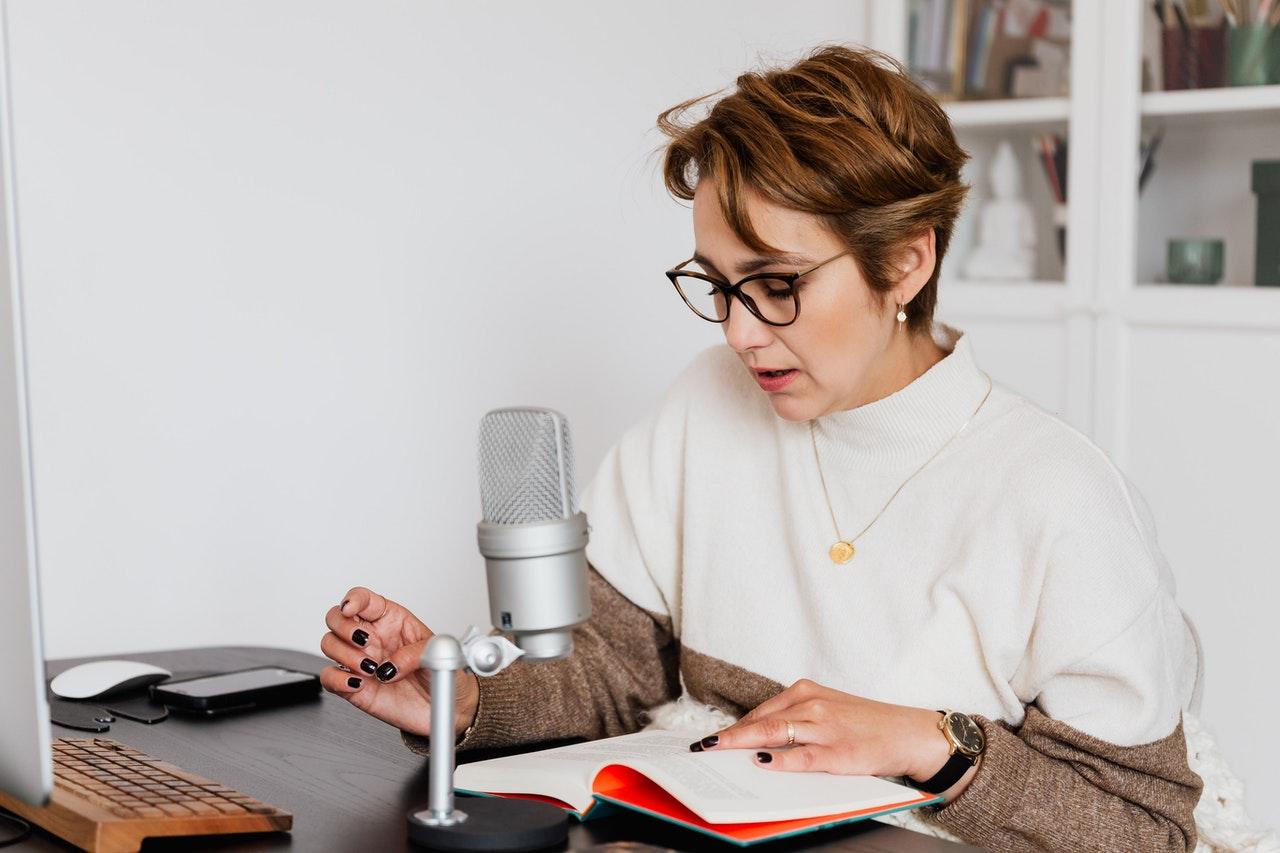
To compete with synthetic voices, your recording quality must be flawless. A high-end XLR microphone and an audio interface are non-negotiable. Many 2026 pros now use "stealth watermarking" on their demos to prevent AI companies from "scraping" their voice to train new models without permission.
4. Market Yourself in the "Merger Era"
With the massive Paramount-Warner Bros. Discovery merger and Netflix's shift toward profitability, there are fewer independent doors to knock on. This "Single-Door" problem means that if you are "de-prioritized" by an algorithm at one major conglomerate, you may be effectively locked out of nearly 40% of the industry’s production slate. Use an ATS-readable resume that targets the specific "Creative Brands" within these super-entities.
5. Apply for Gigs (and Avoid the "Buyout")
Platforms like Voices and Voice123 remain popular, but you must be wary of "AI Training Clauses." Some 2026 contracts attempt to "bundle" your live performance with the right to create a synthetic replica. Always look for the SAG-AFTRA AI Guardrails in your contract to ensure you aren't signing away your future earning potential.
6. Build a "Human Moat"
The more you work, the more you develop your "Human Moat"—the specific, empathetic qualities that algorithms cannot replicate. In 2026, the market is less saturated with "good" actors, but it is hyper-competitive for "exceptional" ones who can provide the creative variance that directors crave.
Typical Voice Actor Salary in 2026
How much you can earn will depend on three factors: the rates you set, the amount of work you get and your expenses.
Your rates should reflect your skills and expertise, but will also depend on how well you market yourself. If you join The Screen Actors Guild - American Federation of Television and Radio Artists (SAG-AFTRA), which brings several benefits such as health plans and pension funds, or any other union, you will also have to charge their minimum rates or higher.
Your expenses, meanwhile, should drop after you’ve bought the equipment you need. However, you’ll still probably find yourself paying accounting fees, subscription fees and insurance. Make sure to take your costs into account when deciding how much you need to charge.
Most voice actors are freelancers, and salaries vary drastically based on your ability to leverage your Digital Identity. While the average voice actor earns around $75,000 to $125,000 a year, these figures often now include digital licensing fees. High earners in gaming and "High-Performance" dubbing in hubs like Brooklyn can still make over $235,000, provided they have the leverage to negotiate against the new studio super-mergers.
Your voice actor resume, meanwhile, needs to be professional, machine-readable and attractive. You should highlight any relevant experience or training and carefully tweak your professional summary. Make sure to avoid common resume mistakes like including too much information or incorrect contact information.
Apply for Gigs
Now you’ve reached the exciting moment in which you can begin applying for work. There are numerous online platforms for finding voice actor jobs, including Voices, Voice123, Casting Call Club, The Voice Realm, Bodalgo, Voice Crew, and Voiver. You could find work on more general freelance platforms such as Upwork and Fiverr, too.
You can also try networking and hiring an agent, although you might see more success with these options once you’ve already got some experience on your resume.
Build Experience
This part’s simple: the more you work, the more you develop your skills, the more voice acting samples and references you gain and the more attractive you become to potential recruiters and clients. You’ll also gain insights into the type of work you enjoy, your turnaround times, ideal rates and other practical considerations.
Update Your Demo Reel and Resume
Now you’ve done a few jobs, you’re already a much better voice actor than you were back when you created your demo reel. It’s time to update your resume, create a new demo and consider increasing your rates. Speaking of which…
Wow Recruiters with Your Voice Actor Resume
Success in 2026 means having a professional demo, glowing references, and a resume that can bypass the "Virtual Gatekeepers." Your resume should be customized to show off your personality while remaining Machine-Readable. At Rocket Resume, we have templates designed to satisfy both the AI scanners and the human casting directors.
Your resume should be customized to the job you’re applying for while also showing off your personality. Here at Rochet Resume, we’ve got over a dozen voice actor resume templates that you can use. They’re all professional, ATS-readable and will help you stand out from the crowd.
Build a resume now, so you can start applying for voice acting gigs.
Browse our resume examples
See what each section can say, then write your own resume one section at a time.